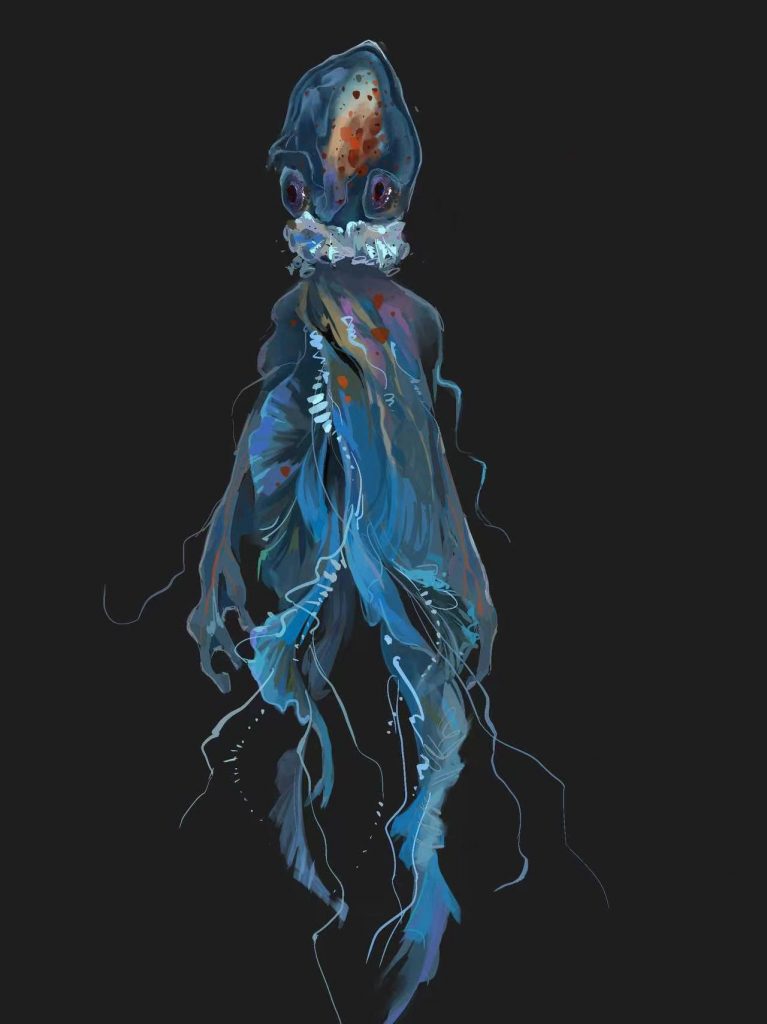
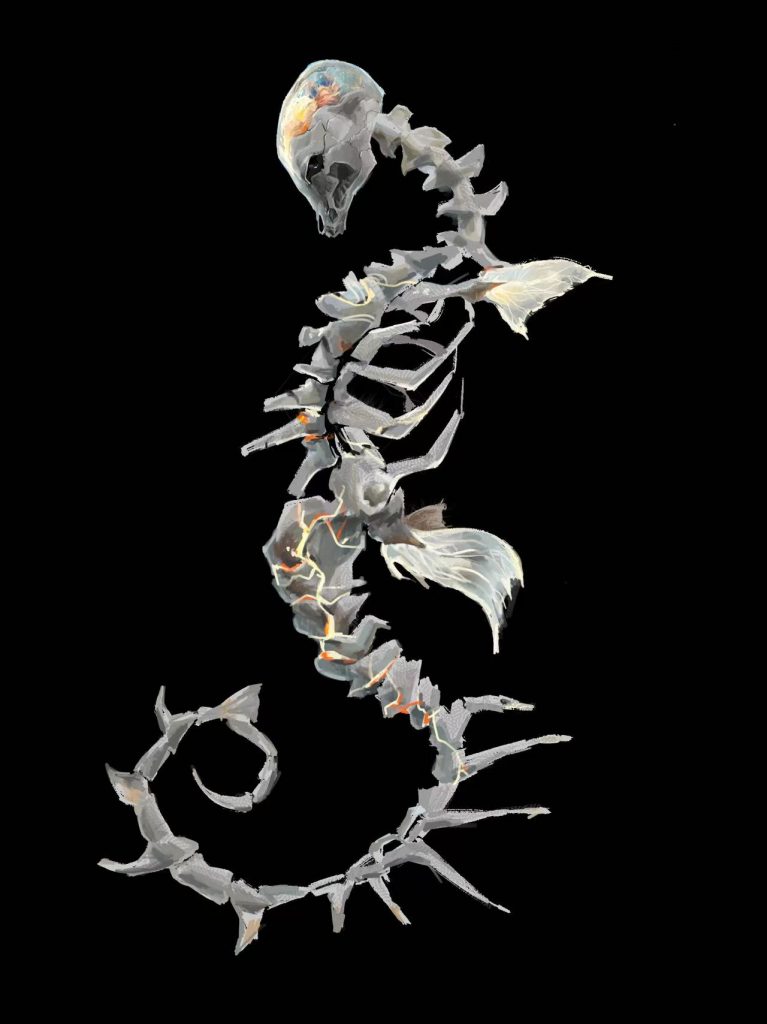
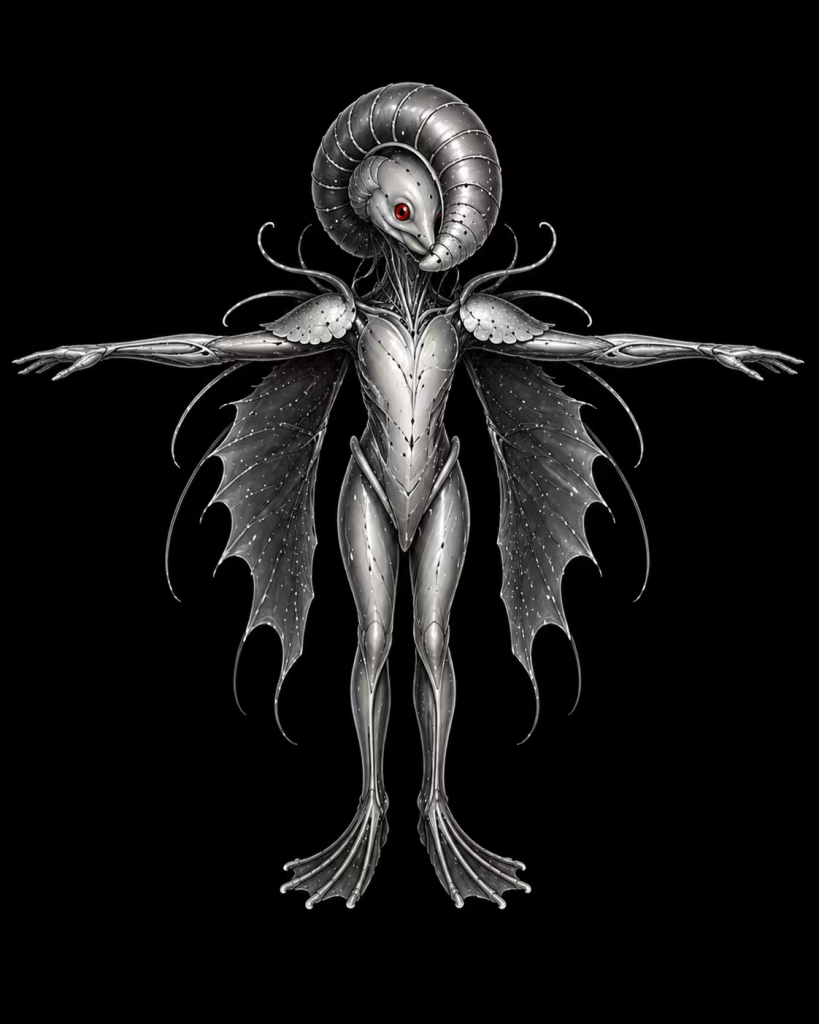
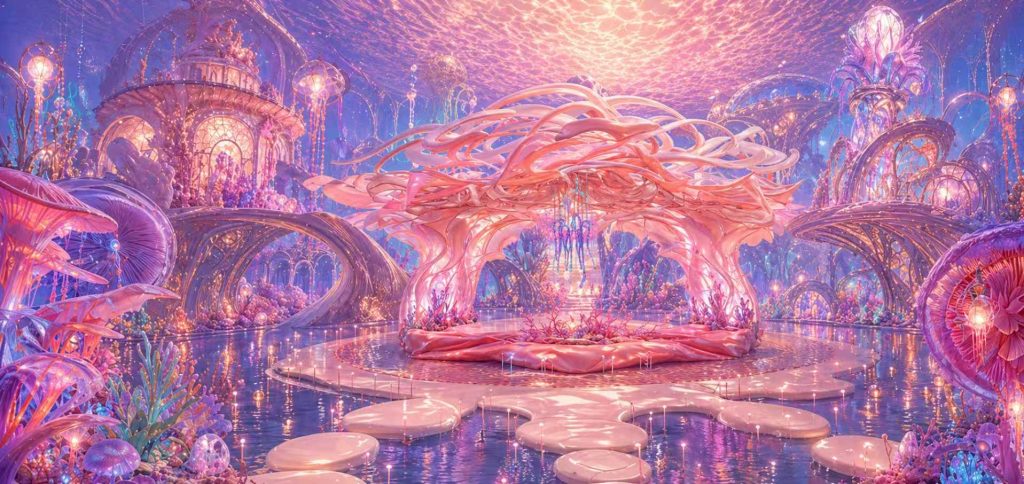
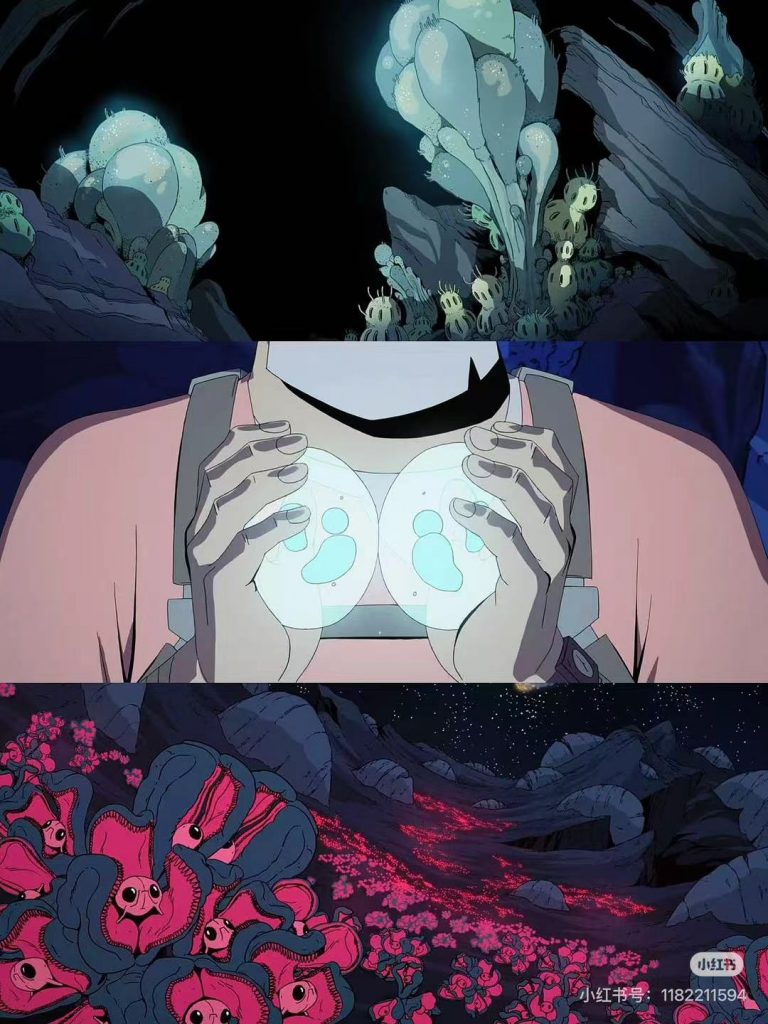
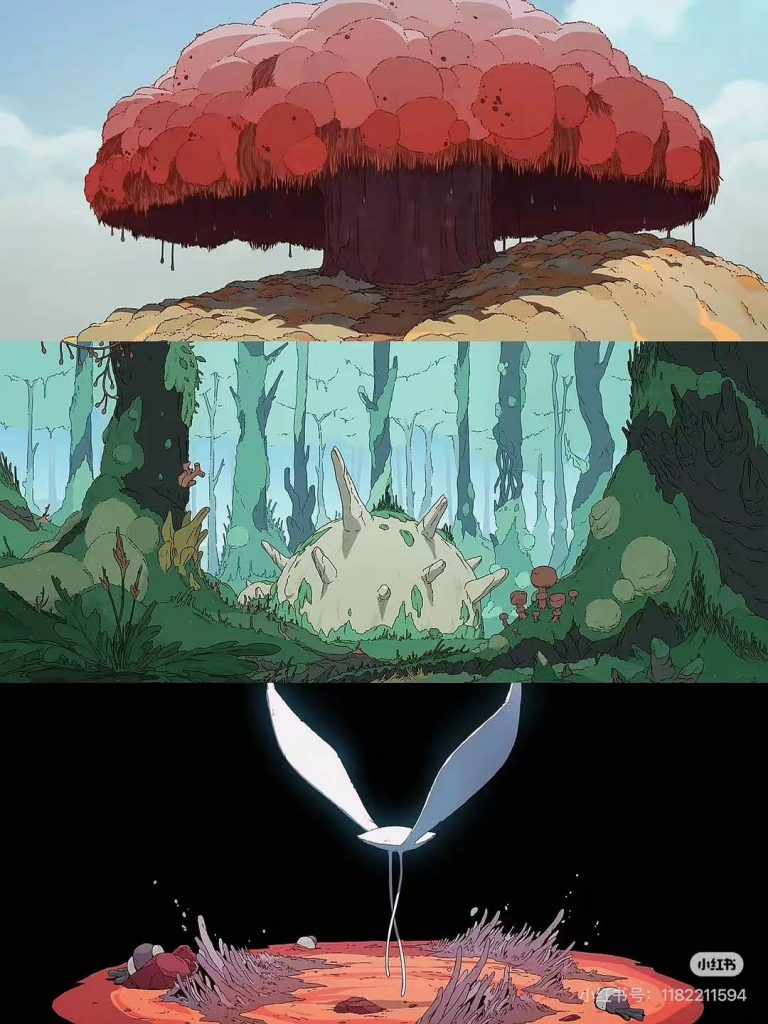
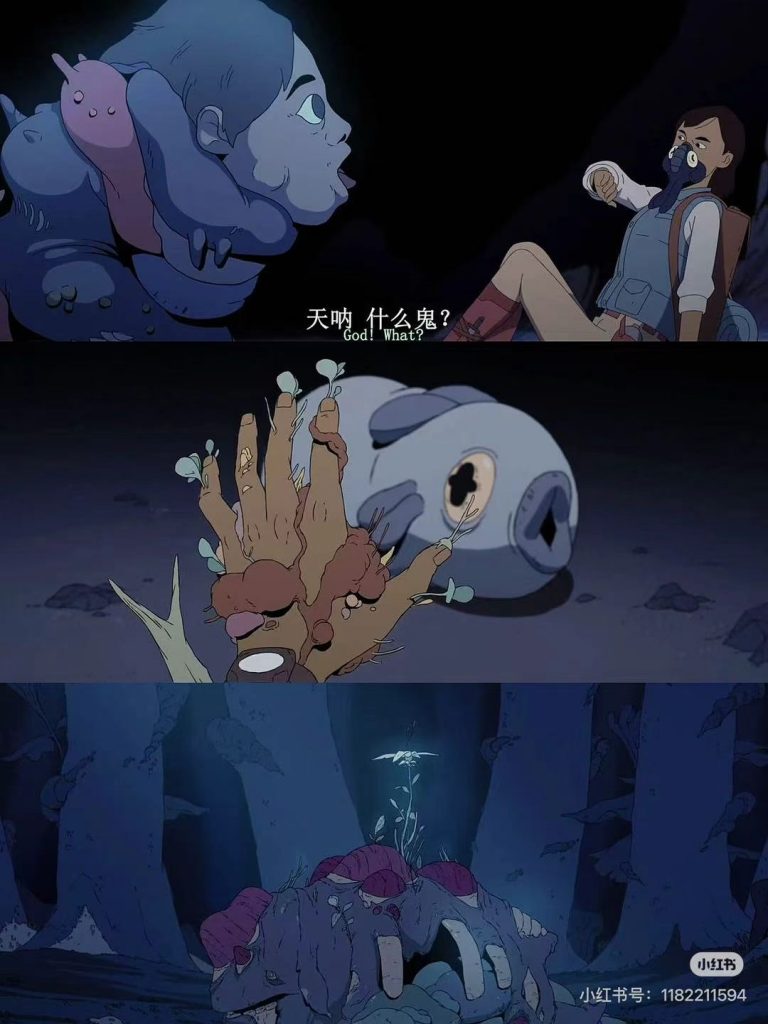
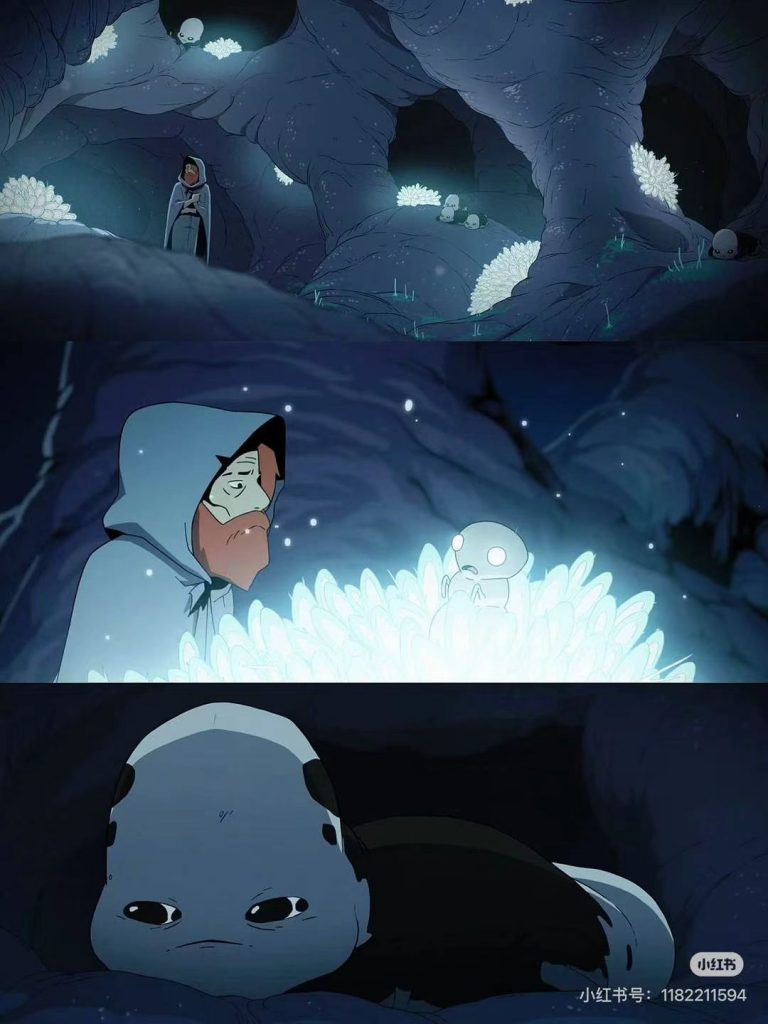
This week, we focused on the concept design of alien creatures and environments. Based on the previously established underwater volcanic alien world, we collected visual references and explored design directions that fit the project’s world-building.
For creature design, we drew inspiration from deep-sea organisms, fish skeleton structures, and fantasy creatures. We experimented with glowing organs, unusual body structures, and unique biological characteristics to create distinctive alien life forms. Through concept sketches and design iterations, we gradually defined the visual direction of the creatures.
For environment design, we explored elements such as bioluminescent plants, alien corals, energy crystals, and organic architecture to build a vibrant underwater volcanic ecosystem. Bright pink, purple, and blue tones combined with glowing effects were used to create a mysterious and fantastical atmosphere.
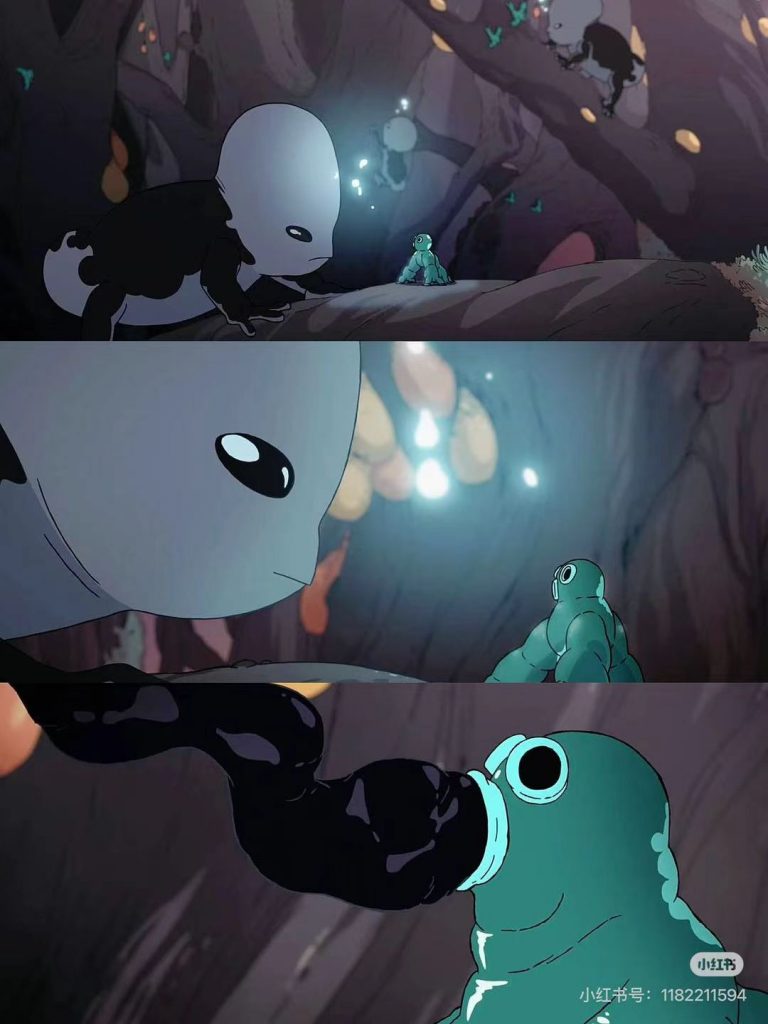
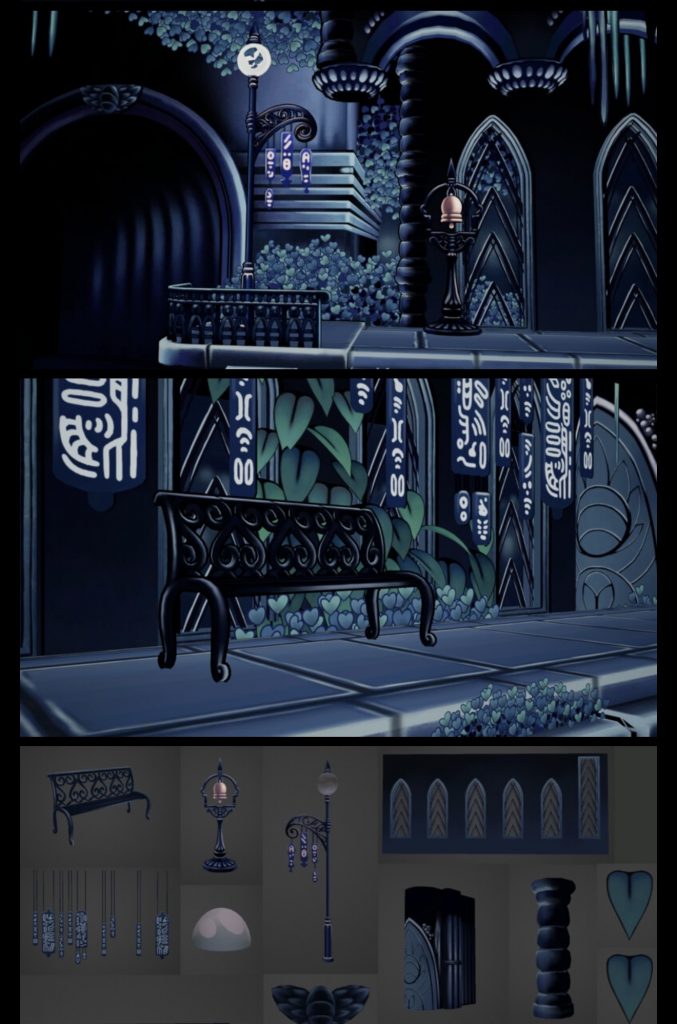
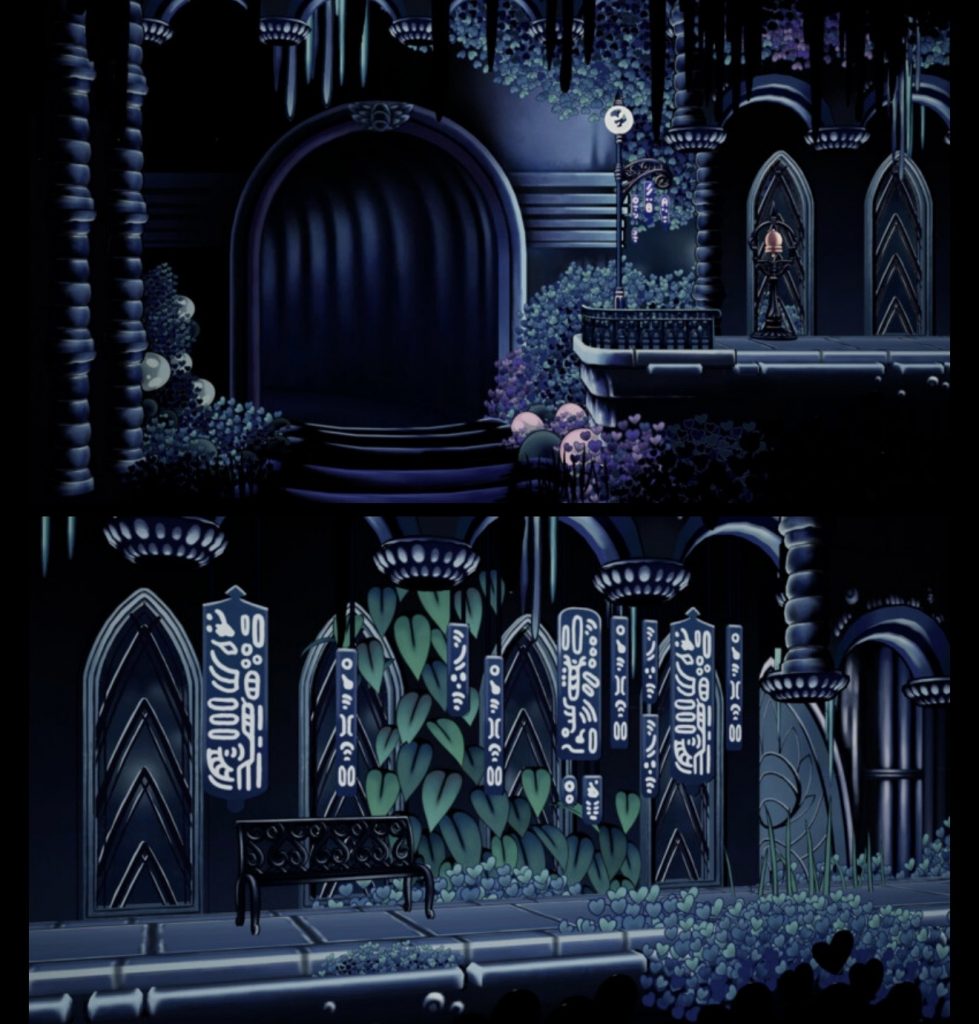
This week, we established the overall visual style and world-building direction of the project. We used Hollow Knight as a key reference, particularly its atmospheric environments and ecosystem-based design approach.
After several discussions, we decided to set the game in an alien world located within an underwater volcanic environment. Influenced by deep-sea pressure and mysterious energy sources, the creatures in this world have evolved into unique life forms and ecosystems. We collected visual references related to bioluminescent plants, deep-sea organisms, and alien environments to guide our design process.
The main achievement of this week was defining the project’s artistic direction and world framework, providing a foundation for future character design, environment creation, and gameplay development.
This week, we completed the AR component of the project and transformed our previously designed postcard into an interactive digital experience.
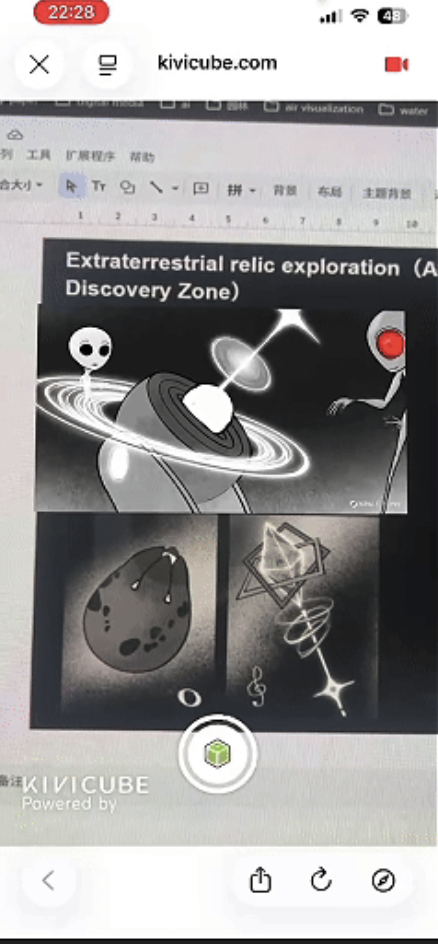
After finalising the postcard design, we used Kivicube to build an AR experience. The postcard image was configured as an image target, and an animation related to the project’s alien world was created and linked to it. When visitors scan the postcard with their phones, hidden animated content appears in real space, turning a static printed object into an interactive experience.
During development, we tested image recognition accuracy, animation playback performance, and recognition stability under different lighting conditions. Based on the results, we refined the postcard design and adjusted the tracking areas to improve reliability and usability.
This AR feature became an important extension of the overall visitor journey. After completing the MR experience, visitors could take the postcard home and continue interacting with the project through their mobile devices. Rather than functioning only as a promotional item, the postcard became a bridge between the physical exhibition and digital content.
This week, we conducted user testing to evaluate how visitors would respond to different forms of alien interaction. The tests focused on two key questions: the comfortable distance between aliens and users and how aliens should approach users.
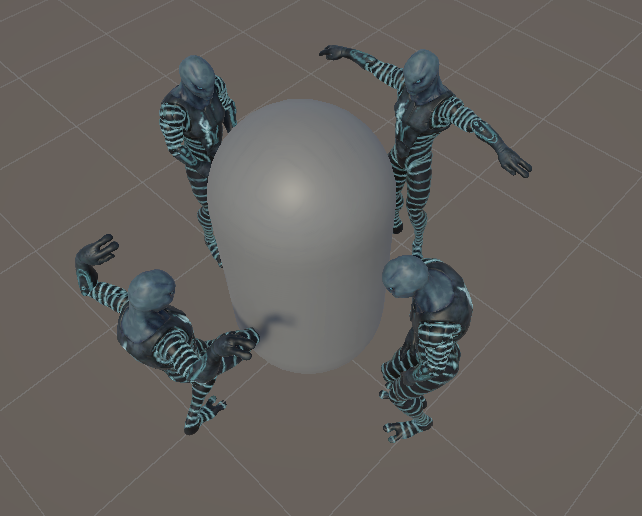
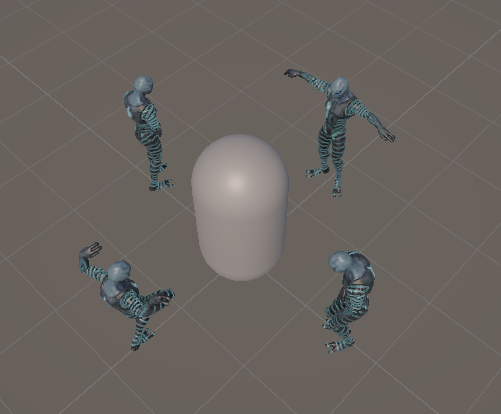
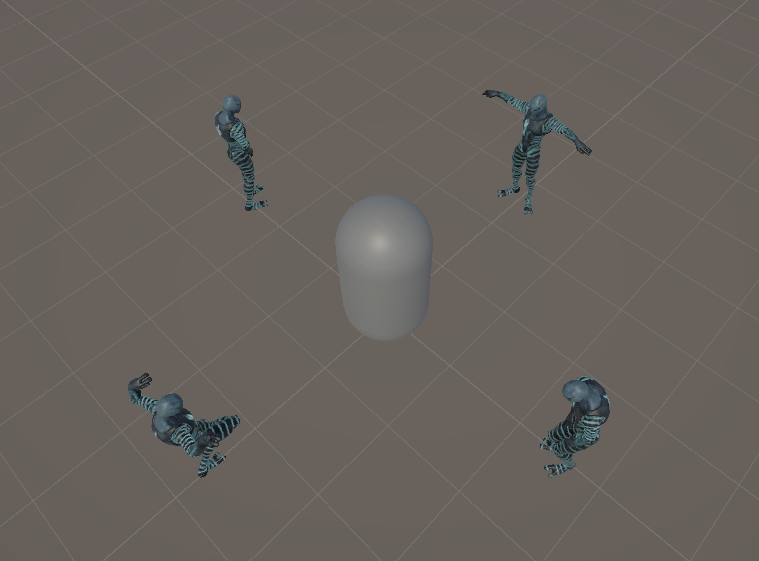
The first study examined proximity. We created a Unity test scene where aliens appeared at different distances and gradually moved closer to participants. Users were asked to identify distances that felt comfortable while still allowing them to clearly observe the aliens. The results suggested that most participants were comfortable with relatively close distances, provided that the aliens behaved in a friendly and non-threatening manner.
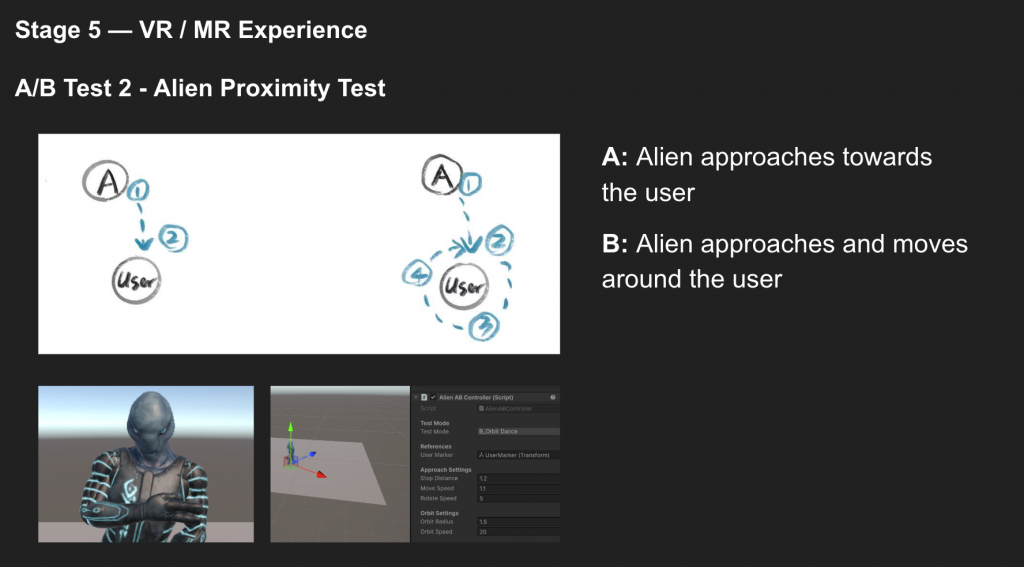
The second study was an A/B test comparing two movement patterns. In Version A, the alien approached the user directly and stopped in front of them. In Version B, the alien first approached and then moved around the user in a circular path. Most participants preferred Version B, describing it as more natural and engaging. The circling motion allowed them to observe the alien from multiple angles while maintaining curiosity and reducing feelings of confrontation.
To support the testing process, we built a configurable prototype in Unity that allowed us to adjust movement speed, stopping distance, and orbit radius. This enabled rapid comparison between different interaction behaviours and helped us collect both observational and questionnaire-based feedback.
This week, we completed our project presentation and began designing a user-testing strategy for the next stage of development.
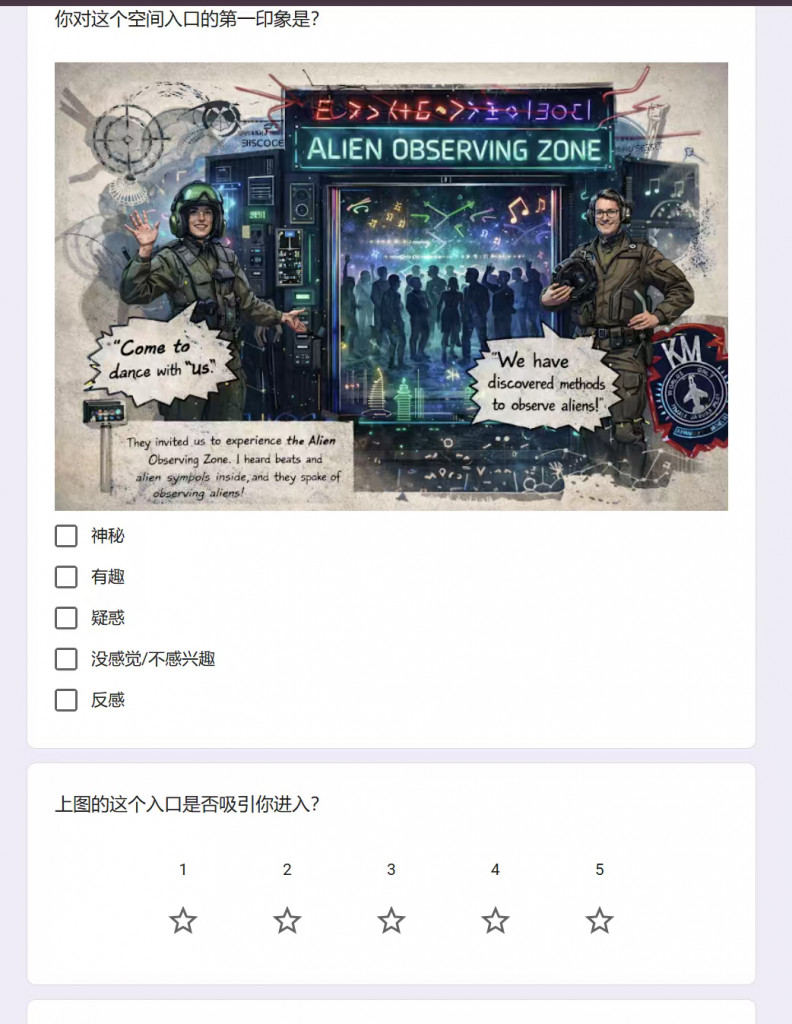
During discussions, we realised that we would likely have limited control over the overall entrance design of the exhibition space, as the container environment may be determined by the event organisers. Therefore, we decided to focus our research on the information devices that we could directly design, such as posters, screens, 3D-printed objects, and QR codes. Our goal was to understand which forms of media are most effective at attracting visitors and encouraging them to enter the experience.
Based on this approach, we developed a series of user-testing questions. We wanted to investigate whether visitors are more attracted by video displays, physical artefacts, or printed posters; whether stories about previous alien encounters would encourage exploration; and what kinds of QR-code prompts would increase users’ willingness to scan and interact.
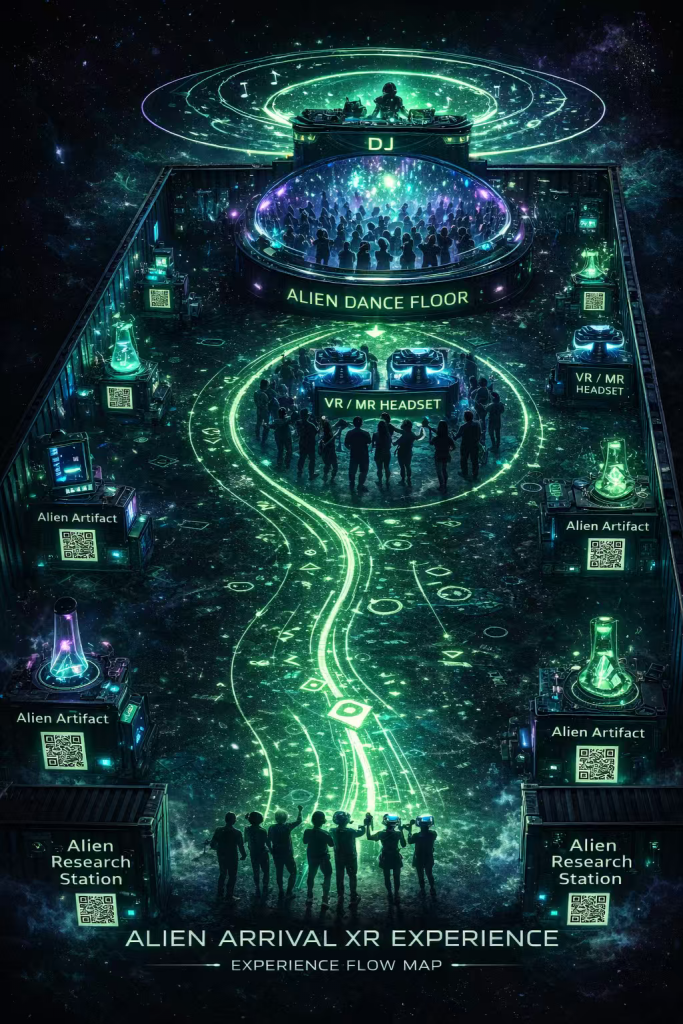
We also began considering spatial behaviour within the final experience. Since the project combines a DJ environment, a dance floor, and MR interaction, we planned to test where visitors would prefer to stand while using the headset, such as in the centre of the dance floor, near the DJ booth, or at the edge of the crowd.
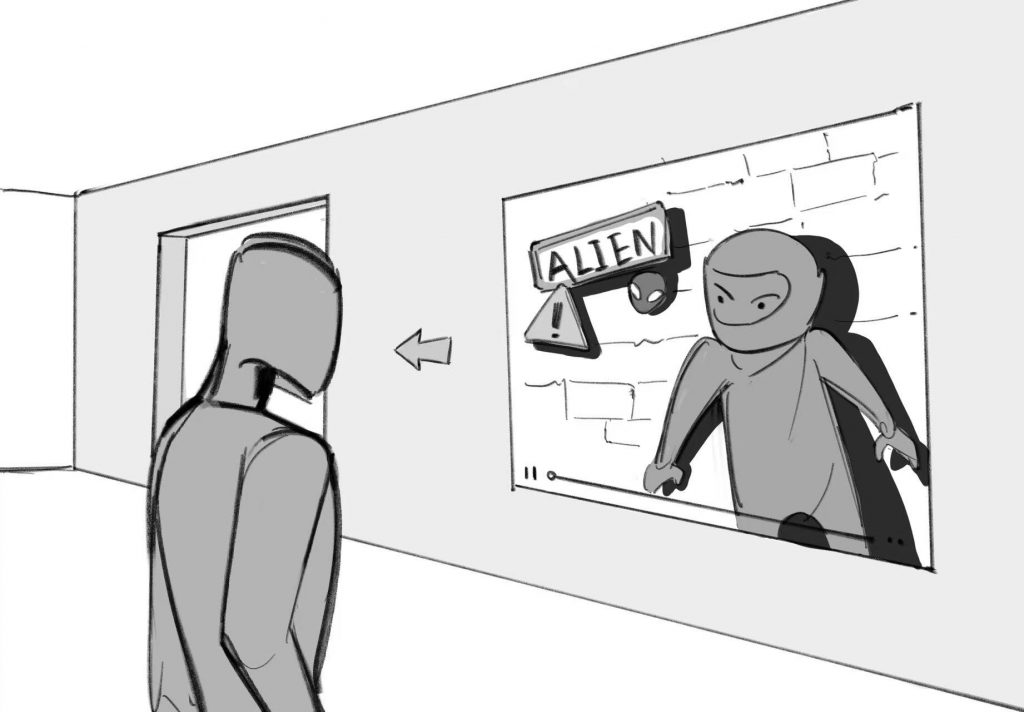
In addition to preparing user-testing questionnaires, I created a user journey storyboard to visualise the complete visitor experience.
The journey begins when visitors encounter promotional videos and information displays at the exhibition entrance. These elements communicate the idea that aliens have previously been discovered in this location, encouraging visitors to explore further.
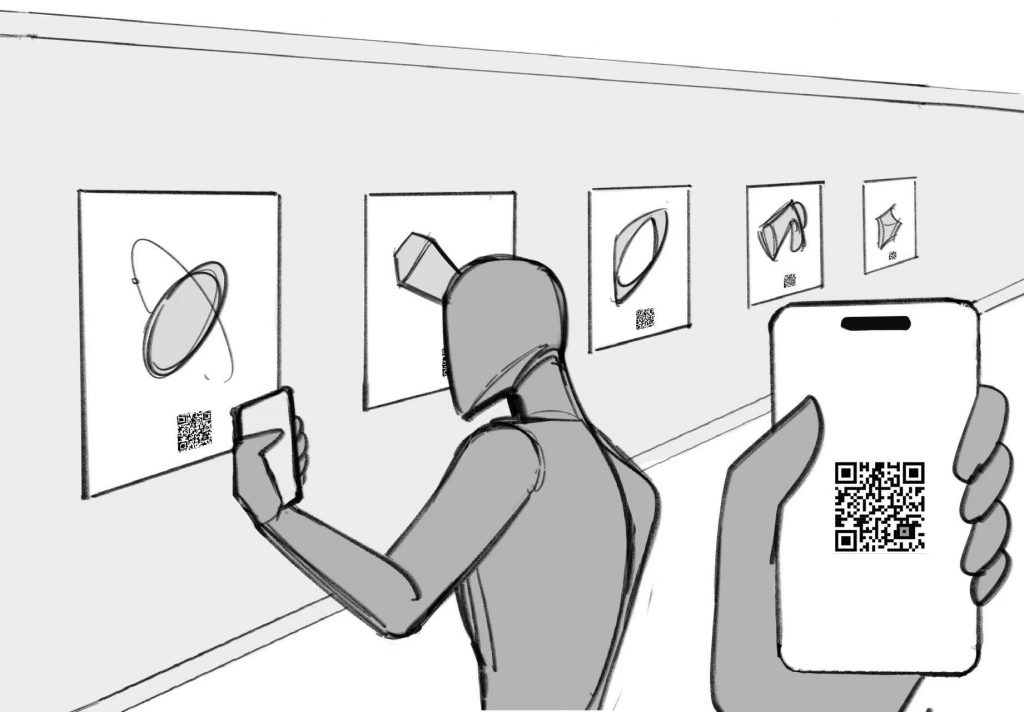
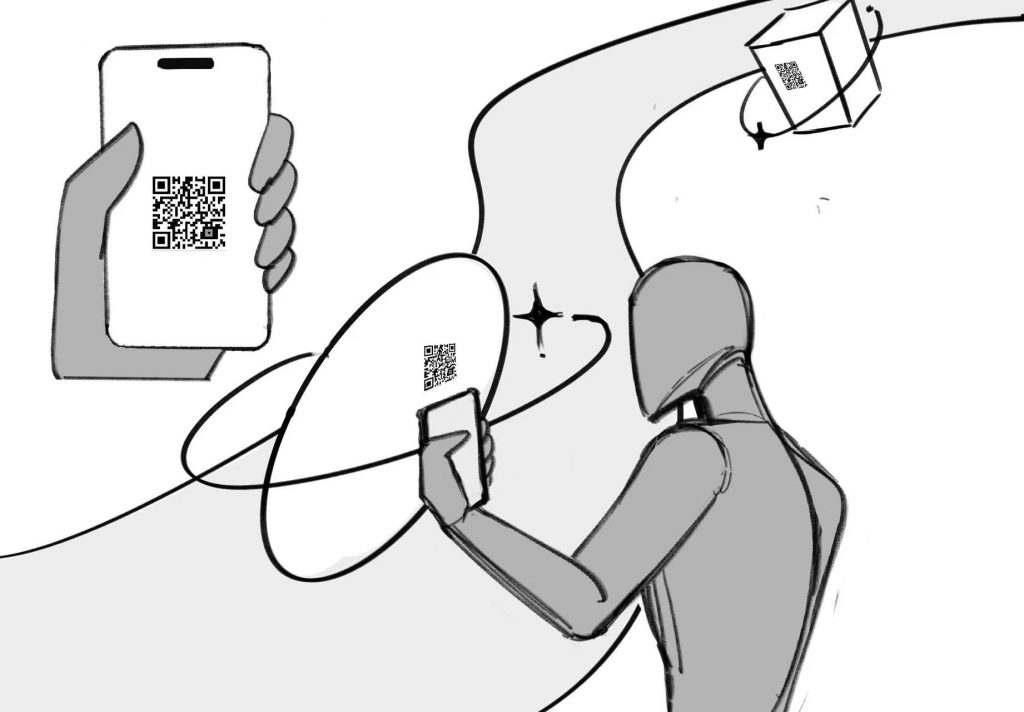
Visitors can then scan QR codes on posters and graphics to unlock AR content and discover hidden alien-related information. This stage serves as an introduction to the fictional world while building curiosity before the main experience.
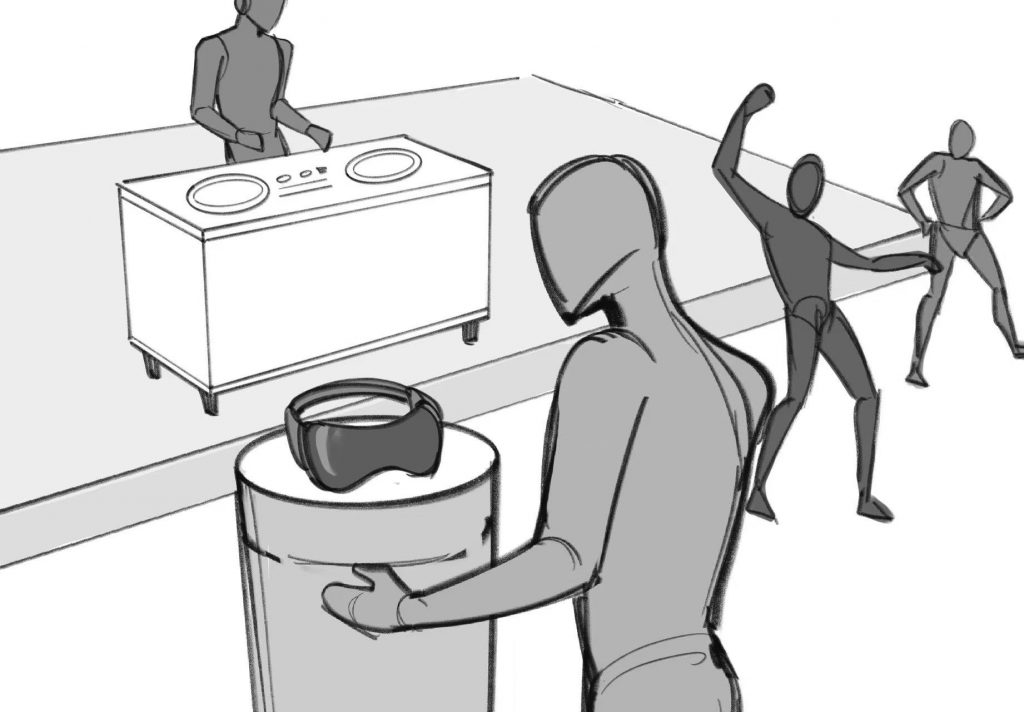
Afterwards, visitors enter the experience space, where they wear an MR headset inside a DJ and dance-floor environment. Through the headset, they are able to see aliens layered into the real world and participate in a shared dance experience.
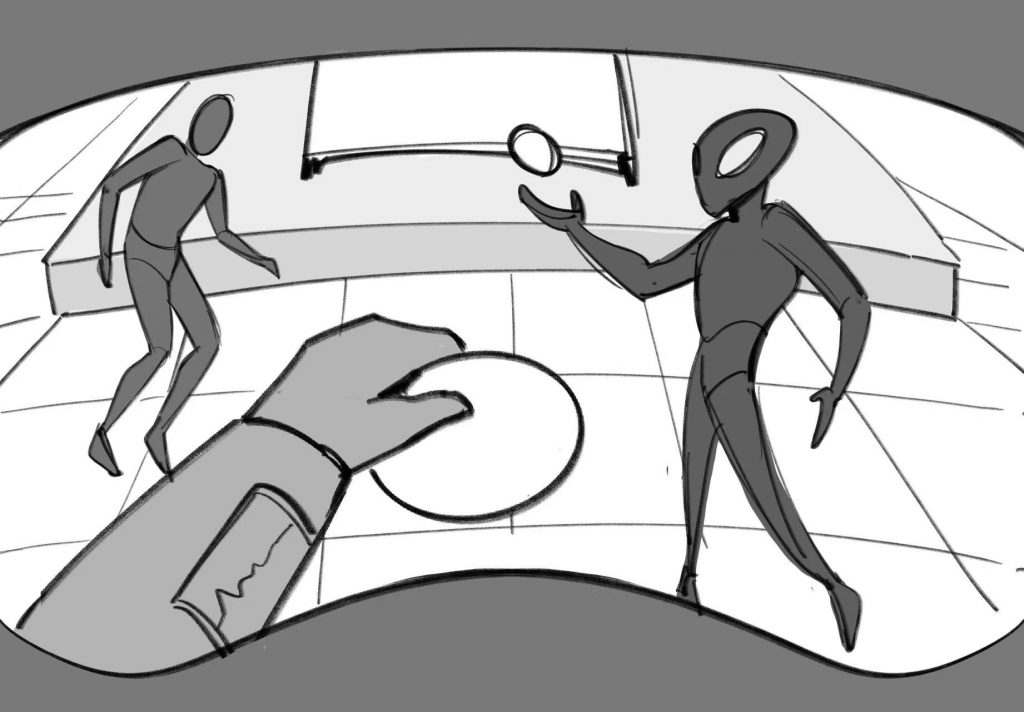
Future versions of the project may include richer interactions with the aliens, such as grabbing, throwing, or exchanging objects, creating a stronger sense of agency and immersion.
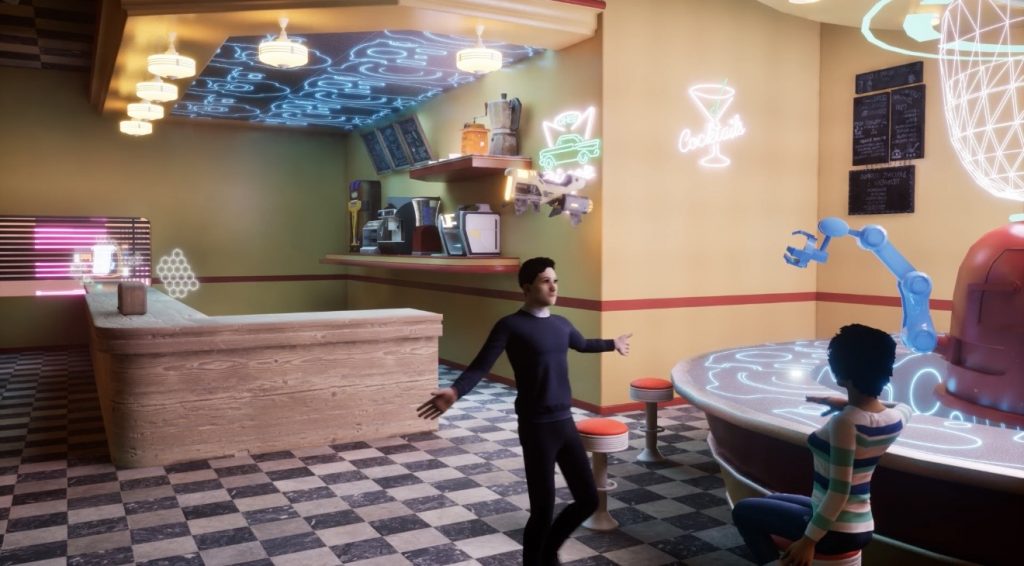
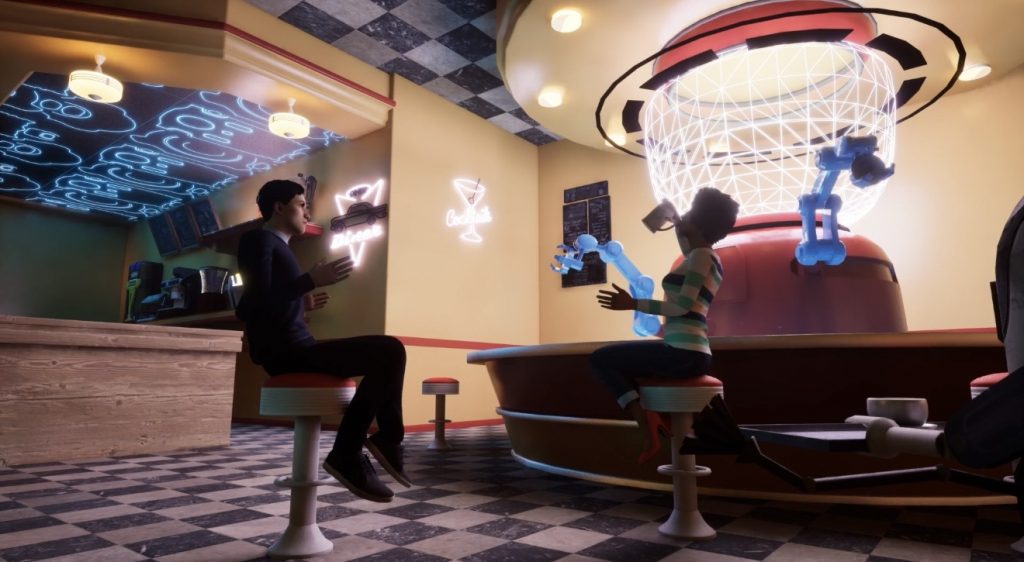
In Week 10, we rendered the café scene, but encountered bugs with the character.
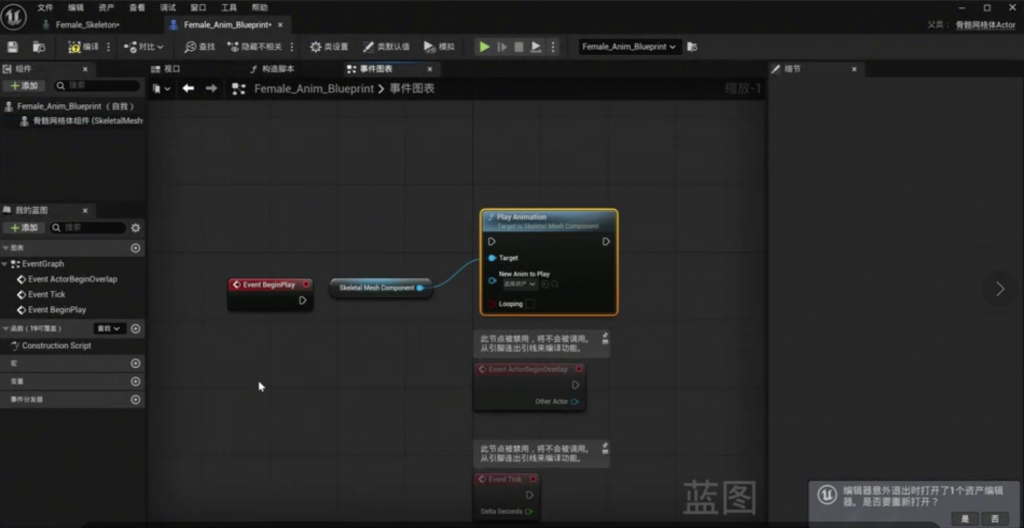
I experimented with Unreal Engine Blueprints to fix the issue, and successfully resolved it. In the end, we completed the café scene and finished the final editing.
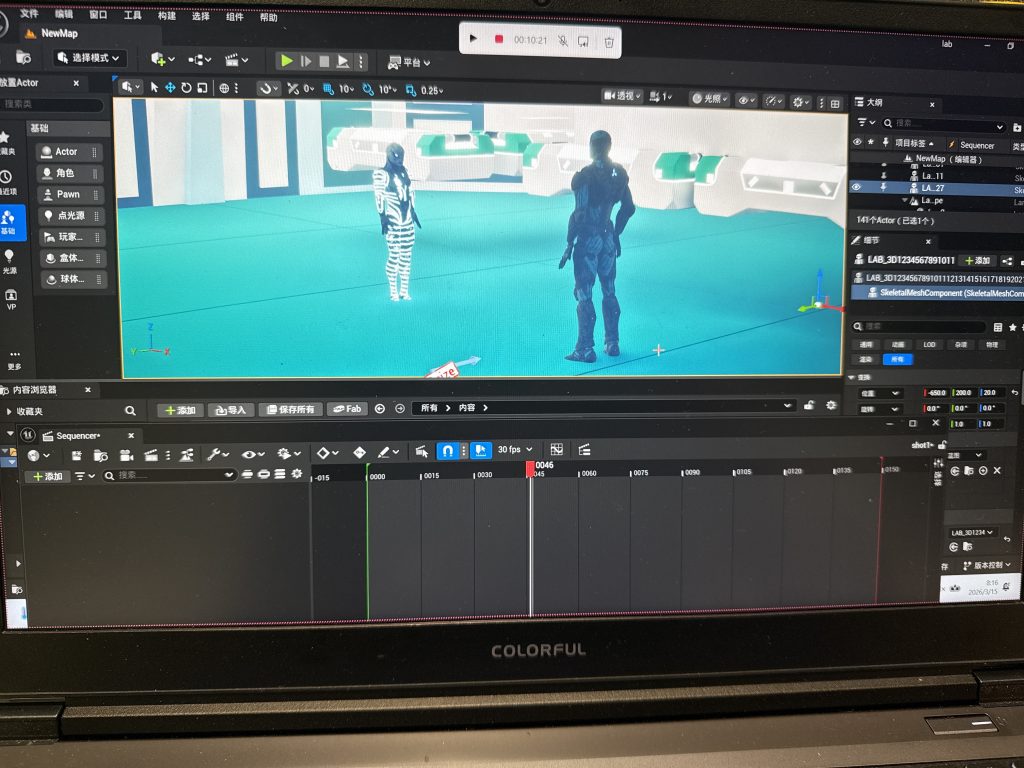
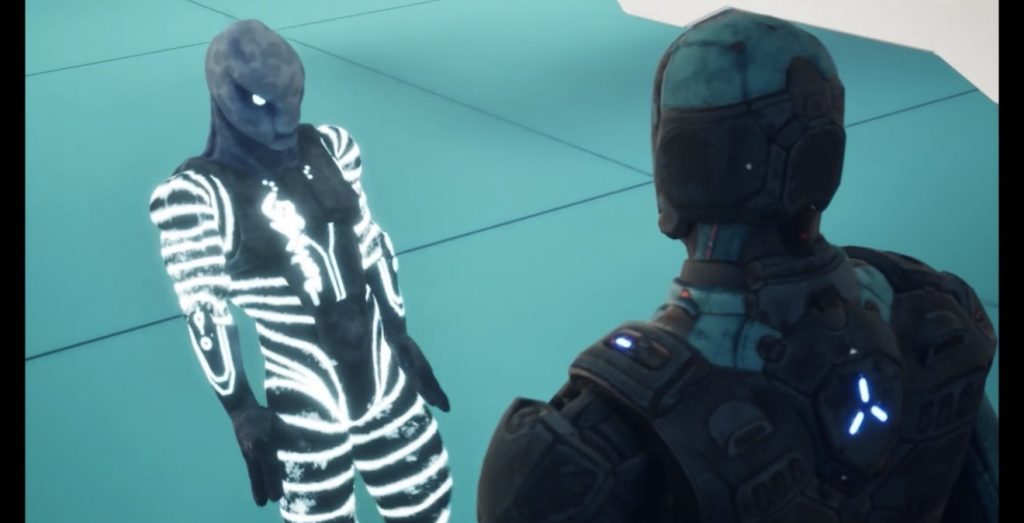
In Week 9, we completed the rendering of the lab scene.
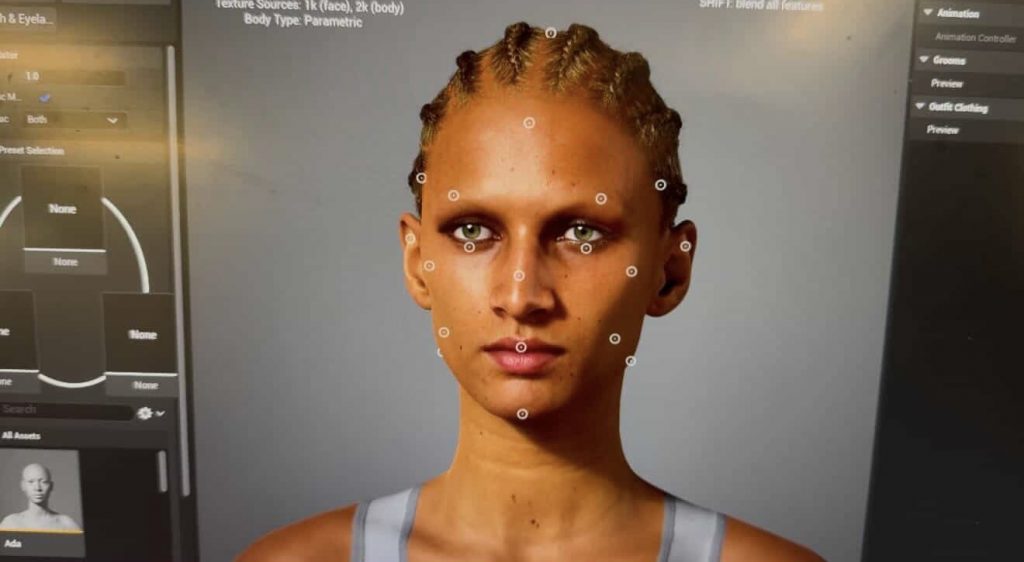
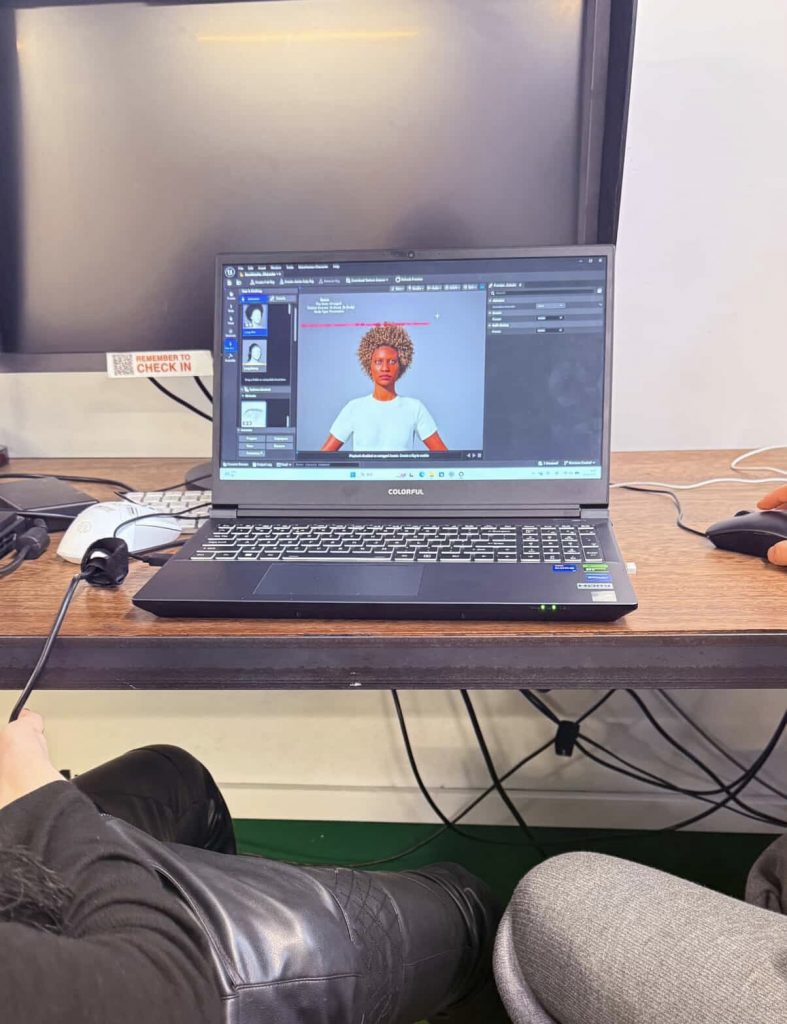
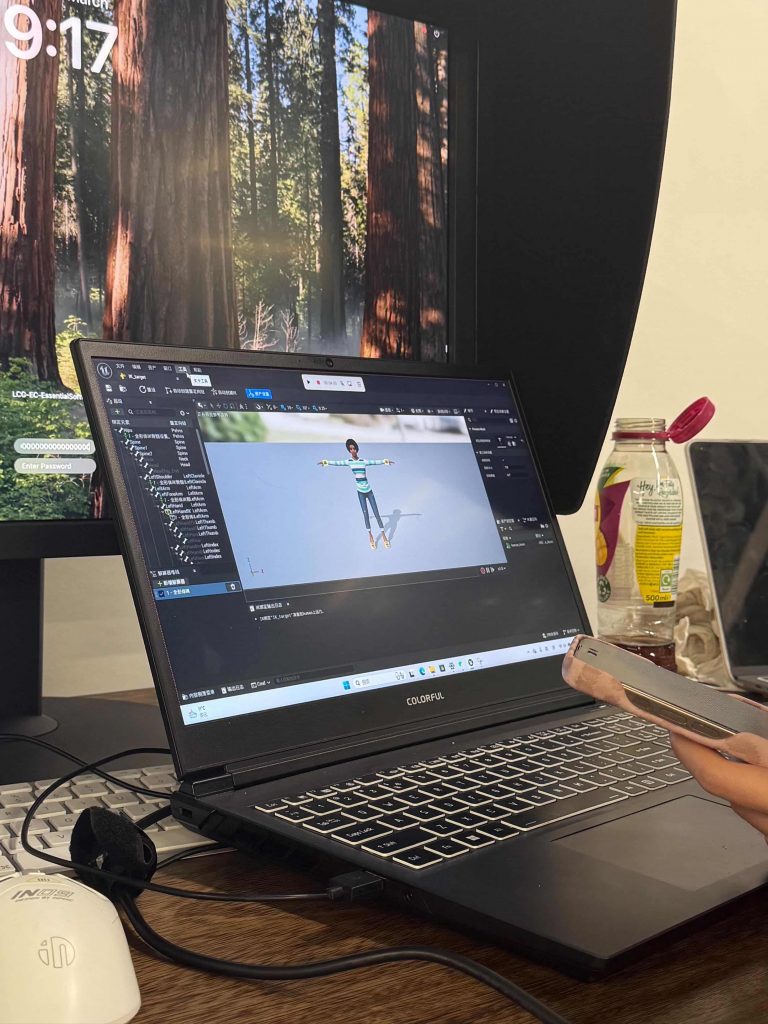
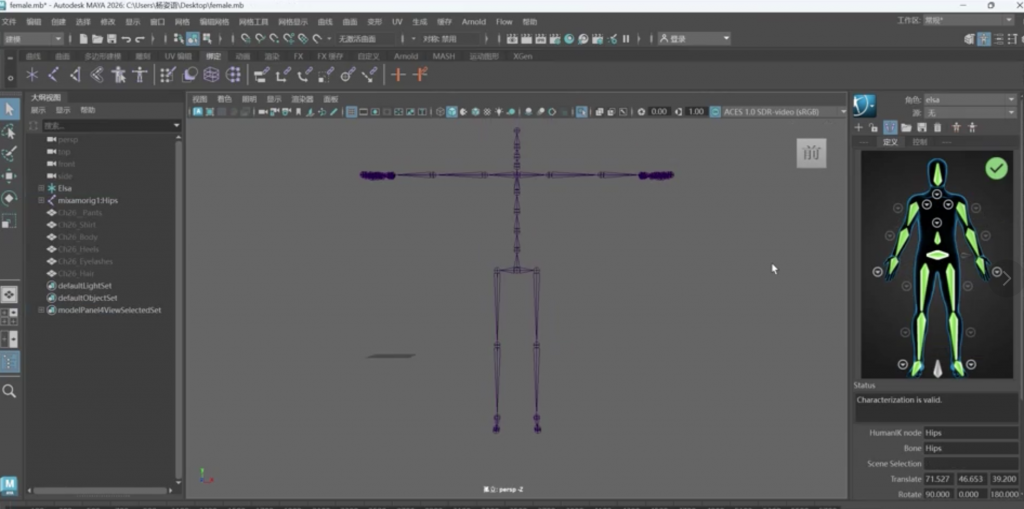
We also attempted facial capture for the café scene, but encountered issues with MetaHuman rigging, which resulted in a failed setup. I may revisit and try facial capture again in the future.
This week I focused on the visual design of the project and began developing promotional materials.
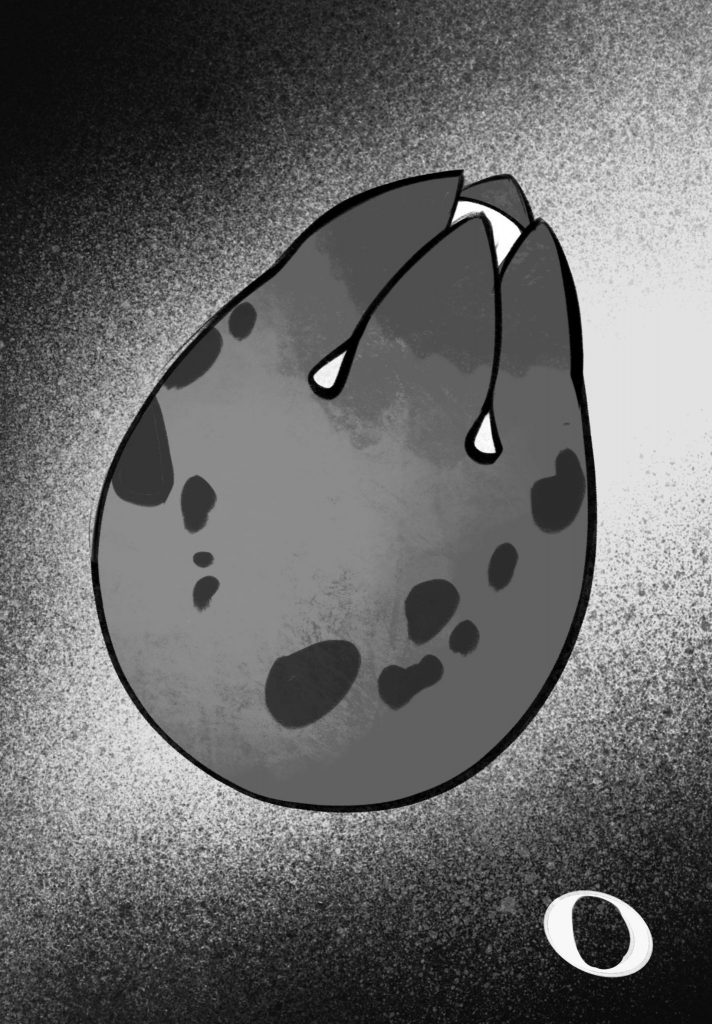
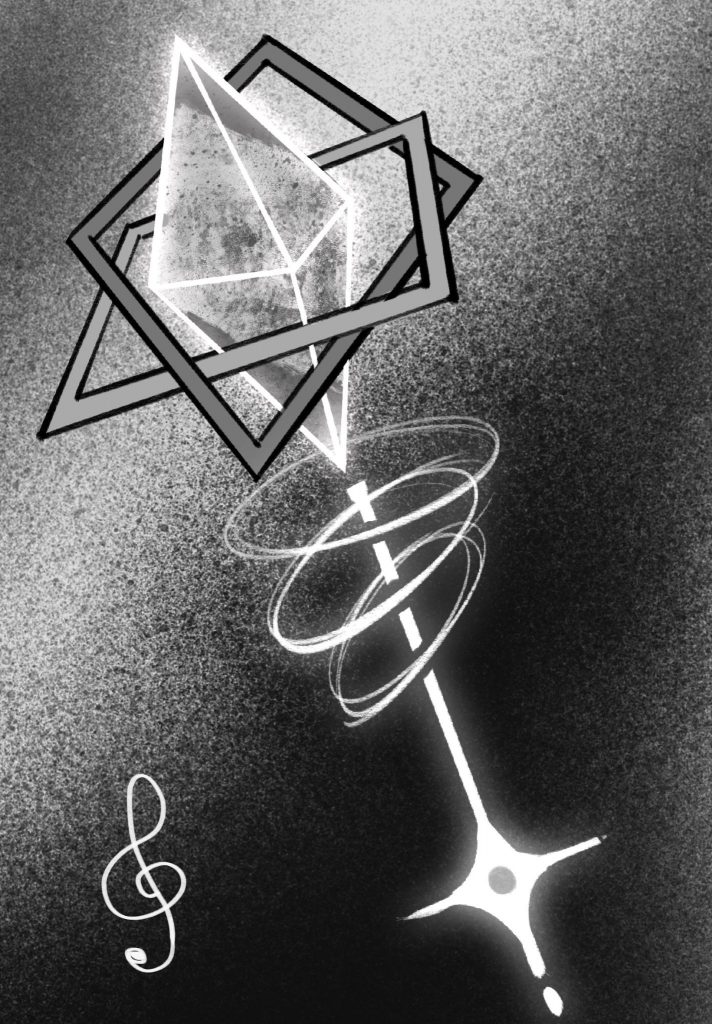
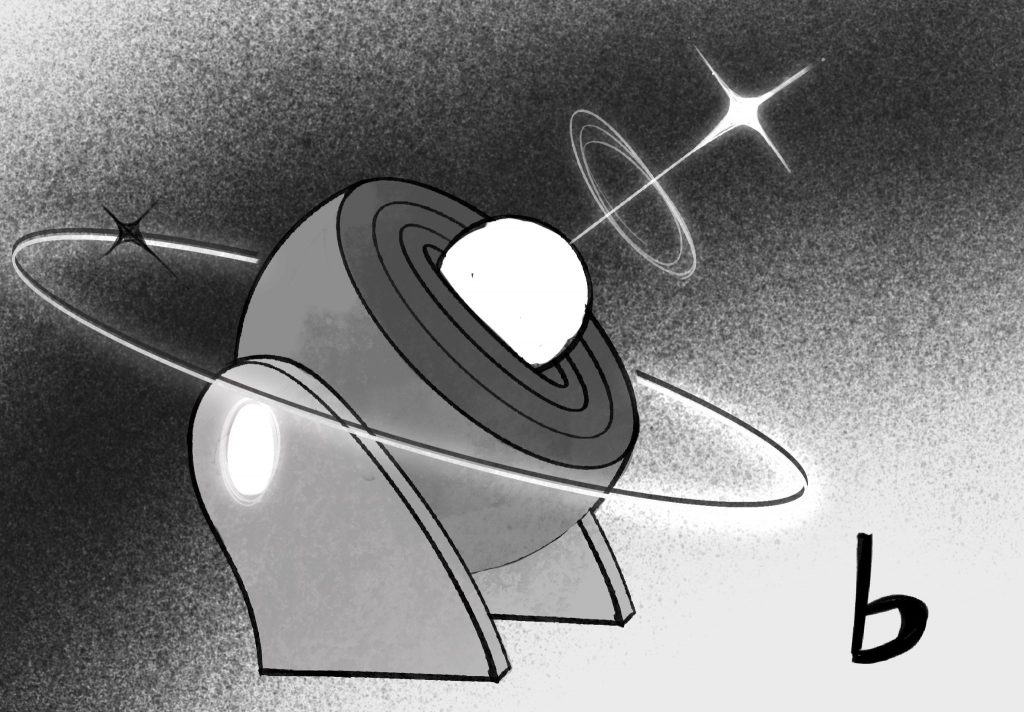
To support the world-building of Do Aliens Exist?, I designed a series of visual elements related to alien civilisation, including alien transmitters, alien eggs, and other fictional artefacts. Rather than adopting a conventional science-fiction aesthetic, I drew inspiration from musical notes, rhythms, and orbital forms, connecting the alien designs to the project’s themes of music and dance.
At the same time, I began designing a postcard for the project. The postcard was intended to function both as a souvenir for visitors and as an extension of the project’s narrative world. I incorporated alien-inspired symbols and graphic elements into the design so that it could be interpreted as a message originating from an alien culture.
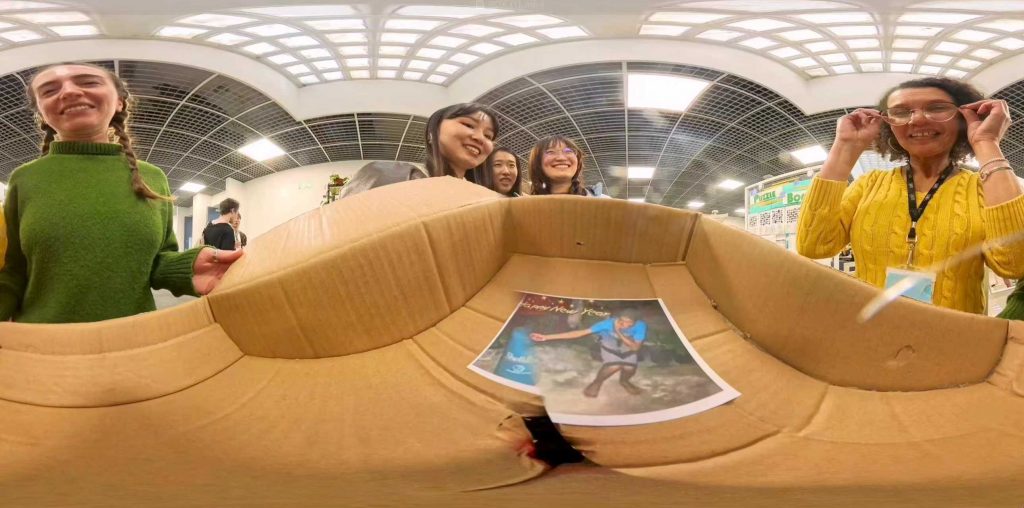
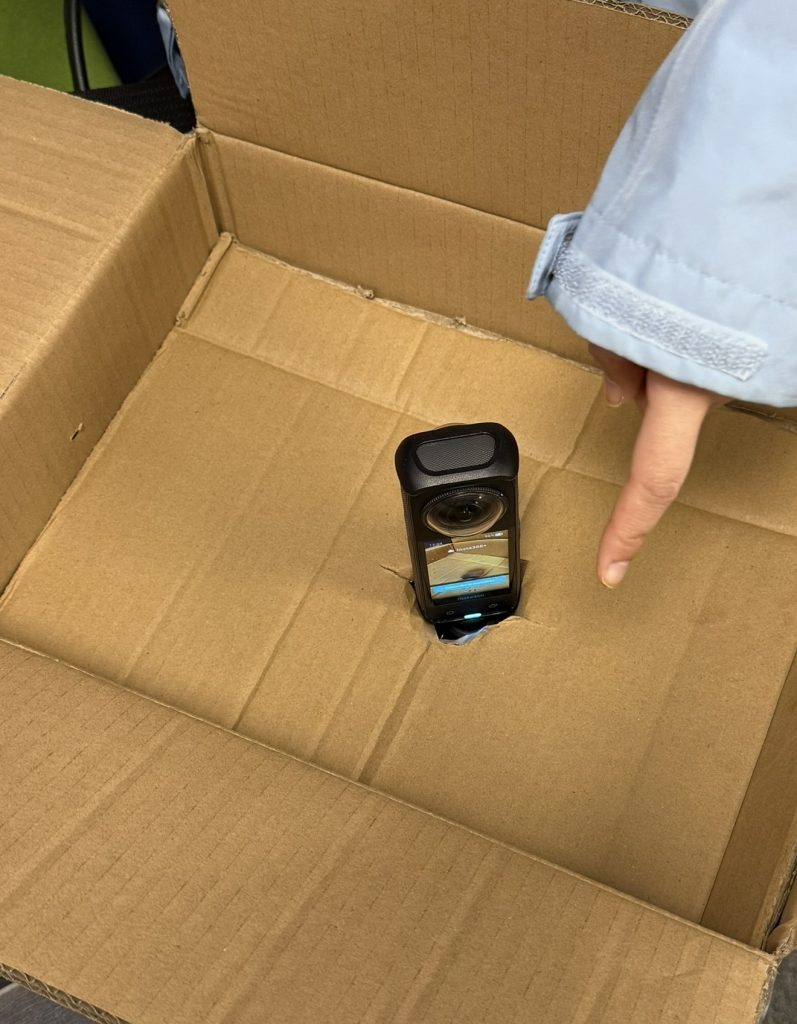
This week, we moved into the production stage of the project, focusing on building the cardboard box, installing the camera, and carrying out the filming. To realise our concept, we designed a box that could conceal the 360° camera while still capturing the reactions of people opening it. We adjusted the internal structure several times to ensure the camera remained hidden without affecting the recording quality.
During filming, we placed the box in a suitable location and recorded participants’ genuine reactions as they opened it. Because the camera was concealed inside the box, many people were unaware that they were being filmed at first, resulting in natural and authentic responses.
In post-production, we made an interesting creative decision: we removed all of the meme images that had originally been placed inside the box. As a result, viewers could only see the participants’ reactions without knowing what they had actually seen. Some people laughed, some looked confused, and others appeared surprised, while the source of these reactions remained hidden.
Do Aliens exist?
This week, we focused on technical testing for the alien project and further clarified how the experience could be implemented. We decided that the current experience would take place in a fixed dance-floor environment, where visitors use an MR headset to see virtual aliens layered onto the real-world space.
During testing, we found that Passthrough Mixed Reality was sufficient for most of our current requirements. Aliens could appear at random positions within the environment, users would not need to return to the same starting location each time, and the aliens could move toward participants, play animations, and perform behaviours within the shared space.
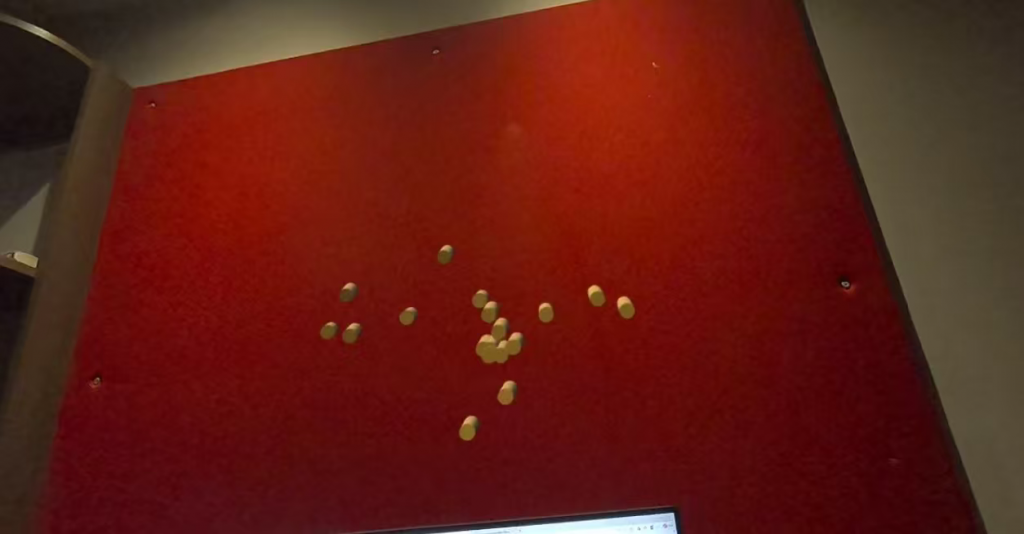
However, we also explored more advanced interactions, such as allowing users to interact with or even shoot at virtual aliens. For these types of interactions, Passthrough alone would not be enough. Spatial Anchors would be required to maintain stable relationships between virtual content and physical space.
To investigate these possibilities, we created a simple shooting prototype in Unity. Through this experiment, we learned about target spawning, raycasting, and basic interaction systems, while also gaining a better understanding of the technical requirements of different MR approaches.