Blog

  • WEEK 2


    XR Stories (continued)

    This week marked the submission of our first project draft, representing a shift from early exploratory discussions toward a proposal that could be clearly articulated, reviewed, and critiqued. Compared to the previous week, which focused more on references and open-ended interests, this draft aimed to define what kind of relationship we wanted to explore, how emotional progression might be structured, and how immersive media could potentially support this narrative.

    In the first draft, we centred the project on changes within a parent–child relationship, particularly how “love” takes different forms across stages of growth. Rather than treating love as a fixed or purely positive force, we approached it as a dynamic relational structure that evolves over time: beginning with protection and dependency, moving through constraint, friction, and compromise, and eventually reaching acceptance, letting go, and mutual growth. We organised this emotional progression into five stages, using the emotional arc itself as the core narrative framework rather than relying on a single plot-driven event.

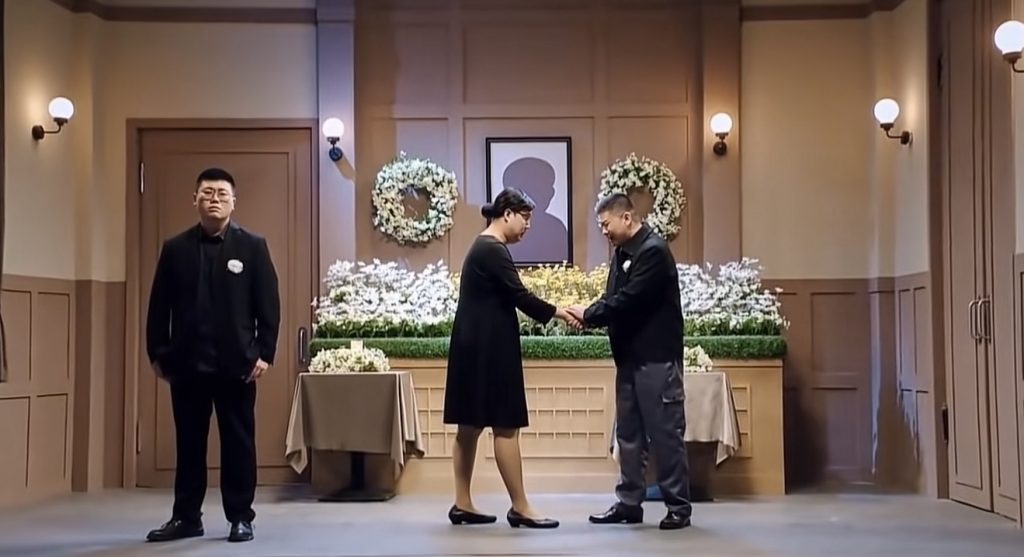
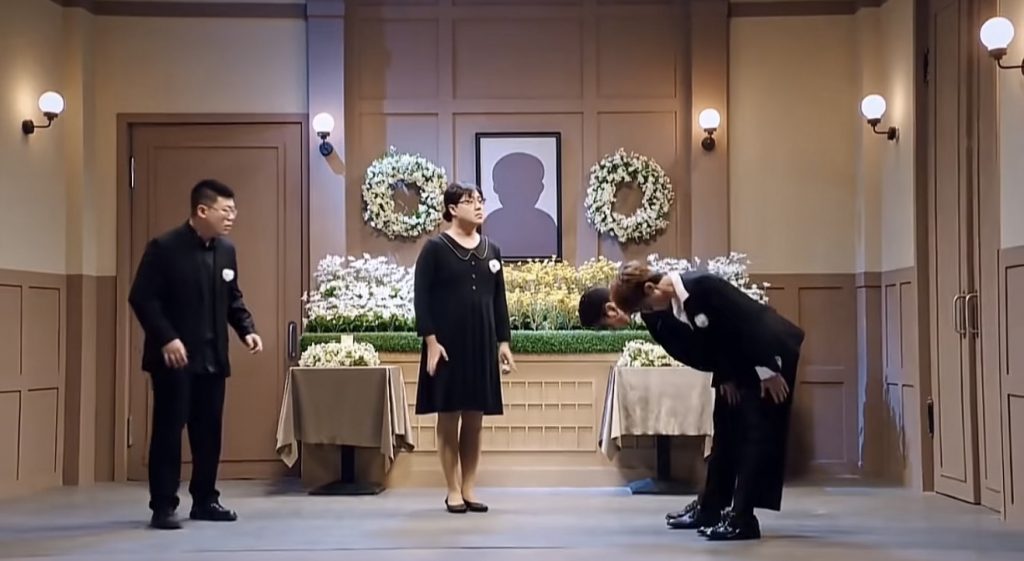
    In terms of narrative setting, we proposed a family ritual—such as a wedding or funeral—as the primary space in which these relational tensions unfold. This type of setting combines public visibility with private emotion, bringing multiple generations, traditions, and personal expectations into the same space. We considered it particularly suitable for immersive storytelling, as it allows emotional pressure and relational imbalance to be spatially experienced rather than simply explained.

    At the level of medium and experience design, the first draft already began to translate emotional dynamics into potential immersive mechanisms. We discussed The Line as a reference for how restricted interaction at critical moments can produce a strong sense of helplessness, and considered whether similar limitations could reflect moments in family relationships that cannot be intervened in or reversed. We also explored early ideas around a “mother” perspective, imagining an experience structured around continuous tasks and accumulating pressure. In this context, failure or loss of control was not framed as error, but as a way to reveal the child’s emerging independence rather than parental inadequacy.

    It is important to note that while this draft established a clear thematic direction, emotional structure, and narrative setting, several aspects remained intentionally unresolved. We had not yet determined the most appropriate experiential viewpoint for the audience—whether the participant should be positioned close to the centre of the conflict or in a more observational role between witnessing and intervention. Similarly, the extent to which interaction should drive narrative progression, as opposed to reinforcing emotional experience, was left open for further testing and feedback.
  • WEEK 2

    Intro to Unity and XR Concepts

    In the second week, we learned the basics of Unity and key XR concepts, which helped me understand how virtual environments are created and experienced.

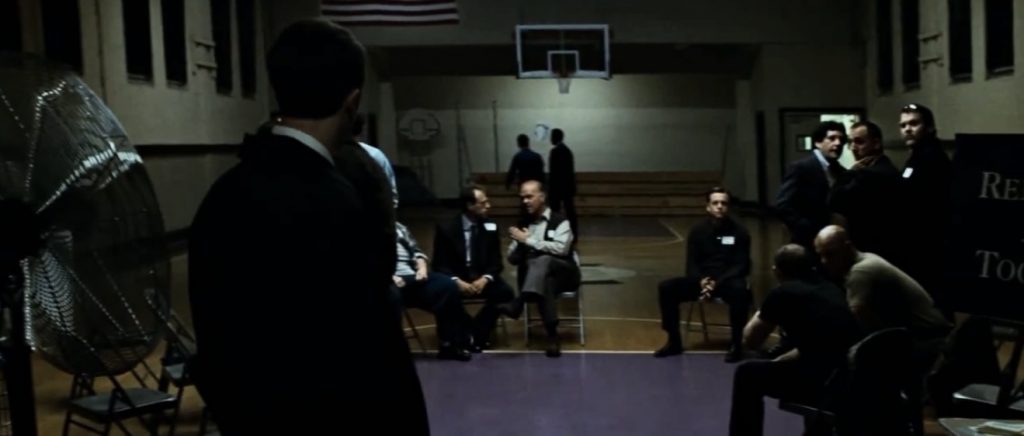
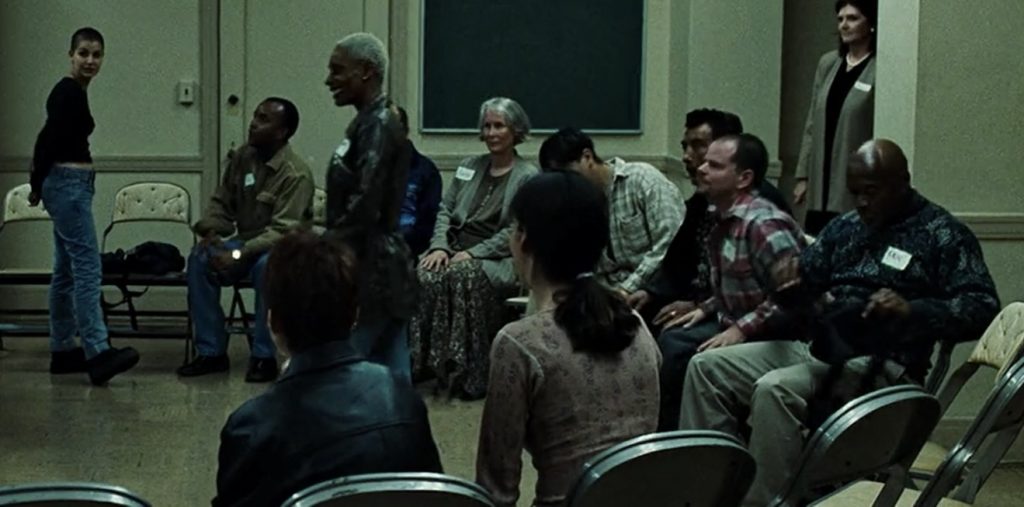
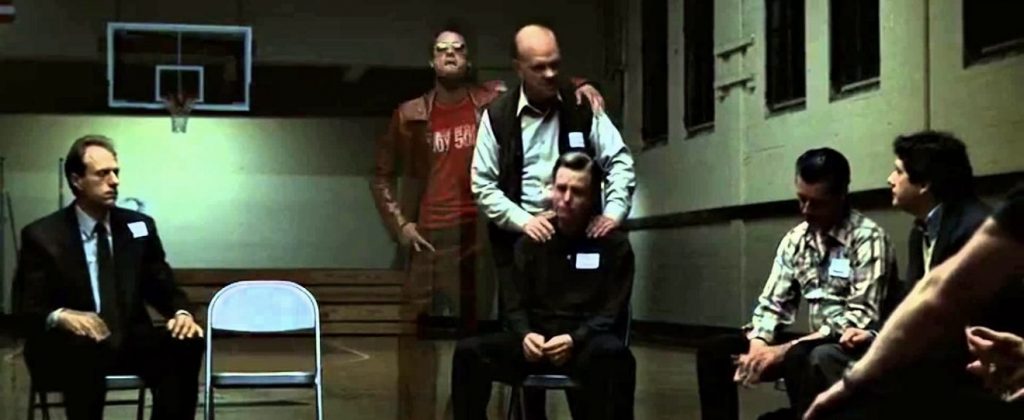
    In terms of the project, we began developing our initial idea. Inspired by the support group scenes in Fight Club, we proposed creating a virtual healing space that focuses on emotional comfort and presence, rather than tasks or gameplay.

    Screenshot
    Screenshot
    Screenshot

  • WEEK 1


    Intro to the unit and XR stories

    In the first week of the project, we did not attempt to define a clear story or final outcome. Instead, our discussions focused on identifying shared interests, emotional themes, and possible narrative approaches. This stage was deliberately open-ended, as we wanted to understand what kinds of experiences and relationships we were interested in exploring before committing to a specific direction.

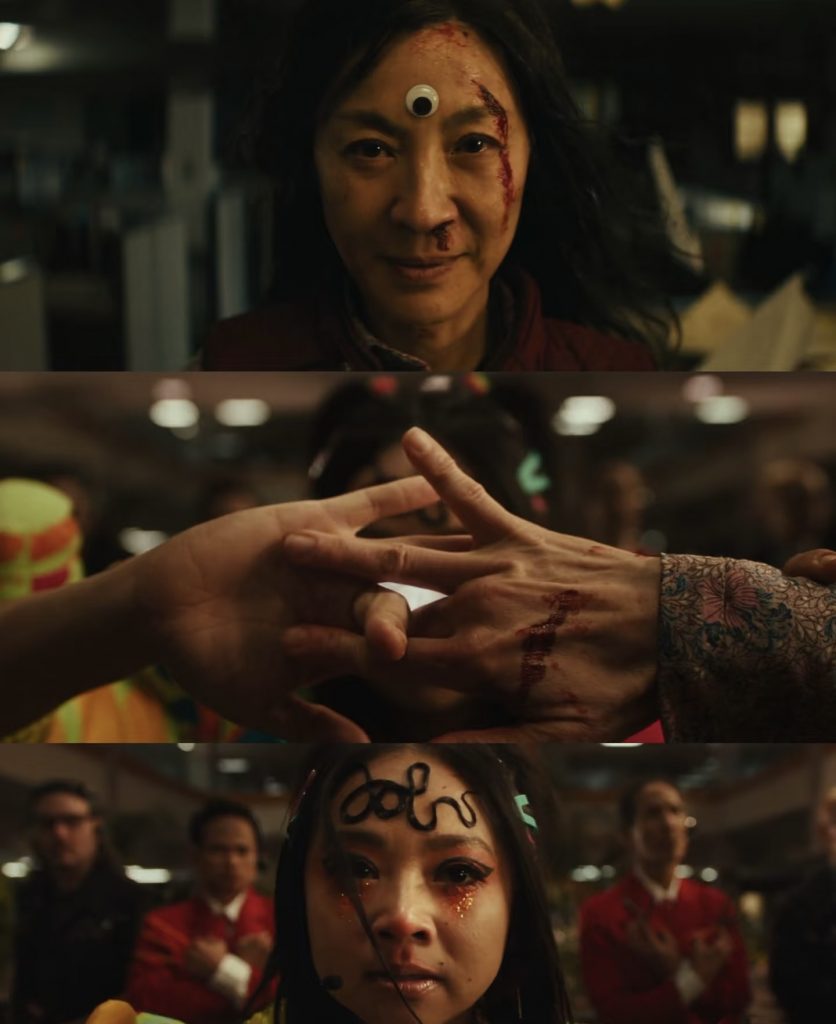
    During these discussions, I contributed by sharing film references that explore emotional expression through unconventional narrative structures. One key reference was Everything Everywhere All at Once. Although the film uses the concept of multiple universes, what interested us most was how fragmentation and narrative excess are used to externalise the characters’ internal emotional states, particularly the tension within a family relationship.

    Through discussing this film, we began to realise that complex emotional experiences do not always need to be communicated through linear storytelling. Instead, structural disruption and shifts in perspective can be used to allow the audience to feel emotional overload rather than simply understand it intellectually. This idea felt especially relevant when thinking about immersive and experiential forms of storytelling.

    At this early stage, these references were not intended to directly inform story content. Rather, they functioned as tools for discussion that helped us think more critically about how narrative can be experienced rather than simply told. We began to question whether immersive media could support emotional and relational storytelling through structure and perspective rather than exposition.

    Overall, Week 1 was exploratory in nature. Our aim was not to reach conclusions, but to open up possible narrative directions that could be developed further in later stages of the project.

    • Breaking linear narrative
    • Narrative fragmentation
    • Emotional overload
    • Structure as expression
    • Experience before understanding

  • WEEK 1

    Intro to the unit and GitHub

    In the first week, we were introduced to GitHub and its basic functions. This was my first time using GitHub, and it made me realise that the development process of a project can be as important as the final outcome.

    Learning about repositories and version control helped me understand GitHub as a tool for documenting changes, experiments, and unfinished ideas. This week showed me that CVPP places emphasis on process rather than just results.