360 film making continued
This week, we began working on our second 360° video project. Unlike our previous work with a fixed camera position, this assignment required dynamic filming, encouraging us to explore movement within immersive storytelling.
After brainstorming, we decided to tell the story from the perspective of a flyer. The audience experiences the narrative as if they were the flyer itself, being picked up, passed between different people, and eventually thrown into a rubbish bin. Through the flyer’s journey, we aimed to reveal brief but interesting connections between different characters.
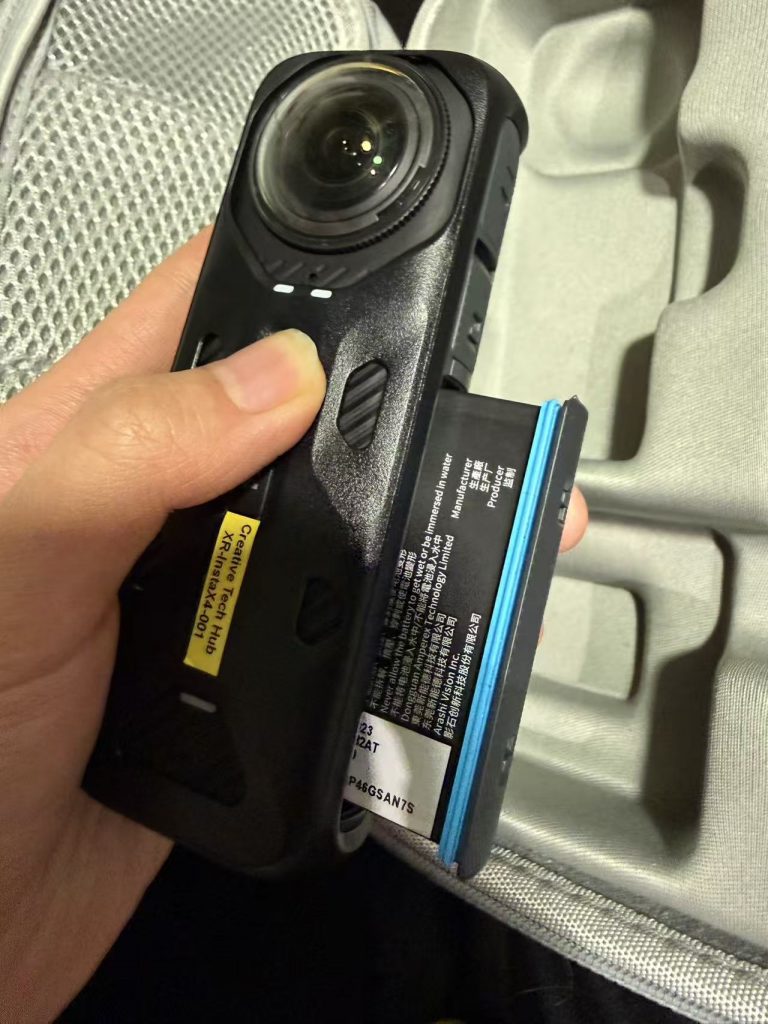
To improve the production quality, we used a more advanced Insta360 camera system. Compared with the equipment we had used previously, it provided better image quality, stabilisation, and support for dynamic filming, allowing us to capture moving shots more effectively and create a smoother viewing experience.
This project encouraged me to think about the possibilities of non-human perspectives in immersive storytelling. Although the flyer cannot speak or act, it serves as a link between different people and locations, allowing the audience to observe the story through its journey. The exercise also helped me gain a deeper understanding of camera movement and audience experience in 360° video production.
Alien Project
This week, we began brainstorming ideas for our art festival project. As our team shared an interest in music, interactive experiences, and immersive technology, our early discussions focused on the relationship between music and XR experiences.
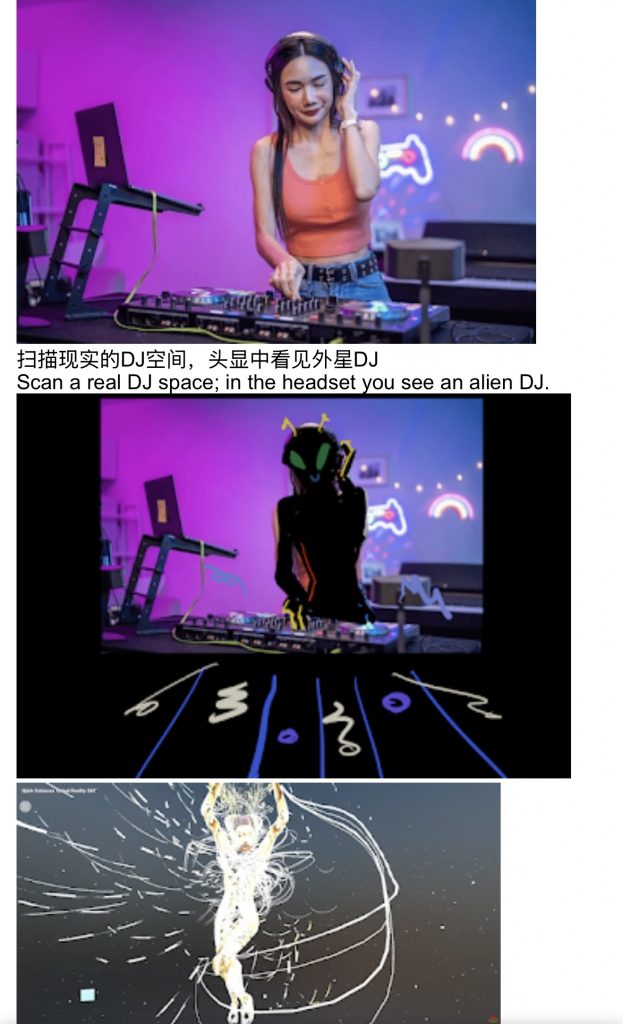
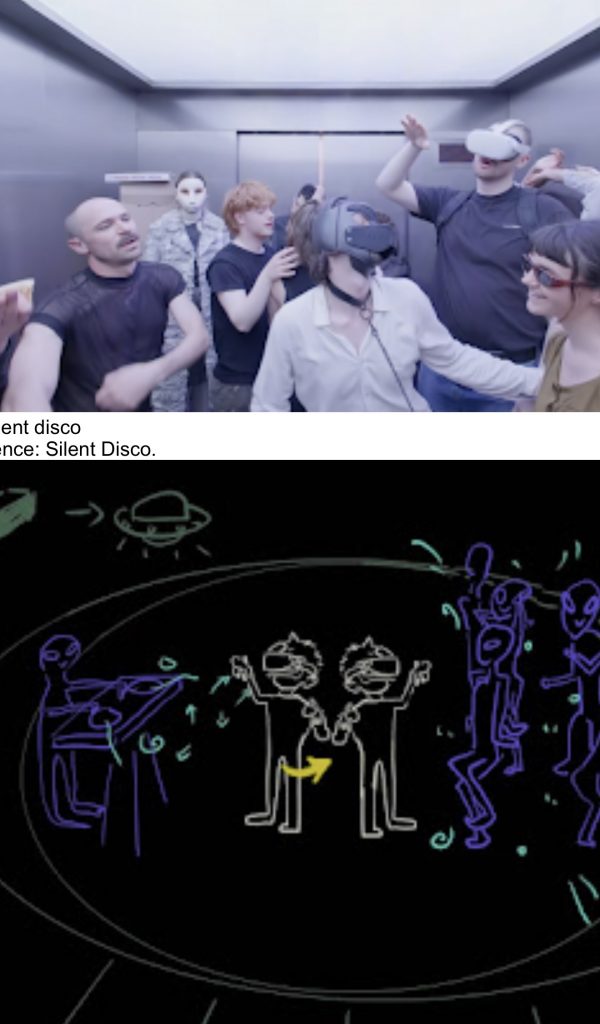
One concept combined DJ performance with an alien theme. Participants would scan a real DJ space and then use an MR headset to discover an alien DJ hidden within the environment. Visual sound waves and symbolic cues would appear alongside the music, encouraging participants to interact and dance. We were inspired by Björk’s 360° music videos and wanted to explore the connection between music, movement, and immersive space.
Another concept focused on discovering hidden “alien signals” within everyday objects. Participants would first notice strange behaviours from real-world installations, such as flickering lights or moving devices. After putting on a headset, they would discover that invisible aliens were responsible for these unusual events, revealing a hidden layer of reality.
We also discussed AR concepts that could transform passers-by into aliens and other interactive experiences combining extraterrestrial themes with everyday life.
Leave a Reply