Author: Ziyu Yang

  • WEEK 4

    Storyboarding and Event List

    In Week 4, the course focused primarily on the analysis and discussion of VR narrative case studies. Rather than producing new material, this week functioned as a period of methodological input, helping us understand how immersive narratives are structured and experienced. For us, this stage was less about advancing the final form of the project and more about building a conceptual framework for thinking about VR storytelling.

    Through the examination of various XR narrative examples, we were introduced to an event-based way of understanding immersive storytelling. Unlike traditional scripts that rely on linear plot progression, VR narratives are often structured around the participant’s position, access to information, and the actions they are allowed or prevented from performing at any given moment. This perspective highlighted that narrative meaning in VR can emerge from the sequencing of experiences and shifts in viewpoint, rather than from explicit causal storytelling.
    Alongside this theoretical input, our group continued to develop an initial XR story draft, resulting in a preliminary treatment. This version focused on three interconnected themes: growing up and letting go, the tension between love and independence, and the ways families express care. We aimed to explore these themes through a symbolic narrative approach that could translate emotional relationships into immersive experience.

    At the centre of the story is a symbolic “dog,” originally given by a mother to her daughter during childhood and consistently treated as real by the family. Whether the dog would ultimately take the form of a toy, a real pet, or a symbolic presence remained under discussion. At this stage, our interest lay primarily in its emotional function: representing protection, attachment, and the responsibility that is gradually transferred from parent to child as independence emerges.

    Structurally, we began experimenting with a multi-perspective framework in which the participant experiences the story through different roles. The player would initially occupy more observational positions before transitioning into roles that are directly involved in the emotional dynamics, such as the mother or the bride. Certain key scenes were conceived as recurring narrative nodes, reappearing across perspectives to reinforce symbolic meaning rather than to advance plot in a conventional sense.

    At this point, the narrative structure was still fluid and unresolved. Questions remained regarding the precise form of the dog as a symbol and whether the accumulation of perspectives and symbolic layers might complicate the experiential clarity of the story. However, these uncertainties were understood as part of the exploratory process. The case studies discussed in class encouraged us to think of narrative not as a fixed text, but as a sequence of experiential events that would need to be tested and refined through design.

  • WEEK 4

    Unity VR Meta All In One

    This week, we further defined the game flow of the project. Initially, we designed five levels, each representing a different stage of the experience, guiding users from entering the space through emotional regulation, externalisation, and closure.

    By mapping out the flow through sketches, we began translating the idea of a “healing space” into a structured interactive experience, and reflected on how pacing and progression affect emotional engagement.

  • WEEK 3

    XR Stories (continued)

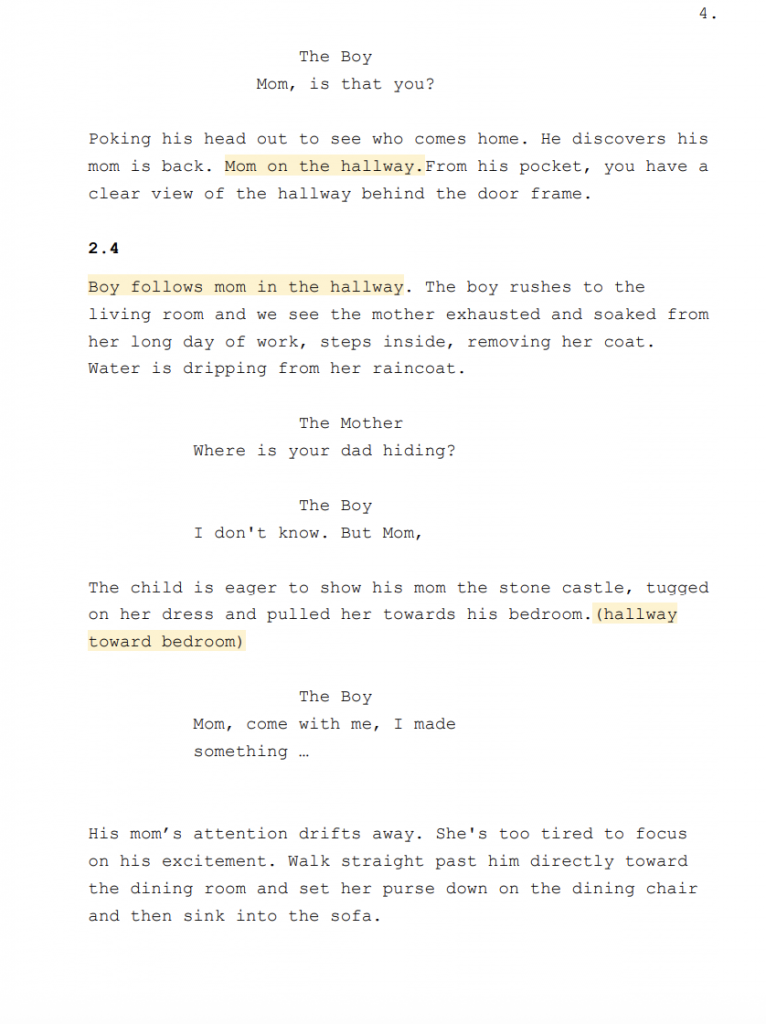
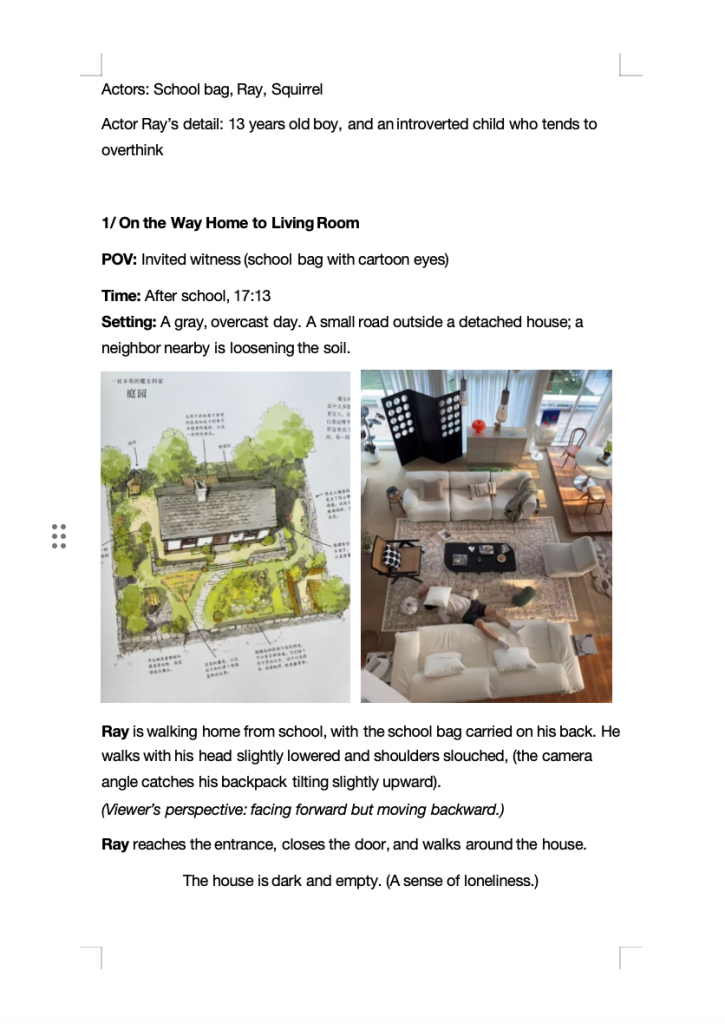
    In Week 3, we began to develop a more structured understanding of the basic components of a script. Through a small script practice exercise, we moved beyond abstract discussions of theme and emotion and started to break narrative down into concrete, executable elements, including point of view (POV), time, space, character relationships, and the position of the audience within the experience.

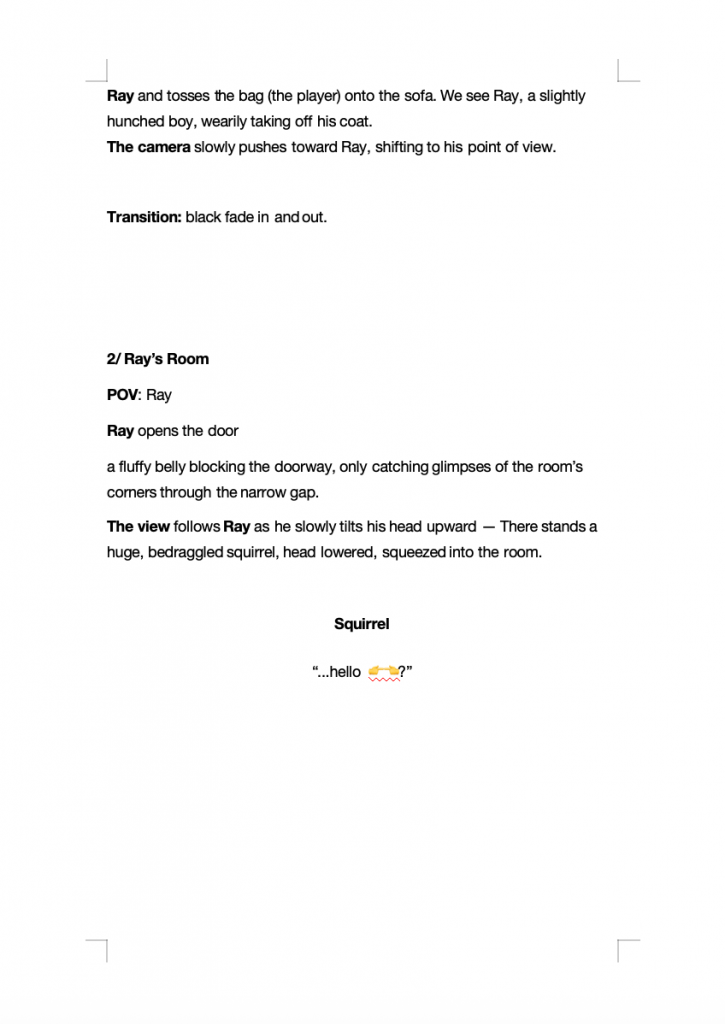
    The exercise was built around a simple everyday scenario: a 13-year-old boy returning home from school. A clear experiential point of view was required, so we experimented with a non-human but carried witness perspective—the school bag. The audience entered the story from the position of the bag on the boy’s back, passively following his movement without the ability to intervene. This setup helped us understand that narrative does not necessarily rely on inner monologue or complex plot progression; emotional atmosphere can be established through perspective, action, and spatial transition alone.

    During the exercise, we paid particular attention to shifts in point of view and emotional progression. The first part positioned the audience as an “invited witness” entering the domestic space, using emptiness and low light to suggest isolation. This then transitioned into the character’s first-person perspective, bringing the audience closer to the boy’s internal state. In the second scene, a sudden change in spatial scale—contrasting the small bedroom with an oversized squirrel figure—was used to create a sense of imbalance and unease, rather than relying on explicit narrative explanation.

    This practice made it clear to us that a script is not defined only by what happens, but by how perspective, pacing, and experiential positioning shape emotional understanding. Even within a short exercise, choices around POV, transitions, and spatial relationships significantly affected how the scene was perceived.


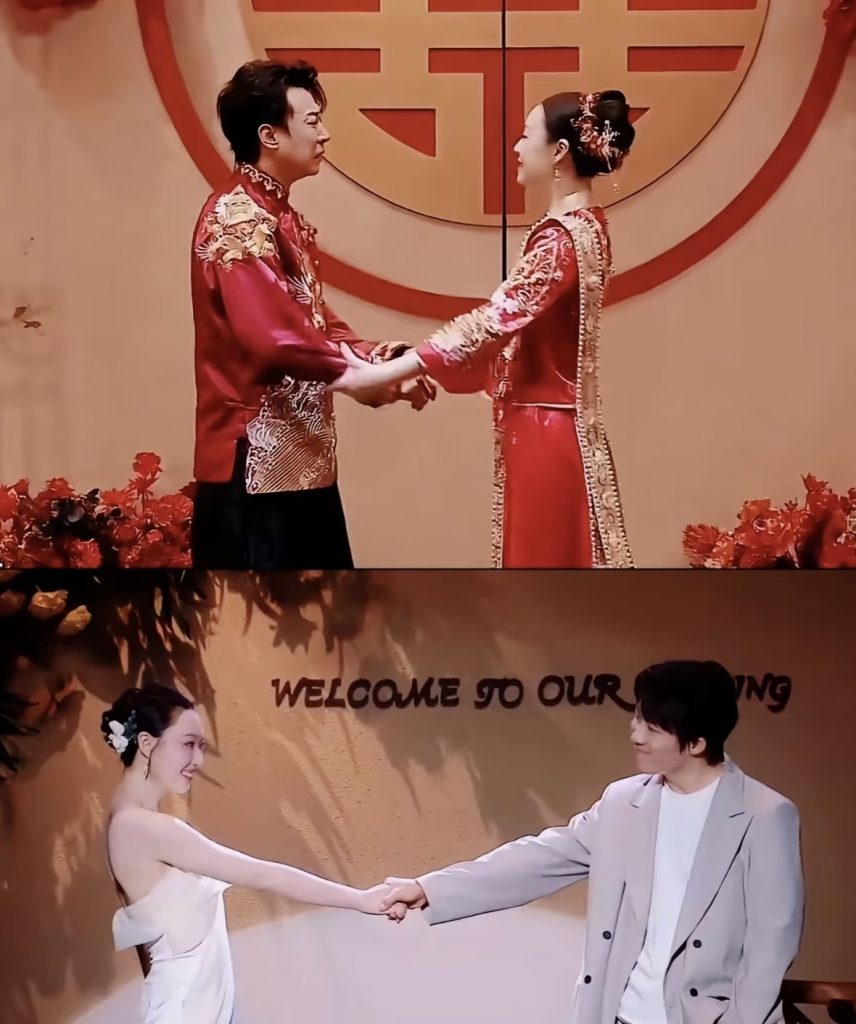
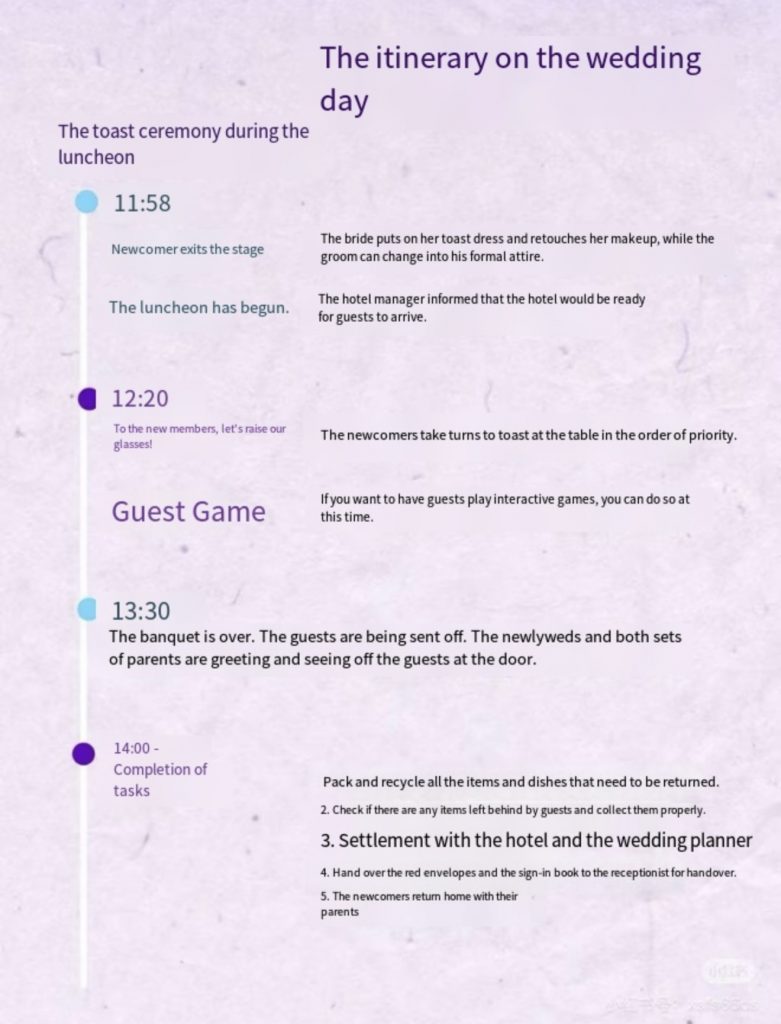
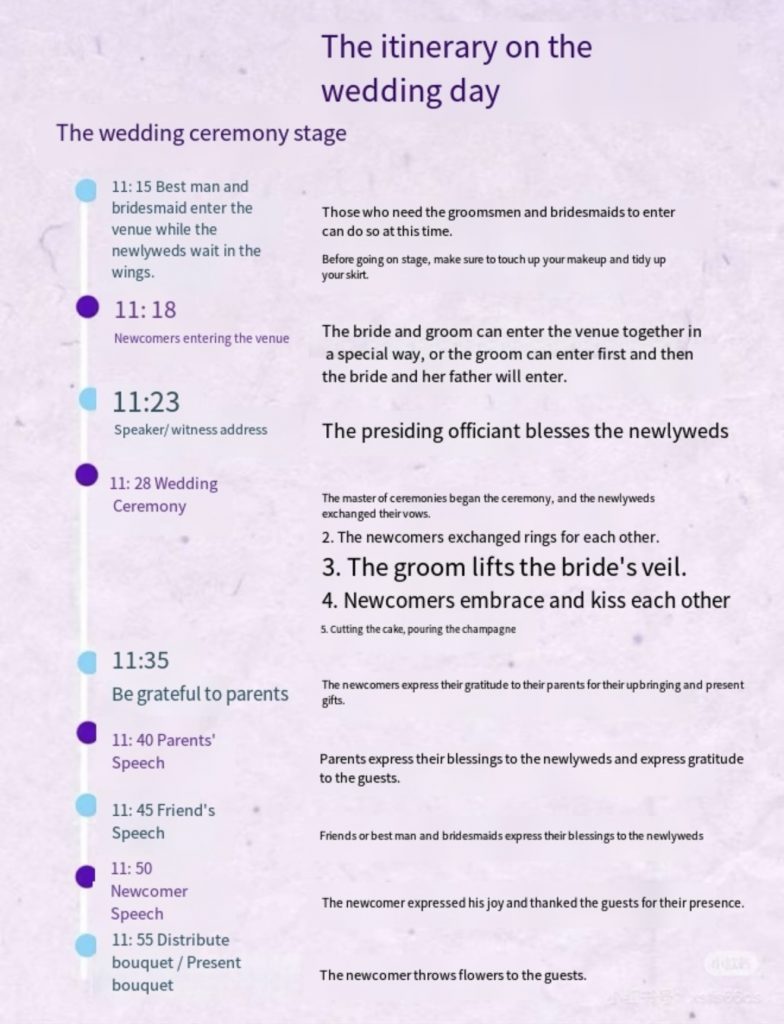
    At the project level, this week also marked an important decision. Building on the discussions of the previous two weeks, we formally confirmed the wedding as the core theme and narrative context of our project. Through the script exercise, we began to recognise that a wedding, like the practice scenario, is highly dependent on perspective and spatial relationships. Different positions within the same event allow access to different information, levels of agency, and emotional intensity. This reinforced our decision to situate changes in family relationships within a ritualised and highly structured social space.

  • WEEK 3

    Level Design, Unity VR Meta All in One SDK and Intro to Mocap

    In the third week, we learned about level design, the Unity VR Meta All-in-One SDK, and had an introduction to motion capture (Mocap). This helped me understand how scale, spatial layout, and bodily movement can influence emotional experience in VR.

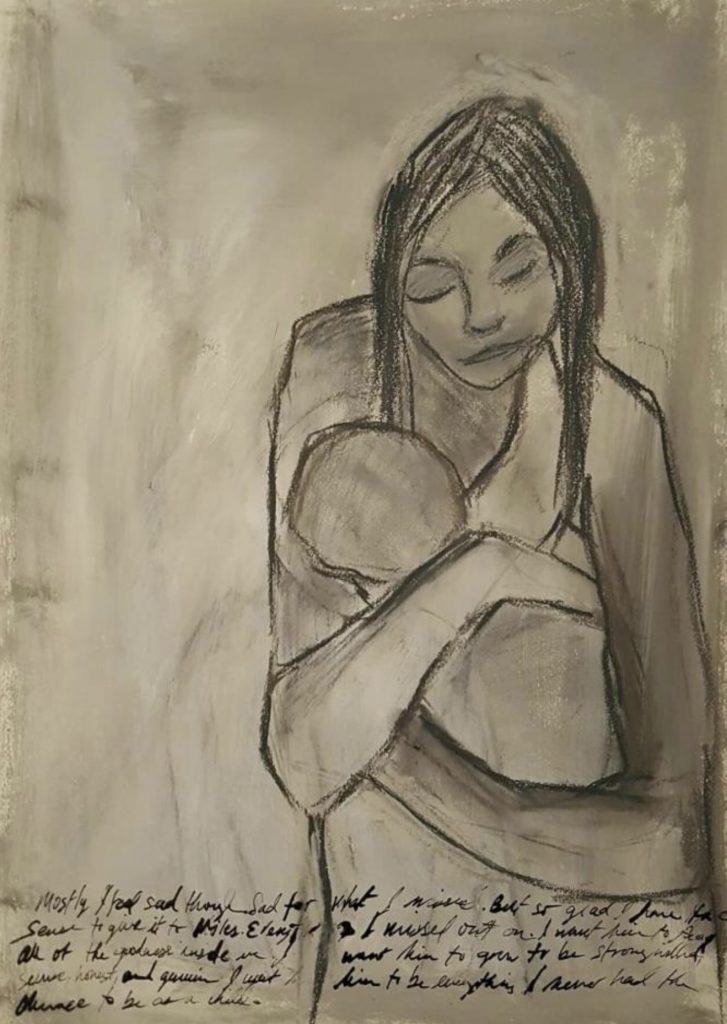
    For the project, we continued discussing the theme and direction. At this stage, we tentatively decided to focus on postpartum depression as the primary group, and explored how a virtual healing space might respond to their emotional and psychological needs.

    Screenshot
  • WEEK 2


    XR Stories (continued)

    This week marked the submission of our first project draft, representing a shift from early exploratory discussions toward a proposal that could be clearly articulated, reviewed, and critiqued. Compared to the previous week, which focused more on references and open-ended interests, this draft aimed to define what kind of relationship we wanted to explore, how emotional progression might be structured, and how immersive media could potentially support this narrative.

    In the first draft, we centred the project on changes within a parent–child relationship, particularly how “love” takes different forms across stages of growth. Rather than treating love as a fixed or purely positive force, we approached it as a dynamic relational structure that evolves over time: beginning with protection and dependency, moving through constraint, friction, and compromise, and eventually reaching acceptance, letting go, and mutual growth. We organised this emotional progression into five stages, using the emotional arc itself as the core narrative framework rather than relying on a single plot-driven event.

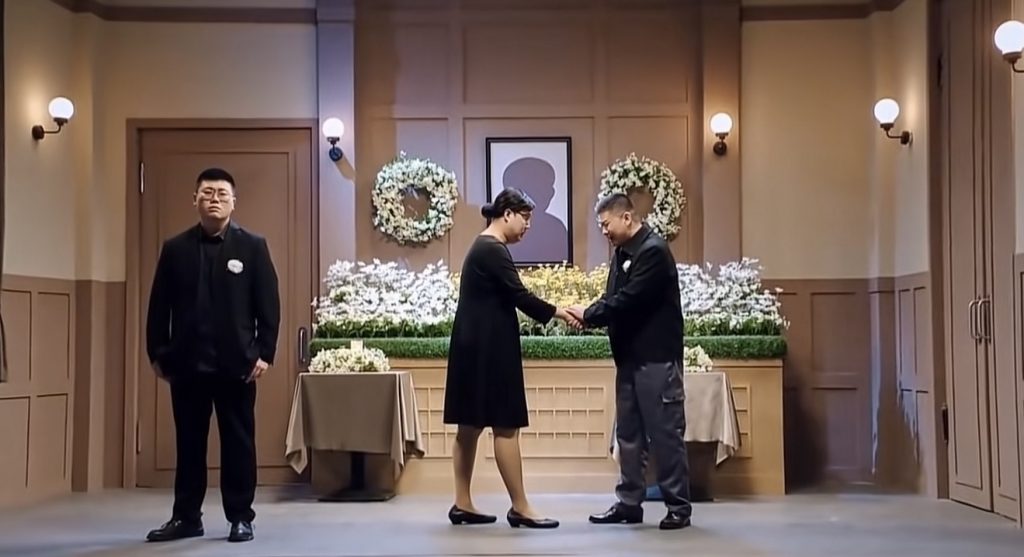
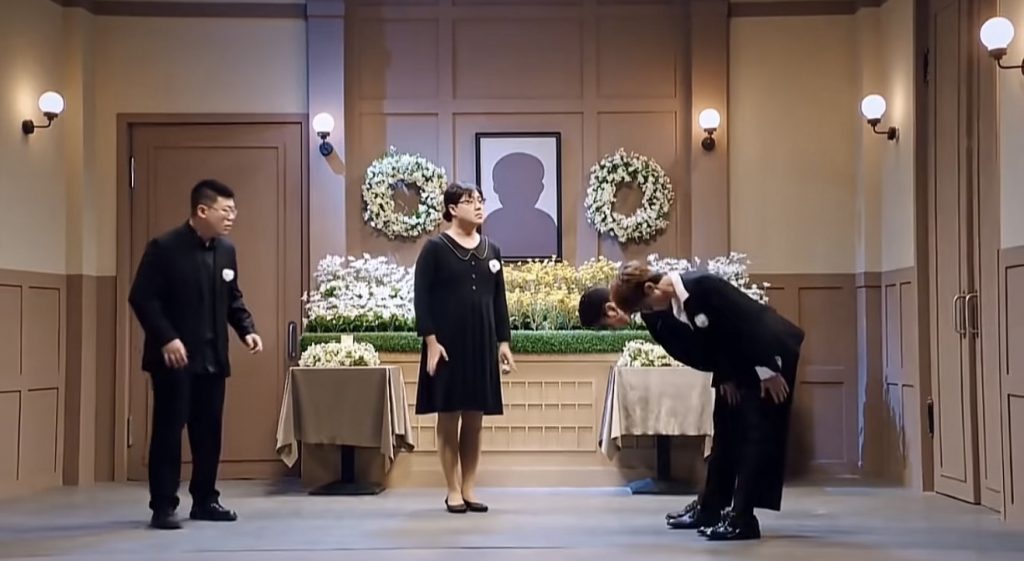
    In terms of narrative setting, we proposed a family ritual—such as a wedding or funeral—as the primary space in which these relational tensions unfold. This type of setting combines public visibility with private emotion, bringing multiple generations, traditions, and personal expectations into the same space. We considered it particularly suitable for immersive storytelling, as it allows emotional pressure and relational imbalance to be spatially experienced rather than simply explained.

    At the level of medium and experience design, the first draft already began to translate emotional dynamics into potential immersive mechanisms. We discussed The Line as a reference for how restricted interaction at critical moments can produce a strong sense of helplessness, and considered whether similar limitations could reflect moments in family relationships that cannot be intervened in or reversed. We also explored early ideas around a “mother” perspective, imagining an experience structured around continuous tasks and accumulating pressure. In this context, failure or loss of control was not framed as error, but as a way to reveal the child’s emerging independence rather than parental inadequacy.

    It is important to note that while this draft established a clear thematic direction, emotional structure, and narrative setting, several aspects remained intentionally unresolved. We had not yet determined the most appropriate experiential viewpoint for the audience—whether the participant should be positioned close to the centre of the conflict or in a more observational role between witnessing and intervention. Similarly, the extent to which interaction should drive narrative progression, as opposed to reinforcing emotional experience, was left open for further testing and feedback.

  • WEEK 2

    Intro to Unity and XR Concepts

    In the second week, we learned the basics of Unity and key XR concepts, which helped me understand how virtual environments are created and experienced.

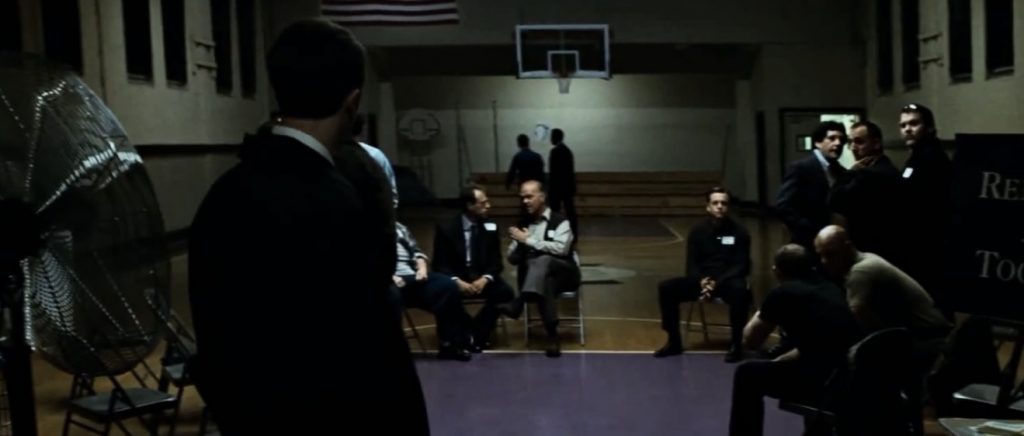
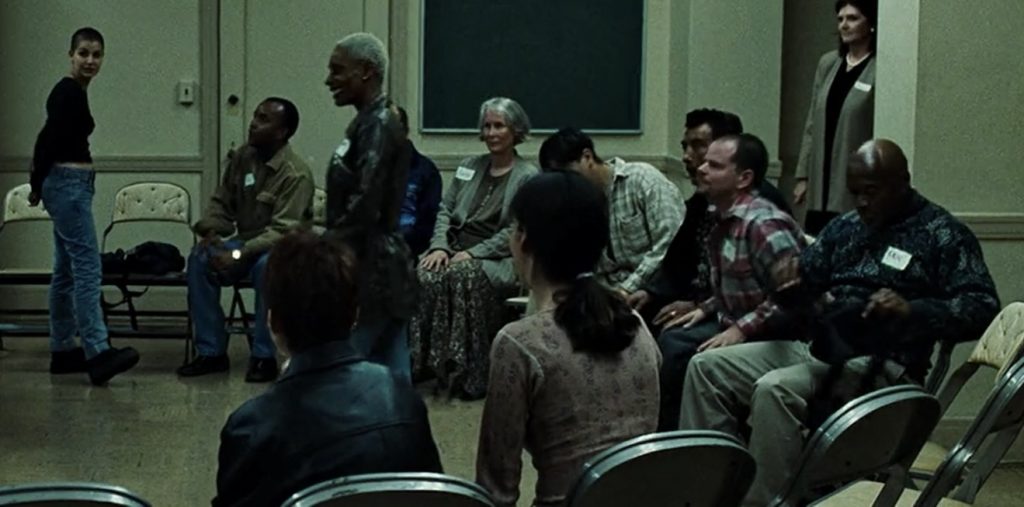
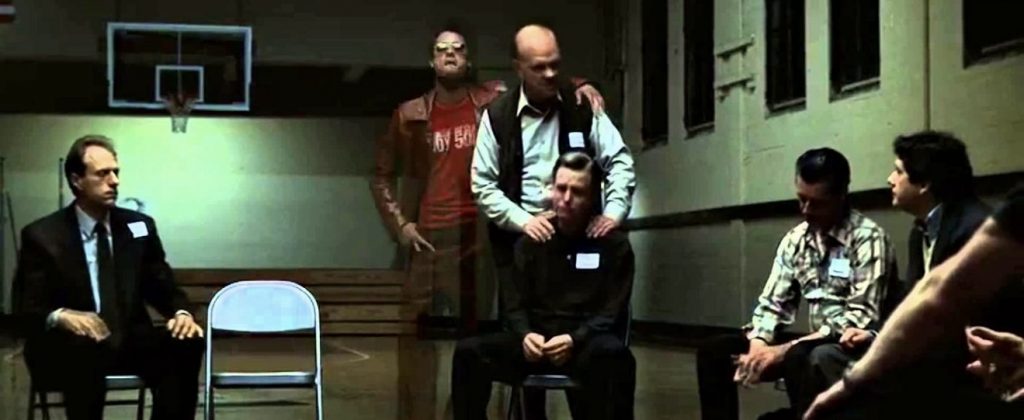
    In terms of the project, we began developing our initial idea. Inspired by the support group scenes in Fight Club, we proposed creating a virtual healing space that focuses on emotional comfort and presence, rather than tasks or gameplay.

    Screenshot
    Screenshot
    Screenshot
  • WEEK 1


    Intro to the unit and XR stories

    In the first week of the project, we did not attempt to define a clear story or final outcome. Instead, our discussions focused on identifying shared interests, emotional themes, and possible narrative approaches. This stage was deliberately open-ended, as we wanted to understand what kinds of experiences and relationships we were interested in exploring before committing to a specific direction.

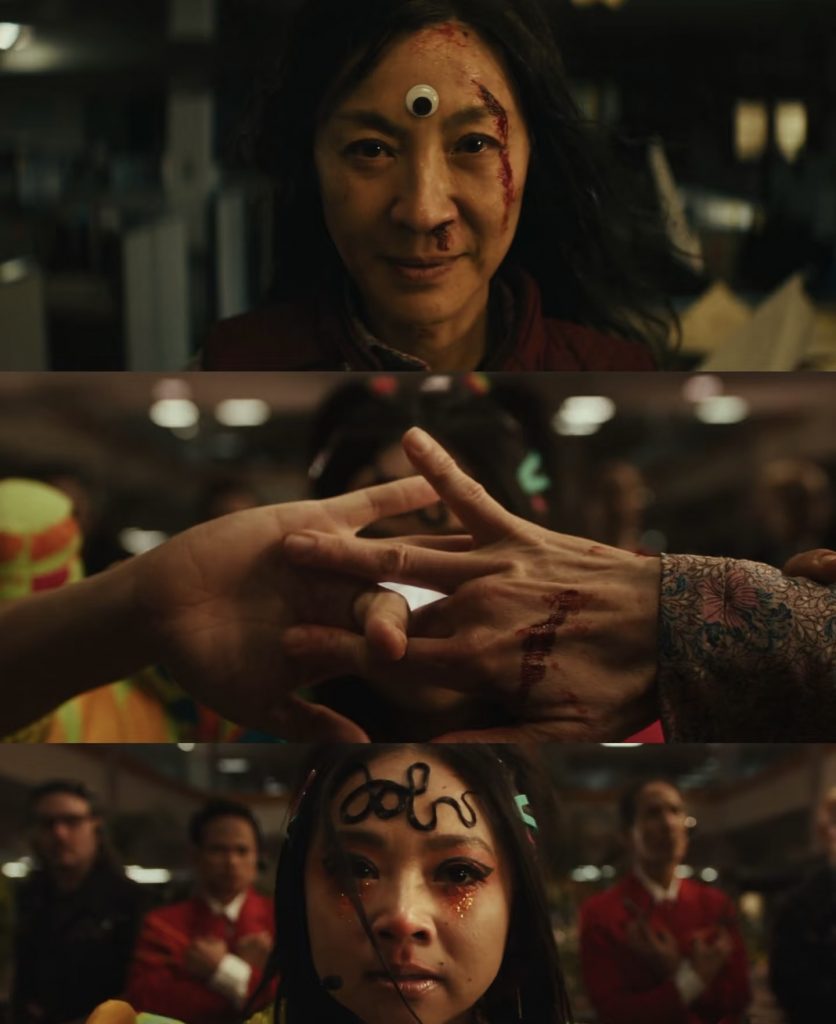
    During these discussions, I contributed by sharing film references that explore emotional expression through unconventional narrative structures. One key reference was Everything Everywhere All at Once. Although the film uses the concept of multiple universes, what interested us most was how fragmentation and narrative excess are used to externalise the characters’ internal emotional states, particularly the tension within a family relationship.

    Through discussing this film, we began to realise that complex emotional experiences do not always need to be communicated through linear storytelling. Instead, structural disruption and shifts in perspective can be used to allow the audience to feel emotional overload rather than simply understand it intellectually. This idea felt especially relevant when thinking about immersive and experiential forms of storytelling.

    At this early stage, these references were not intended to directly inform story content. Rather, they functioned as tools for discussion that helped us think more critically about how narrative can be experienced rather than simply told. We began to question whether immersive media could support emotional and relational storytelling through structure and perspective rather than exposition.

    Overall, Week 1 was exploratory in nature. Our aim was not to reach conclusions, but to open up possible narrative directions that could be developed further in later stages of the project.

    • Breaking linear narrative
    • Narrative fragmentation
    • Emotional overload
    • Structure as expression
    • Experience before understanding

  • WEEK 1

    Intro to the unit and GitHub

    In the first week, we were introduced to GitHub and its basic functions. This was my first time using GitHub, and it made me realise that the development process of a project can be as important as the final outcome.

    Learning about repositories and version control helped me understand GitHub as a tool for documenting changes, experiments, and unfinished ideas. This week showed me that CVPP places emphasis on process rather than just results.