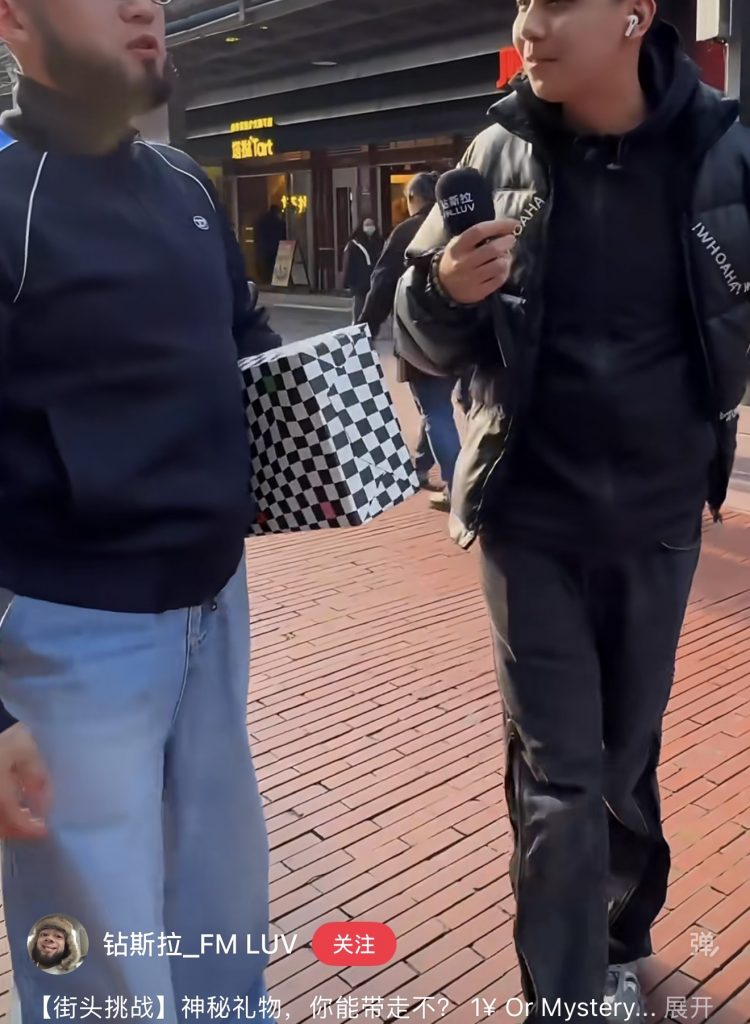
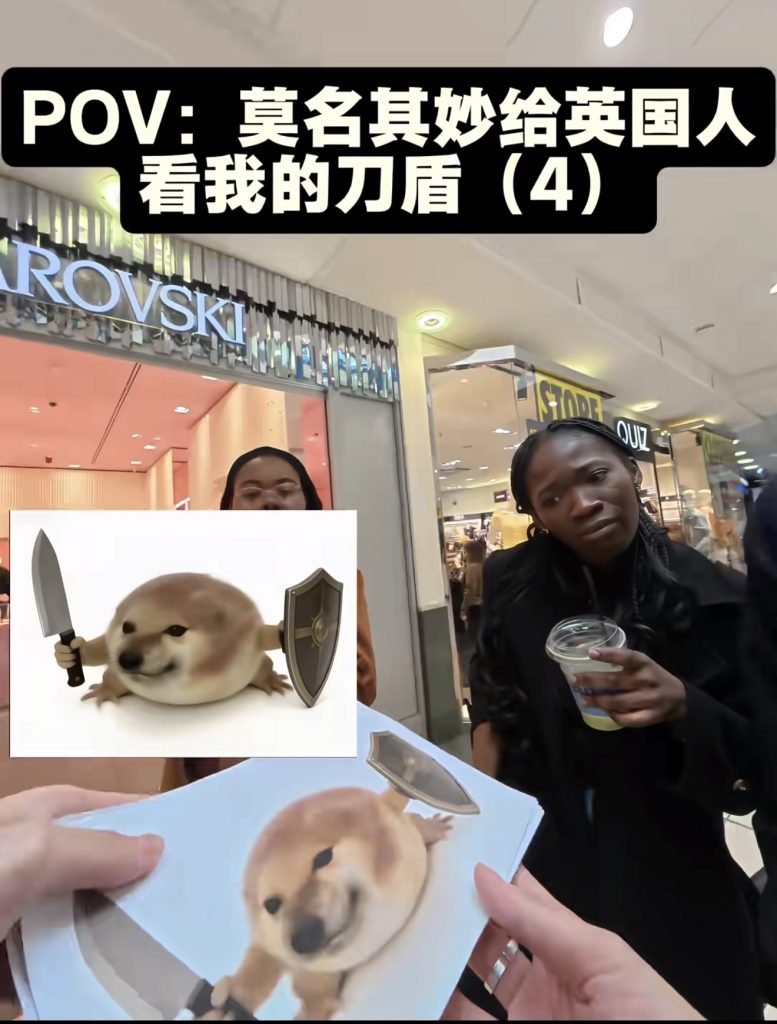
This week, we further developed our cardboard box experiment and decided to place a selection of internet memes and humorous visual content inside the box. Our goal was to use these playful materials to spark curiosity and observe people’s immediate reactions when opening it.
During filming, the 360° camera was hidden inside the box, allowing us to capture participants’ facial expressions and behaviour as they discovered the contents. To ensure ethical practice and respect for privacy, we explained the project to participants after filming and obtained their consent before using any footage in the final work.
The responses were varied and often entertaining. Some participants laughed immediately, others appeared confused, and some shared the experience with friends nearby. These genuine reactions became one of the most valuable aspects of the project.
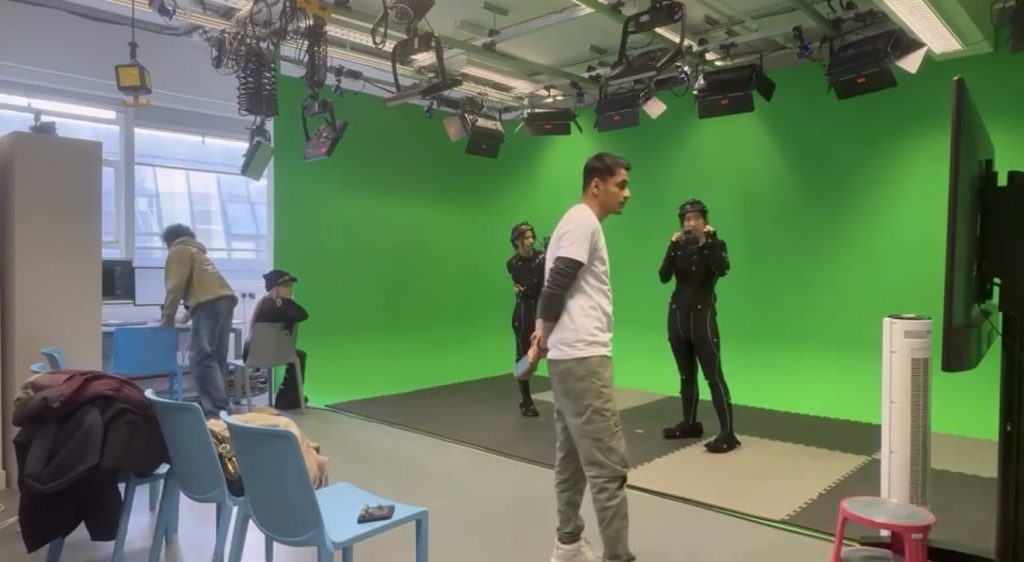
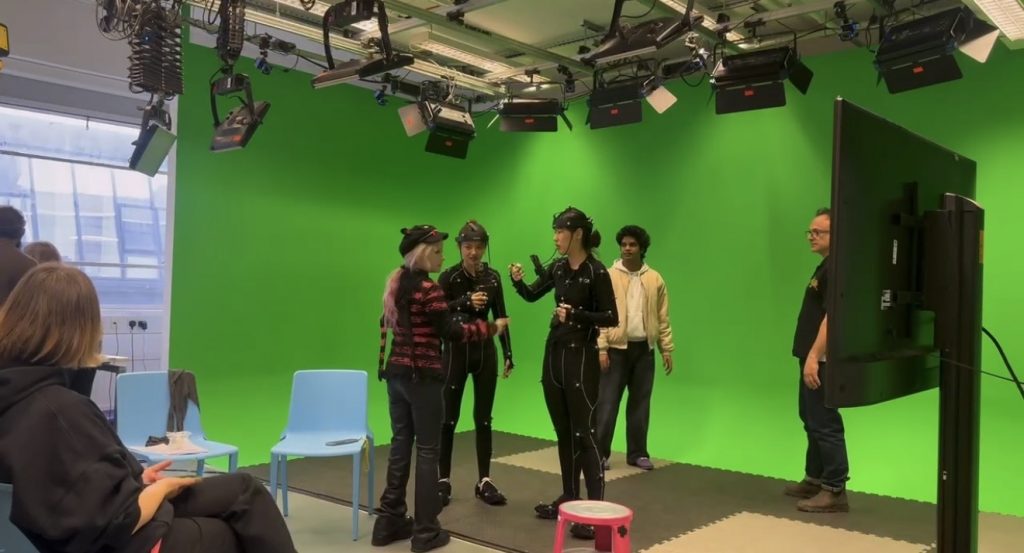
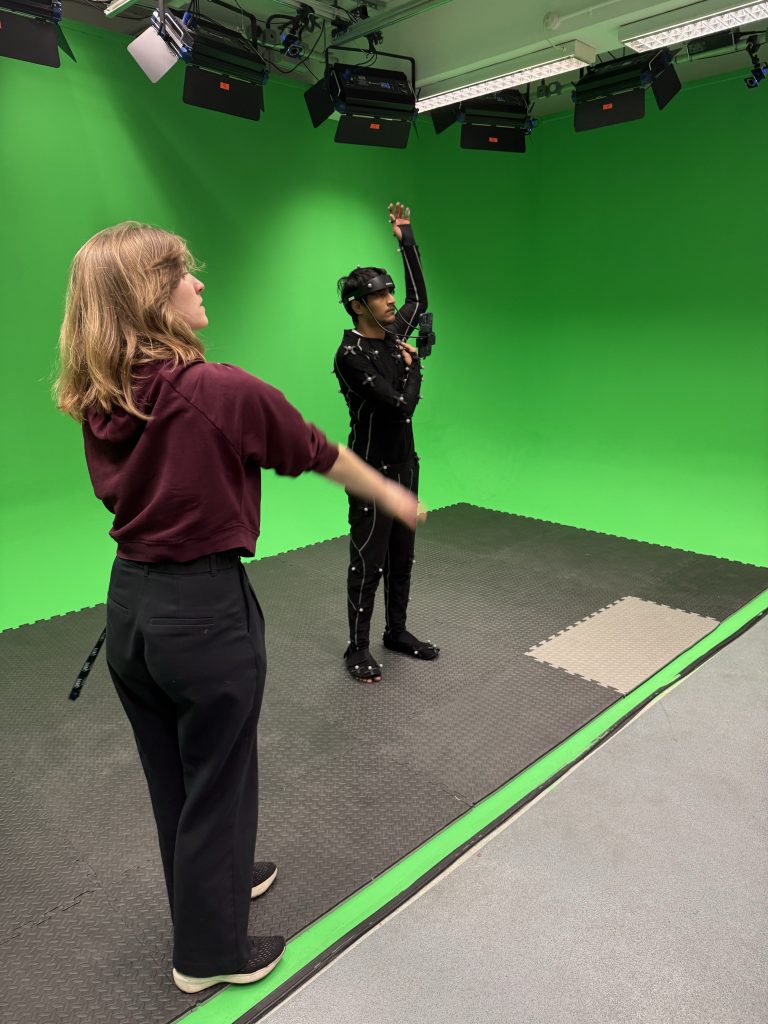
In Week 7, we completed our motion capture shoots.
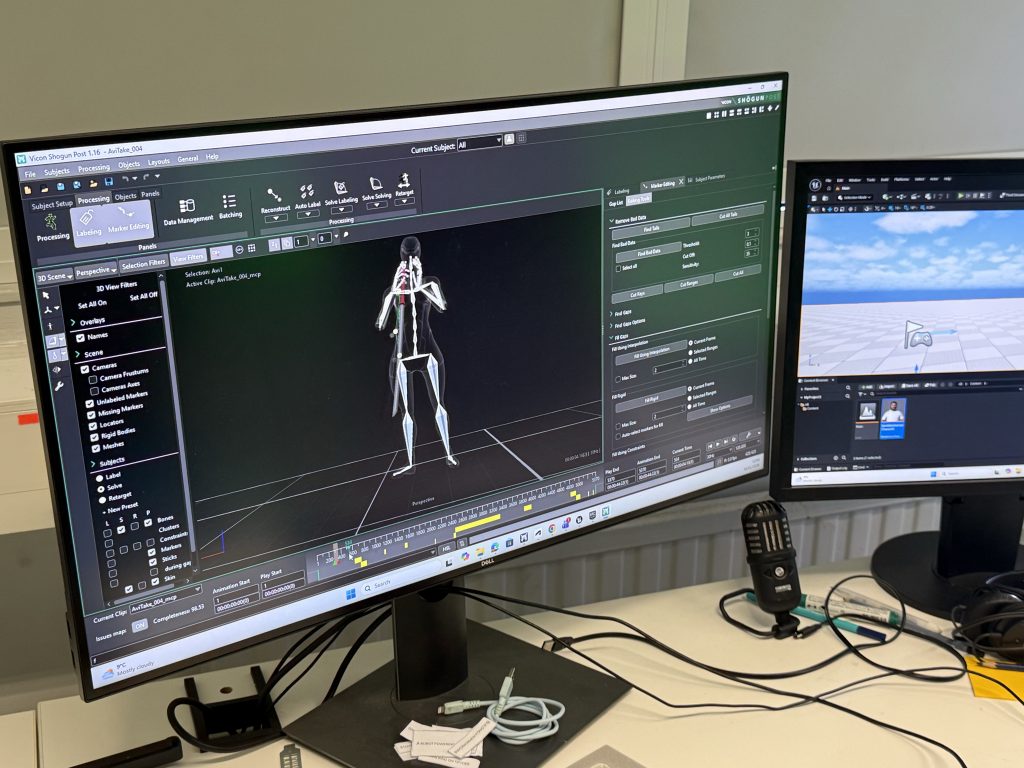
We recorded the remaining sequences, downloaded the motion data, and tested them in real-time software such as Unreal Engine to understand timing and scene setup.
Screenshot
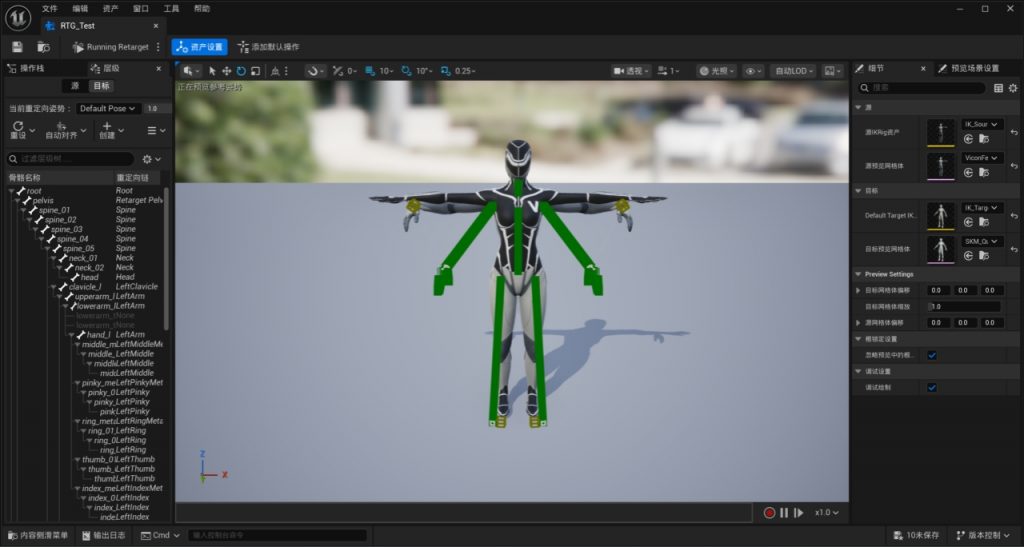
I also retargeted the motion data onto the characters in Unreal Engine.
This week, following feedback from our tutor, we reconsidered the narrative approach of our flyer project. Although the flyer perspective was interesting, the tutor suggested that audiences might find it difficult to form a strong connection with the object itself. As a result, we decided to revise the concept and explore a more direct and engaging approach.
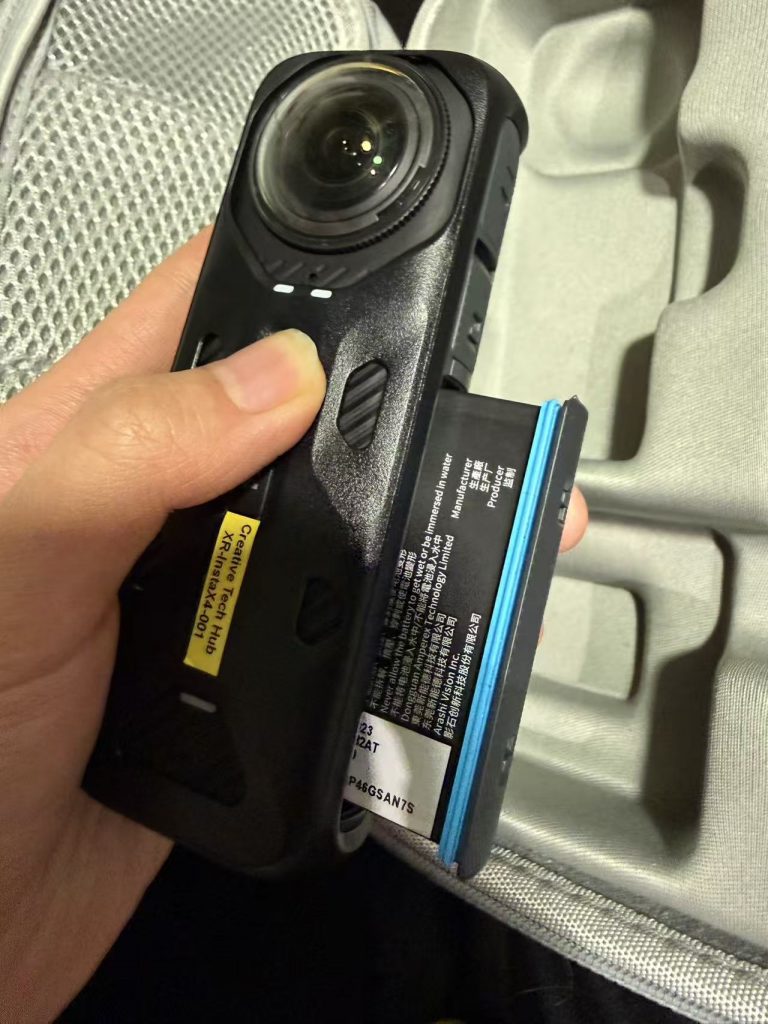
After discussion, we abandoned the flyer narrative and instead developed a project inspired by street interviews and social experiments. Our idea was to hide a 360° camera inside a cardboard box and place it in a public space. When passers-by opened the box out of curiosity, the camera would capture their genuine and spontaneous reactions.
Compared with the original flyer concept, this new approach focused more on human behaviour and curiosity when encountering something unknown. We were interested in observing how different people responded: some might open the box immediately, others might be cautious, while some could invite friends to explore it together.
ScreenshotScreenshot
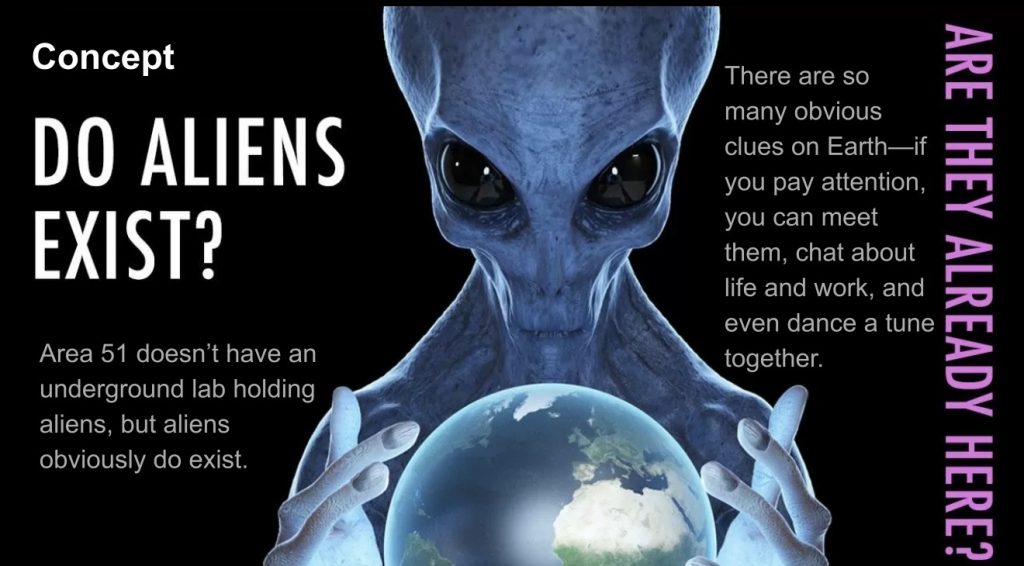
Do Aliens Exist?
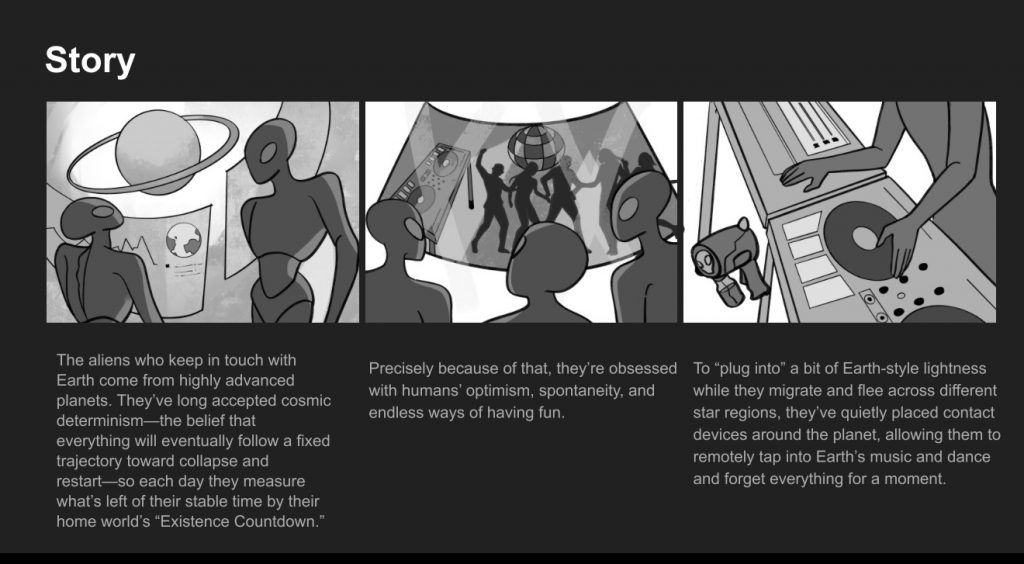
This week, we further developed our art festival project and began shaping the concept that would eventually become Do Aliens Exist?. Building on our earlier interest in music, DJs, and immersive experiences, we started exploring a new question: what if aliens were already around us, but invisible to ordinary perception?
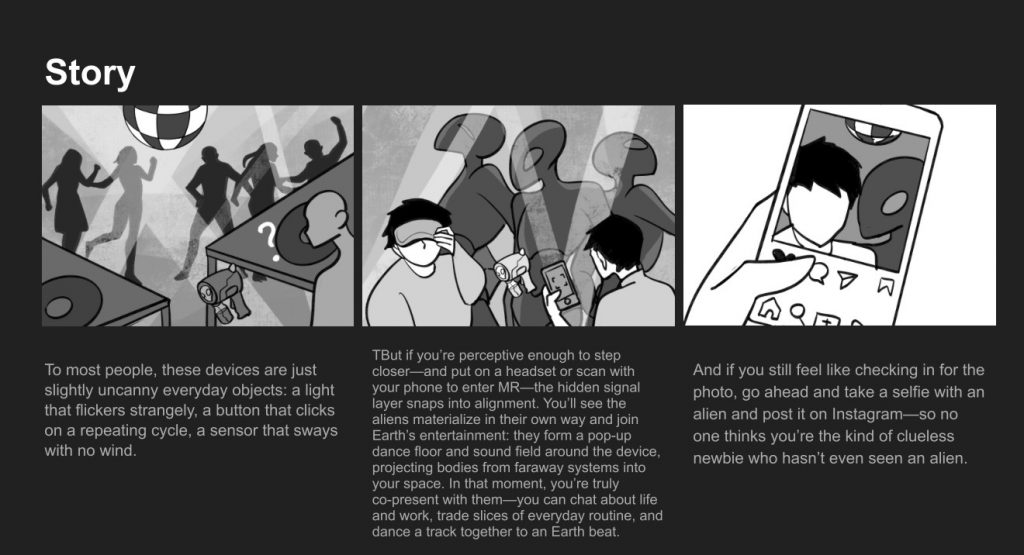
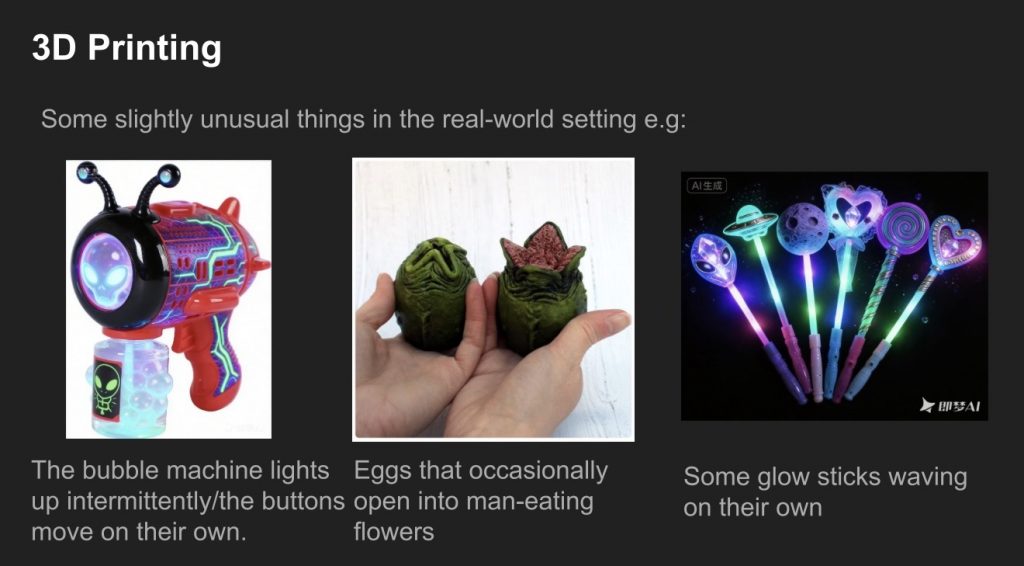
During our presentation, we proposed a narrative in which aliens secretly coexist with humans and communicate through unusual devices hidden in everyday environments. Visitors first encounter strange phenomena such as flickering lights, moving objects, or mysterious signals. After putting on an MR headset, they discover that these events are actually caused by hidden alien activities.
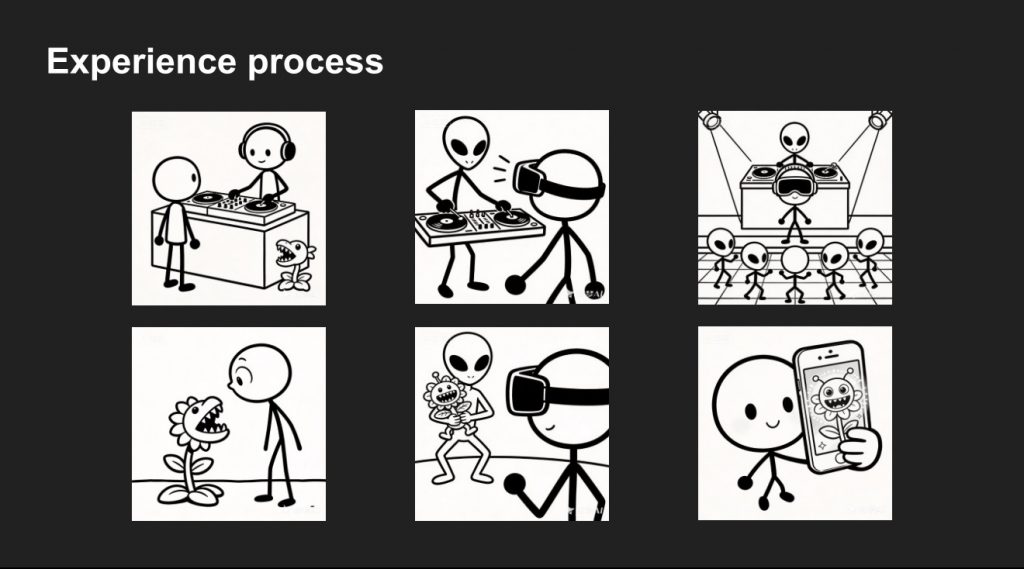
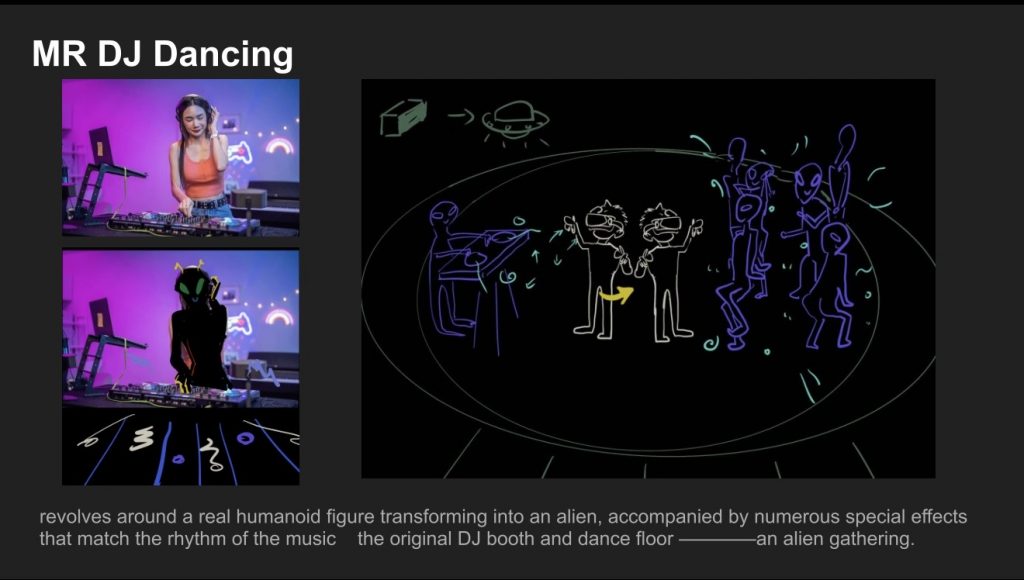
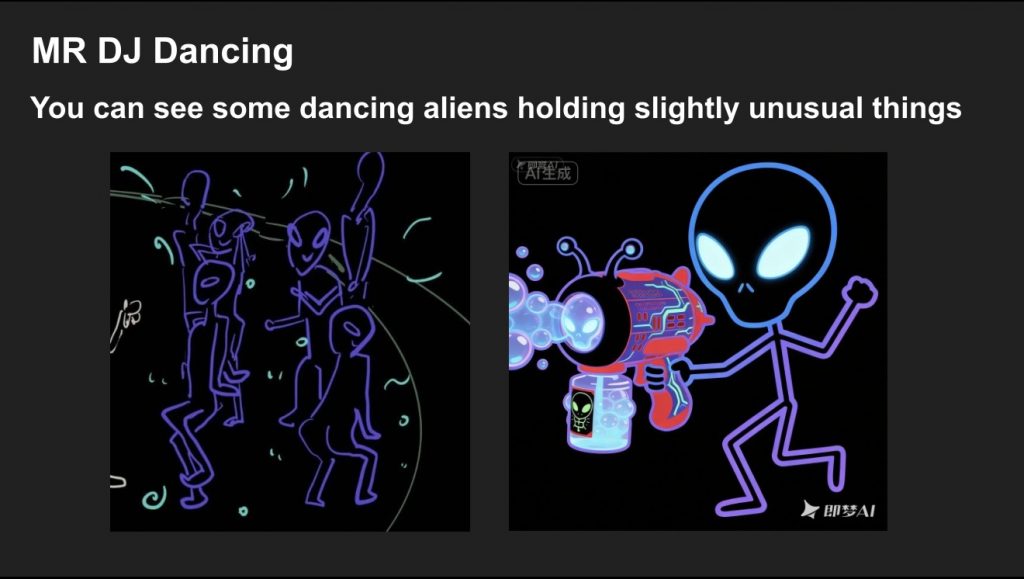
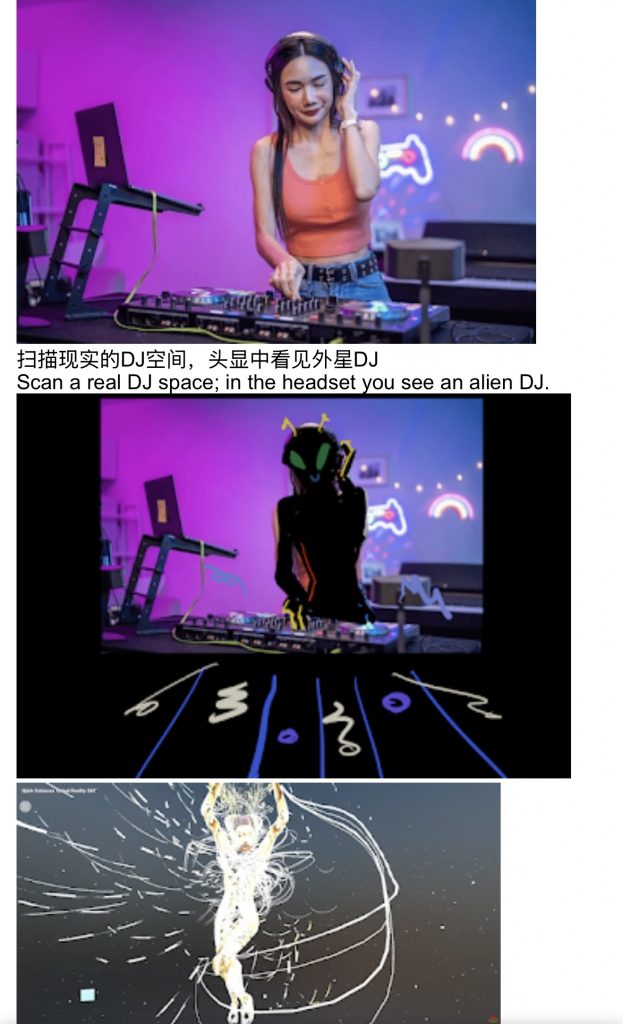
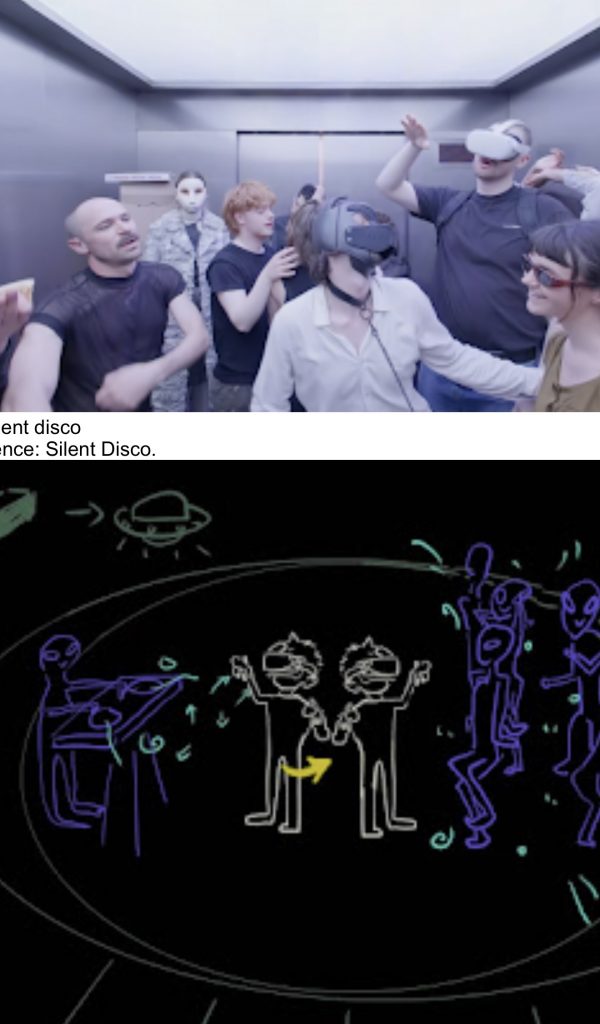
At the same time, we retained our interest in music and dance by developing the idea of an “alien DJ.” In the real world, visitors would see an ordinary DJ setup, while in MR they would discover an alien dance party taking place around it. The aliens would move with the music and encourage visitors to participate through visual cues and rhythmic interaction.
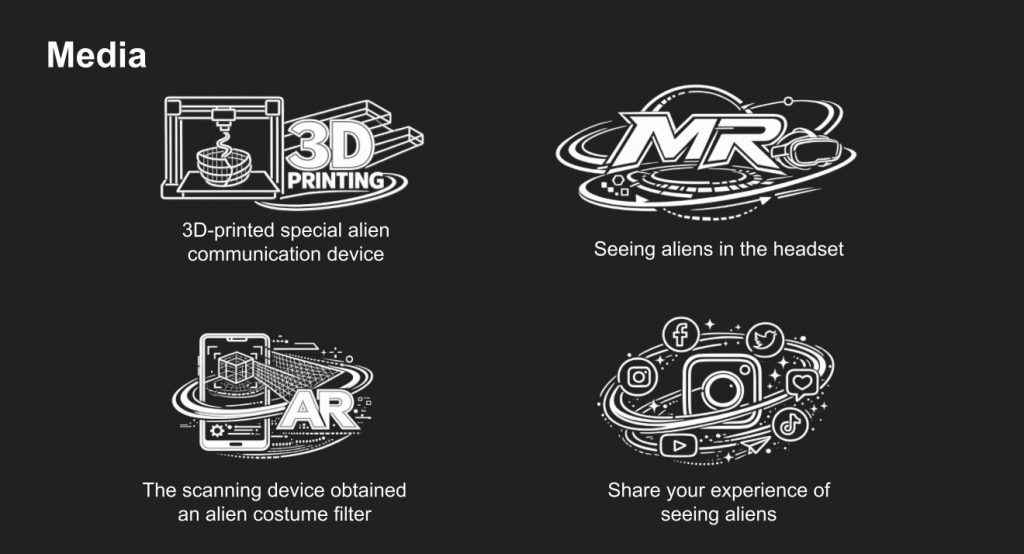
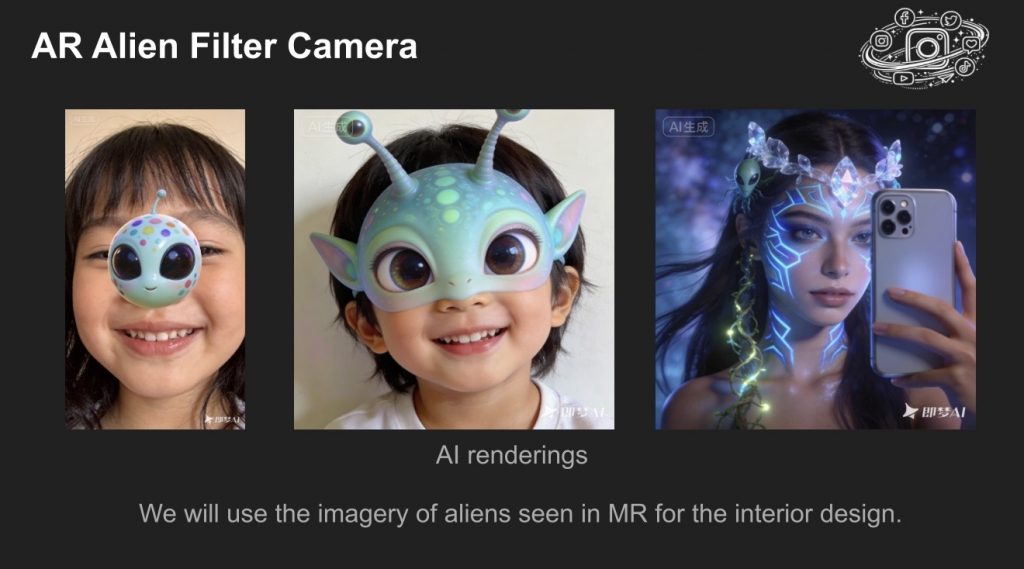
We also explored different media components, including MR experiences, 3D-printed alien communication devices, and AR alien filters. These elements would allow visitors not only to encounter aliens but also to document and share their experiences.
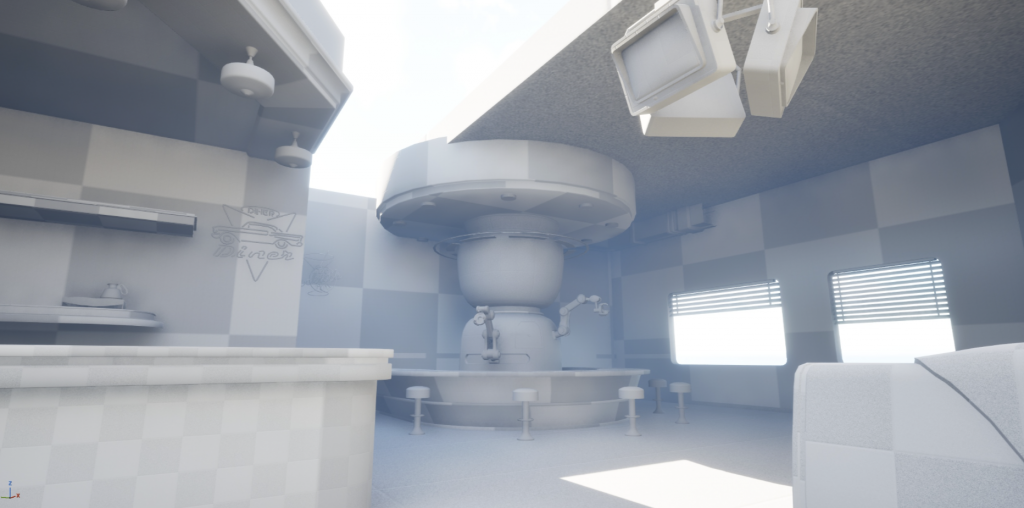
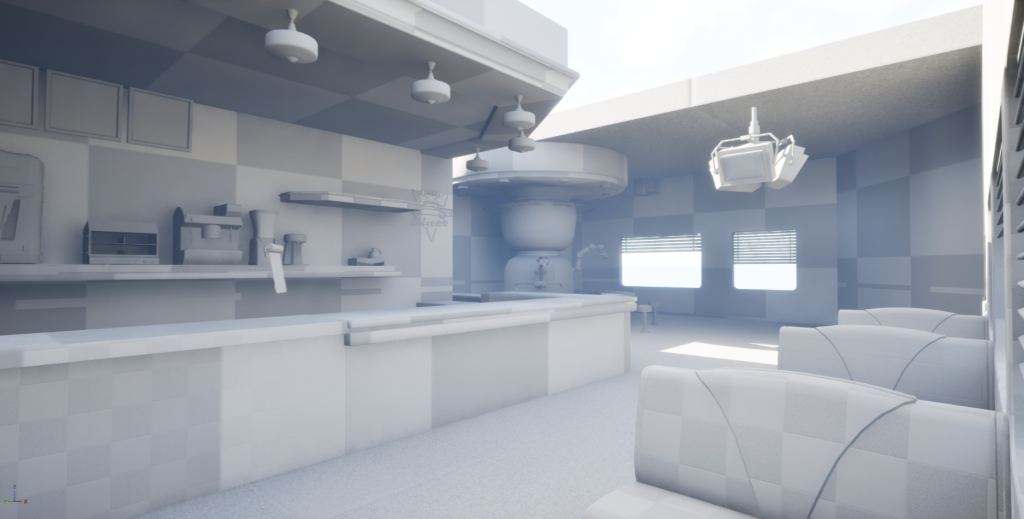
Week 6, we started building our environments and assets.
We created scene elements using a combination of online resources and original models, and focused on adjusting textures to match the overall tone of the project.
This week, we began working on our second 360° video project. Unlike our previous work with a fixed camera position, this assignment required dynamic filming, encouraging us to explore movement within immersive storytelling.
After brainstorming, we decided to tell the story from the perspective of a flyer. The audience experiences the narrative as if they were the flyer itself, being picked up, passed between different people, and eventually thrown into a rubbish bin. Through the flyer’s journey, we aimed to reveal brief but interesting connections between different characters.
To improve the production quality, we used a more advanced Insta360 camera system. Compared with the equipment we had used previously, it provided better image quality, stabilisation, and support for dynamic filming, allowing us to capture moving shots more effectively and create a smoother viewing experience.
This project encouraged me to think about the possibilities of non-human perspectives in immersive storytelling. Although the flyer cannot speak or act, it serves as a link between different people and locations, allowing the audience to observe the story through its journey. The exercise also helped me gain a deeper understanding of camera movement and audience experience in 360° video production.
Alien Project
This week, we began brainstorming ideas for our art festival project. As our team shared an interest in music, interactive experiences, and immersive technology, our early discussions focused on the relationship between music and XR experiences.
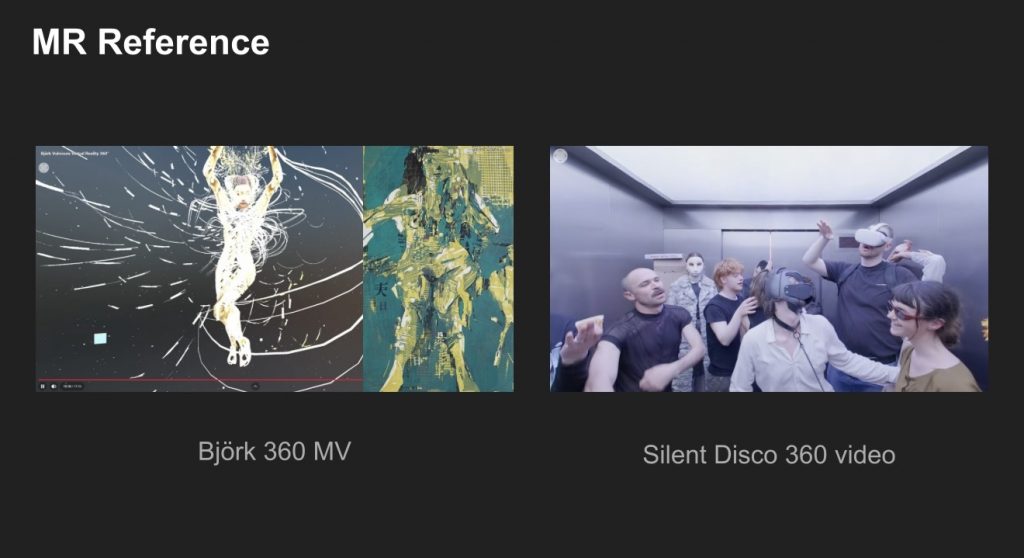
One concept combined DJ performance with an alien theme. Participants would scan a real DJ space and then use an MR headset to discover an alien DJ hidden within the environment. Visual sound waves and symbolic cues would appear alongside the music, encouraging participants to interact and dance. We were inspired by Björk’s 360° music videos and wanted to explore the connection between music, movement, and immersive space.
Another concept focused on discovering hidden “alien signals” within everyday objects. Participants would first notice strange behaviours from real-world installations, such as flickering lights or moving devices. After putting on a headset, they would discover that invisible aliens were responsible for these unusual events, revealing a hidden layer of reality.
We also discussed AR concepts that could transform passers-by into aliens and other interactive experiences combining extraterrestrial themes with everyday life.
In Week 5, we carried out our first motion capture session.
During the shoot, I performed as the humanoid character, focusing on controlled and slightly mechanical body movements. We recorded key actions and interactions that would later be used in the animation.
This process helped us understand how performance translates into digital characters through motion capture.
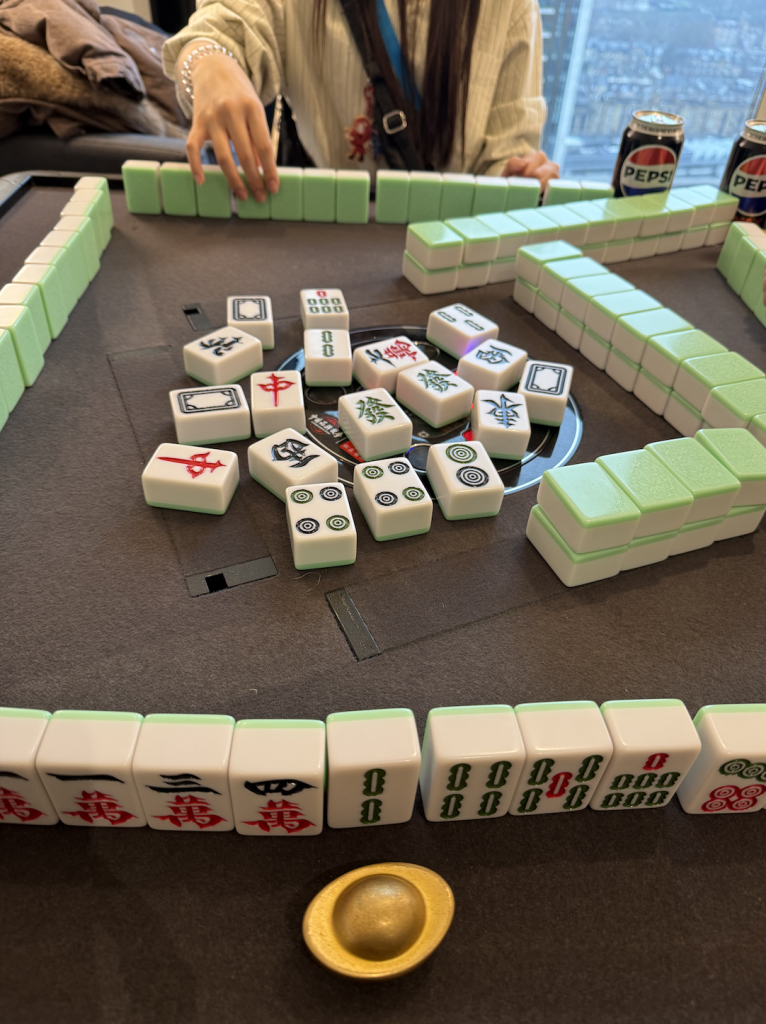
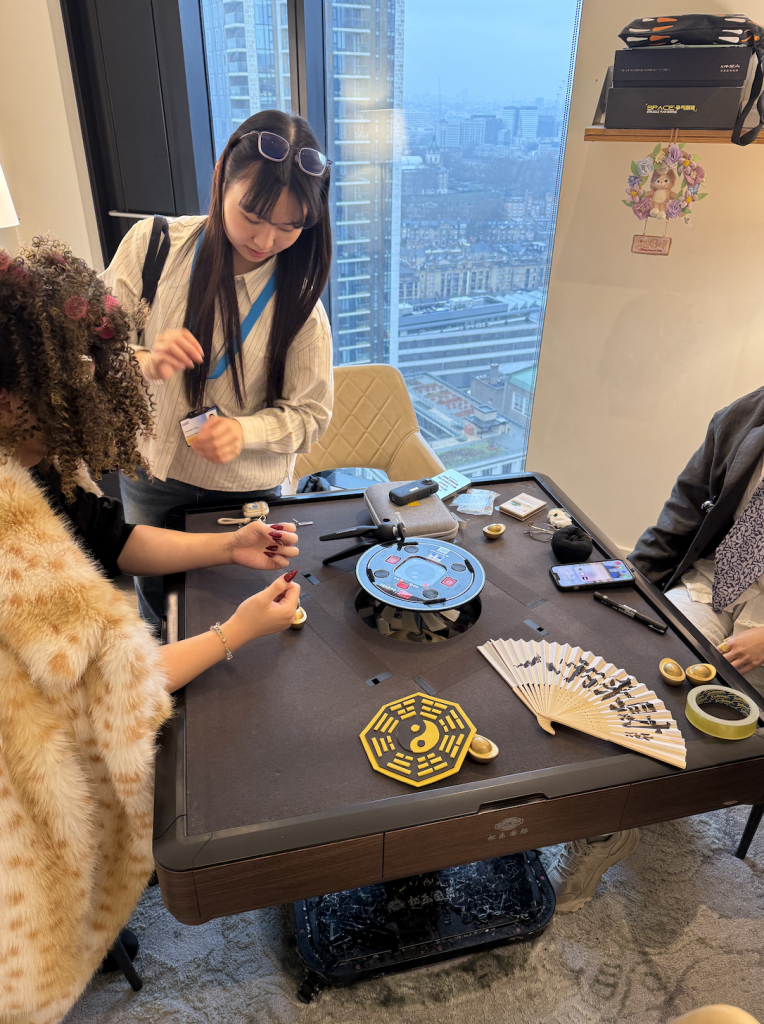
This week, we began filming our mahjong-themed 360° short film. To realise our concept, we rented a mahjong table and placed the 360° camera in the centre of the table, allowing viewers to observe the game from the perspective of a participant.
During filming, each character performed according to their role. As the game progressed, their personalities and cheating methods gradually became apparent. The mathematical genius relied on calculation, the auntie used experience, the fortune teller used divination, and the gang leader and his follower attempted to gain advantages through intimidation and cooperation.
We wanted the conflict to escalate throughout the story. As the game became more intense, the table grew increasingly chaotic. Players began breaking the rules and fighting over the mahjong tiles, while props and costumes started falling apart. What began as a normal social activity slowly transformed into a scene of disorder and competition.
In Week 4, we held online group meetings to develop our project ideas, including script writing, reference research, and storyboard creation.
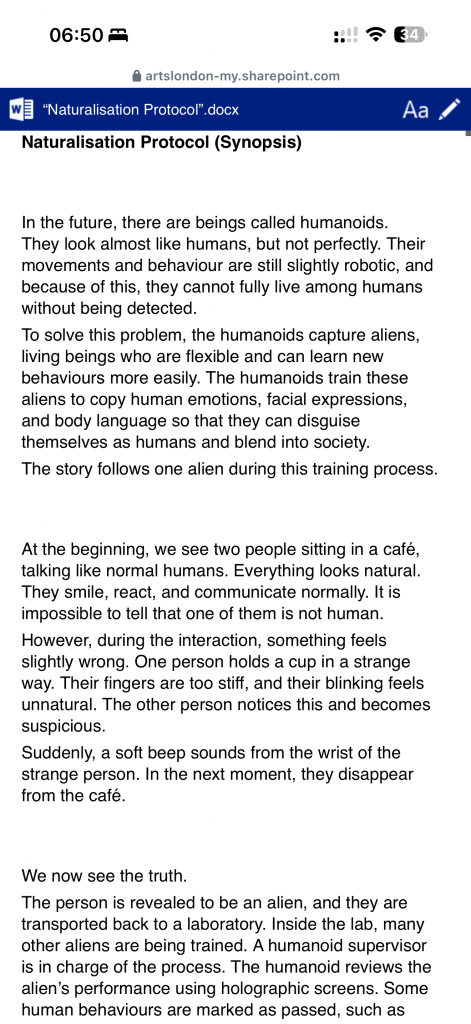
The story is set in a future where humanoids train aliens to imitate human behaviour in order to blend into society. The aliens learn human emotions, facial expressions, and body language through a controlled training process.
The narrative follows one alien as it undergoes testing, moving between a café setting and a laboratory. Through repeated trials, the alien gradually improves its behaviour, becoming more natural and eventually passing the test.
The story focuses on subtle differences in human behaviour, such as micro-expressions, gestures, and timing, which are especially suitable for motion capture performance.
This week, we focused on character design and prop preparation for our mahjong-themed 360° short film. To make the video more visually engaging, we decided to create characters with strong personalities and clear visual identities.
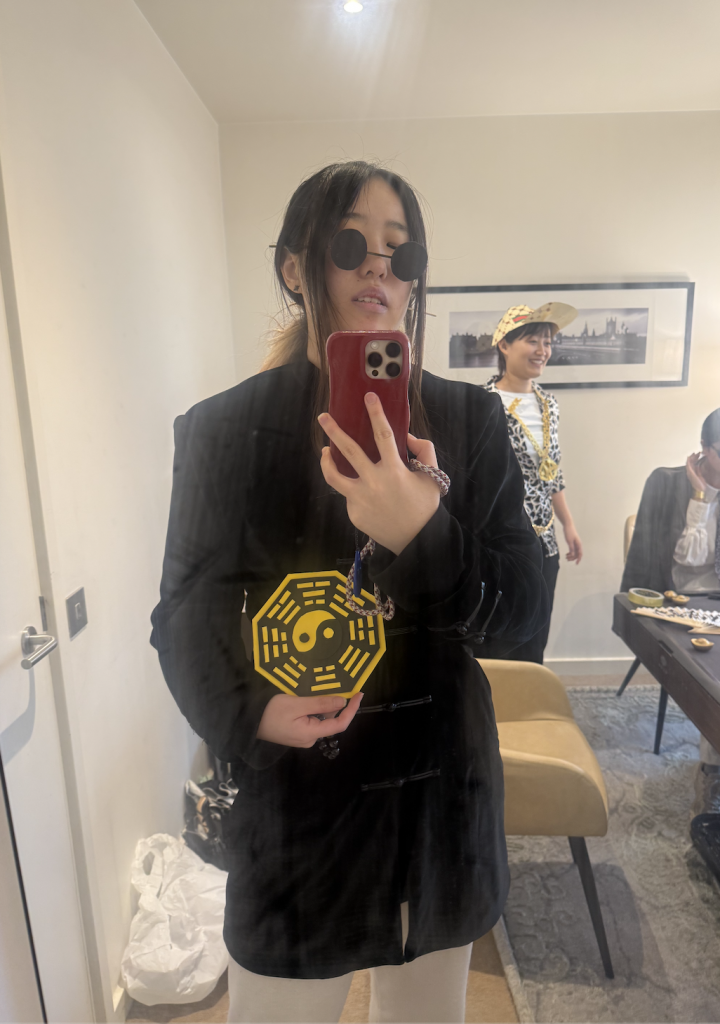
Our characters included a mathematical genius, an elderly auntie, a fortune teller, a gang leader, and his follower. Each character had their own identity and cheating method. For example, the mathematical genius used calculation to analyse the game, while the fortune teller used divination and mystery to influence other players. I played the role of the fortune teller, so I also started developing the costume, gestures, and props for this character, such as talismans, fortune-telling tools, and exaggerated performance styles.
The focus of this week was not filming yet, but making each character clearer through visual and behavioural design. Through this process, we wanted the audience to understand each character quickly, even when watching freely in a 360° environment.