XR Stories (continued)
In Week 3, we began to develop a more structured understanding of the basic components of a script. Through a small script practice exercise, we moved beyond abstract discussions of theme and emotion and started to break narrative down into concrete, executable elements, including point of view (POV), time, space, character relationships, and the position of the audience within the experience.
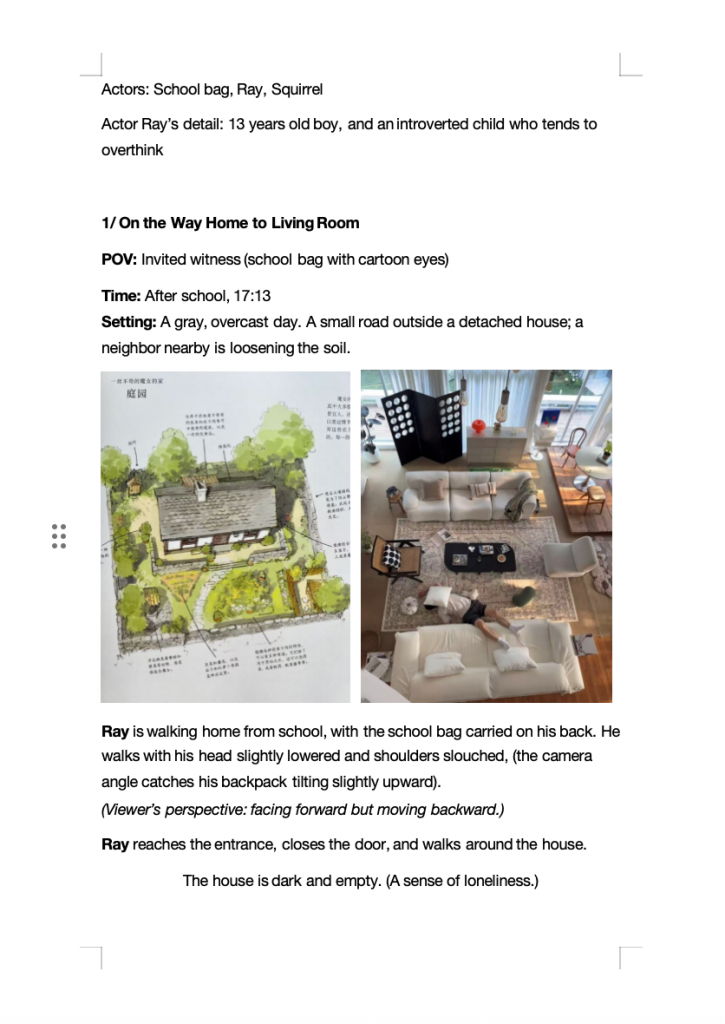
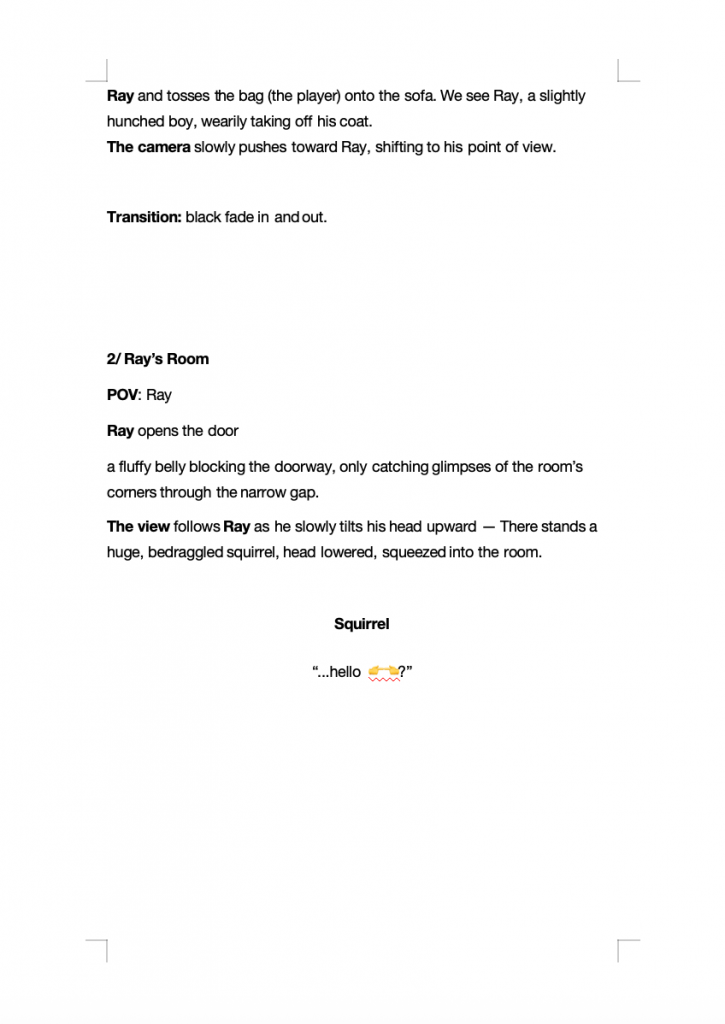
The exercise was built around a simple everyday scenario: a 13-year-old boy returning home from school. A clear experiential point of view was required, so we experimented with a non-human but carried witness perspective—the school bag. The audience entered the story from the position of the bag on the boy’s back, passively following his movement without the ability to intervene. This setup helped us understand that narrative does not necessarily rely on inner monologue or complex plot progression; emotional atmosphere can be established through perspective, action, and spatial transition alone.
During the exercise, we paid particular attention to shifts in point of view and emotional progression. The first part positioned the audience as an “invited witness” entering the domestic space, using emptiness and low light to suggest isolation. This then transitioned into the character’s first-person perspective, bringing the audience closer to the boy’s internal state. In the second scene, a sudden change in spatial scale—contrasting the small bedroom with an oversized squirrel figure—was used to create a sense of imbalance and unease, rather than relying on explicit narrative explanation.
This practice made it clear to us that a script is not defined only by what happens, but by how perspective, pacing, and experiential positioning shape emotional understanding. Even within a short exercise, choices around POV, transitions, and spatial relationships significantly affected how the scene was perceived.
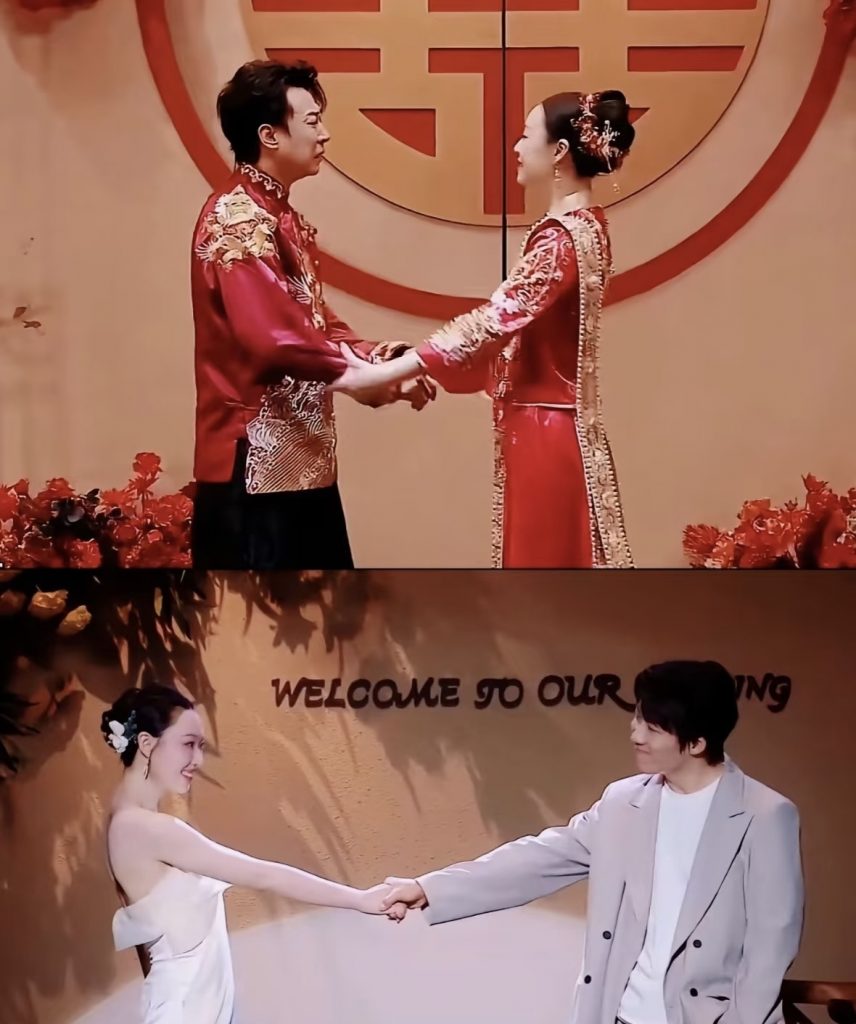
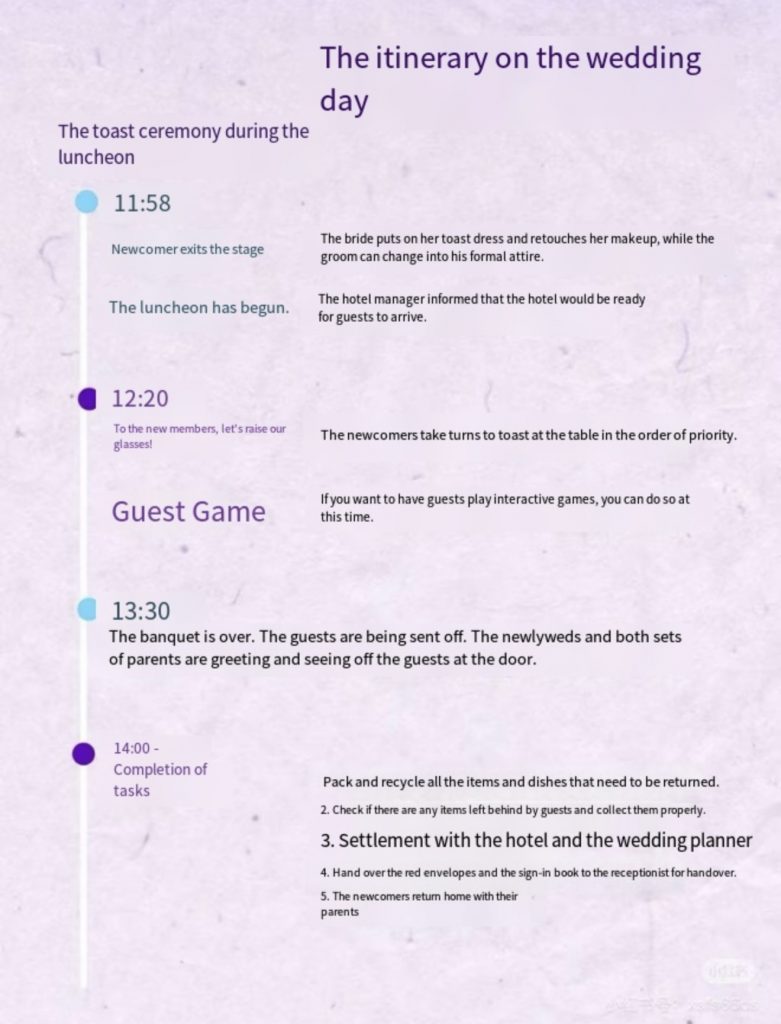
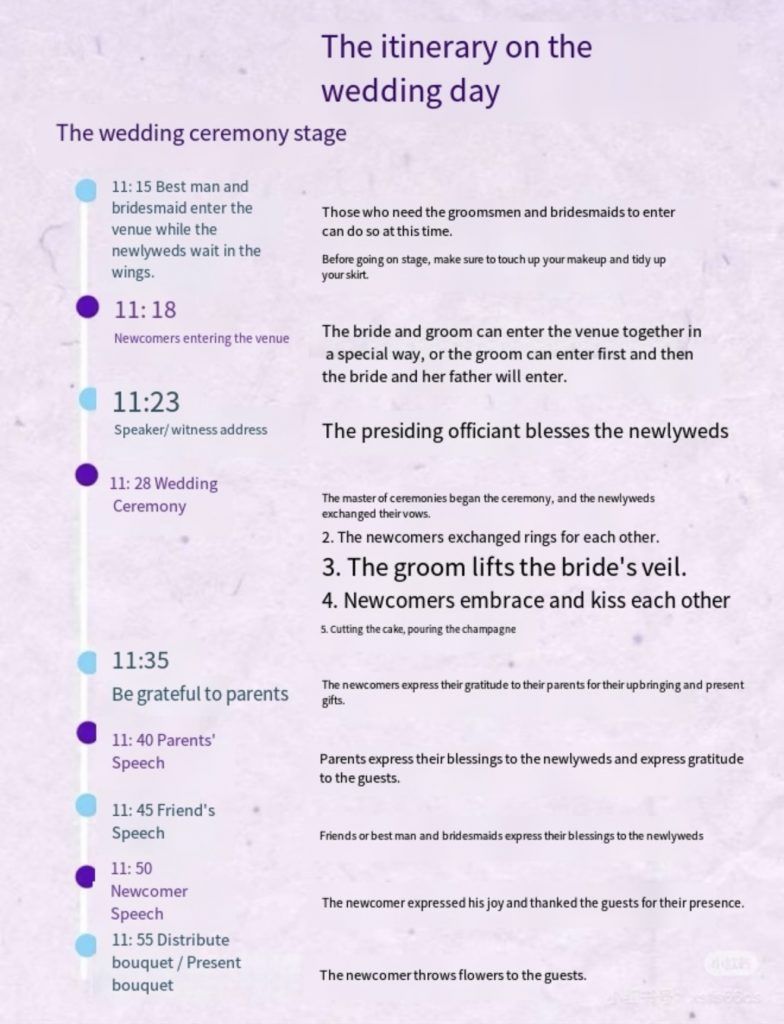
At the project level, this week also marked an important decision. Building on the discussions of the previous two weeks, we formally confirmed the wedding as the core theme and narrative context of our project. Through the script exercise, we began to recognise that a wedding, like the practice scenario, is highly dependent on perspective and spatial relationships. Different positions within the same event allow access to different information, levels of agency, and emotional intensity. This reinforced our decision to situate changes in family relationships within a ritualised and highly structured social space.
Leave a Reply