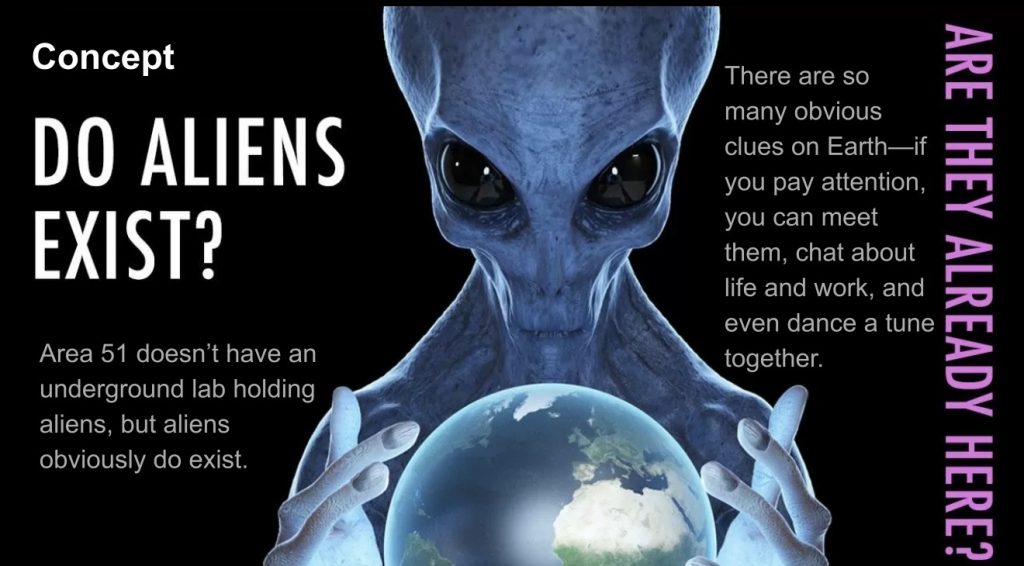
Do Aliens exist?
This week, we completed our project presentation and began designing a user-testing strategy for the next stage of development.
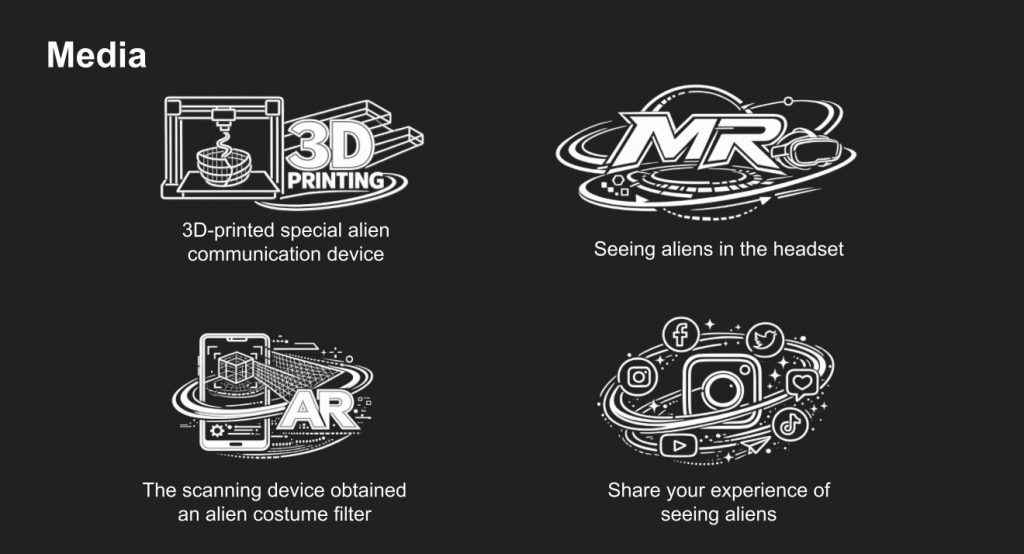
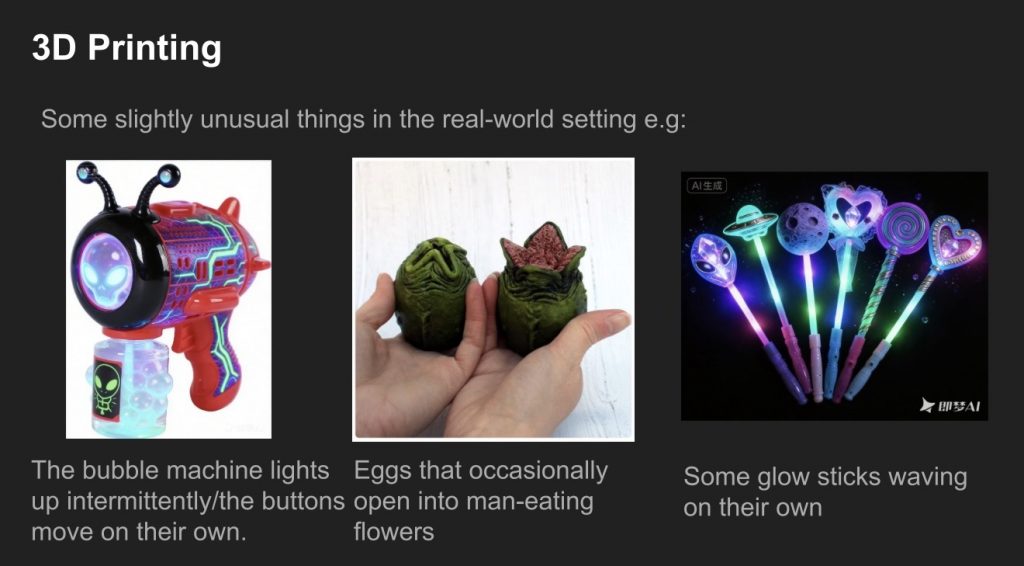
During discussions, we realised that we would likely have limited control over the overall entrance design of the exhibition space, as the container environment may be determined by the event organisers. Therefore, we decided to focus our research on the information devices that we could directly design, such as posters, screens, 3D-printed objects, and QR codes. Our goal was to understand which forms of media are most effective at attracting visitors and encouraging them to enter the experience.
Based on this approach, we developed a series of user-testing questions. We wanted to investigate whether visitors are more attracted by video displays, physical artefacts, or printed posters; whether stories about previous alien encounters would encourage exploration; and what kinds of QR-code prompts would increase users’ willingness to scan and interact.
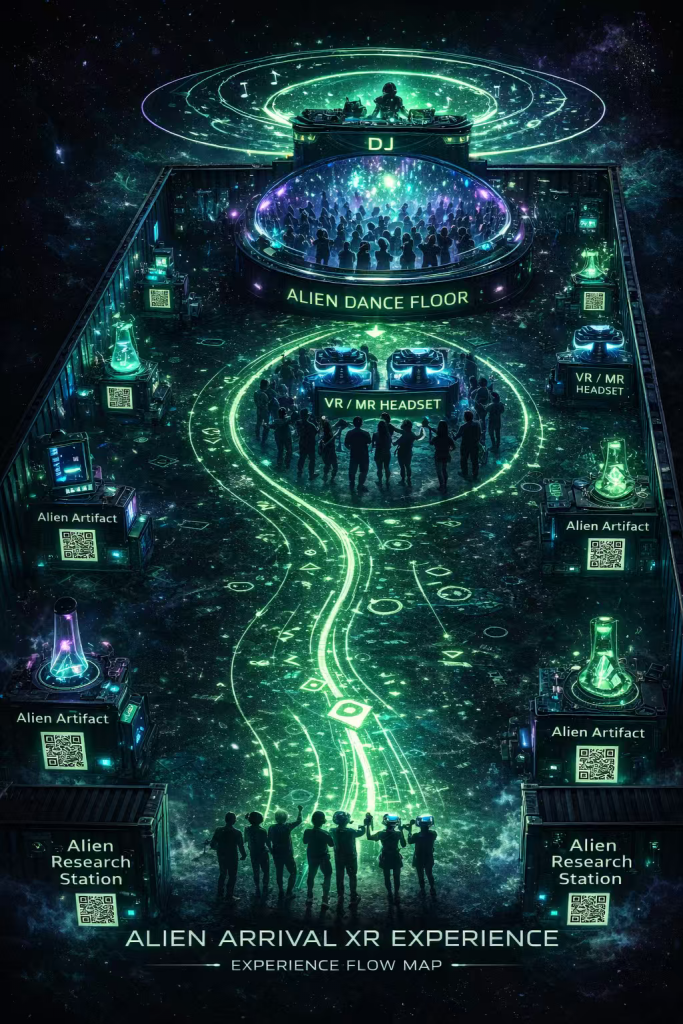
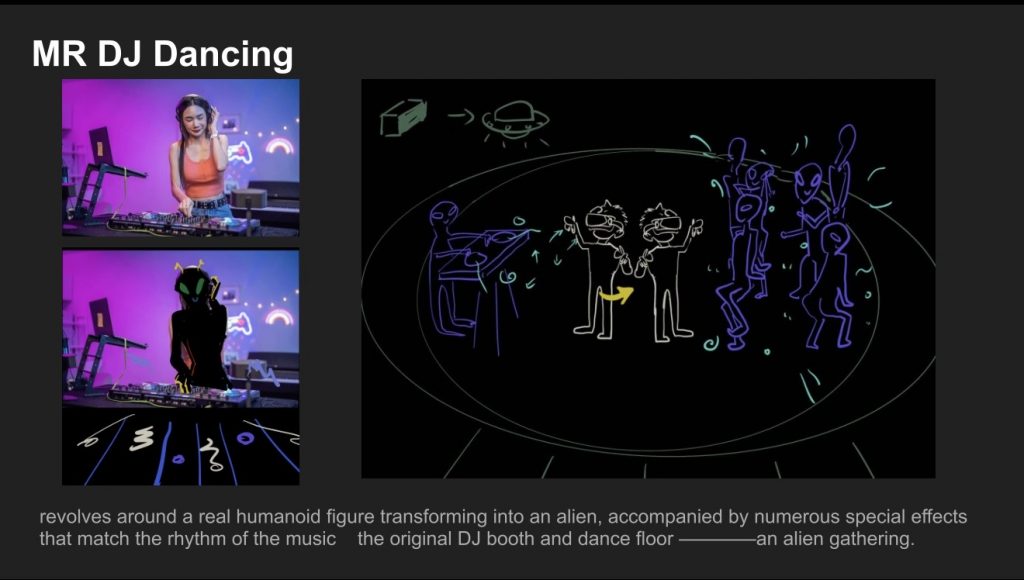
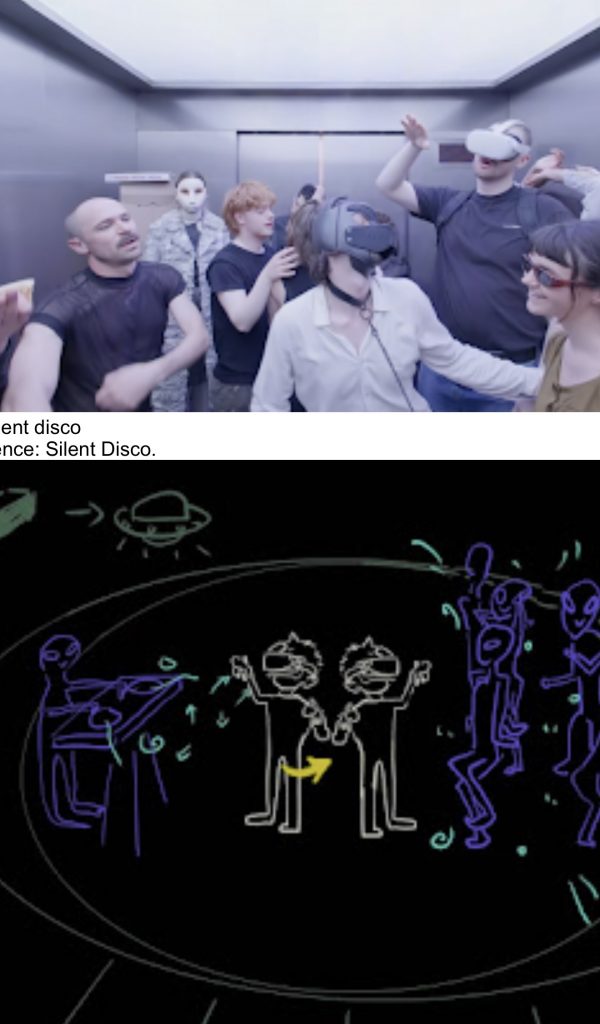
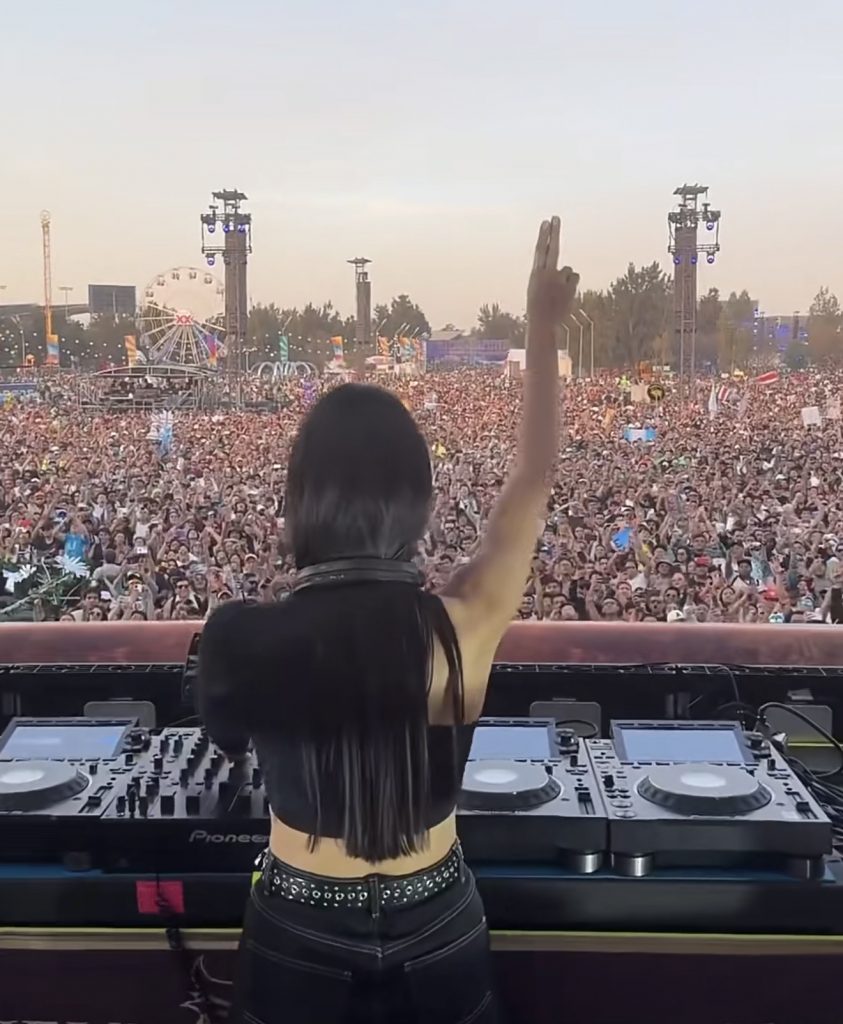
We also began considering spatial behaviour within the final experience. Since the project combines a DJ environment, a dance floor, and MR interaction, we planned to test where visitors would prefer to stand while using the headset, such as in the centre of the dance floor, near the DJ booth, or at the edge of the crowd.
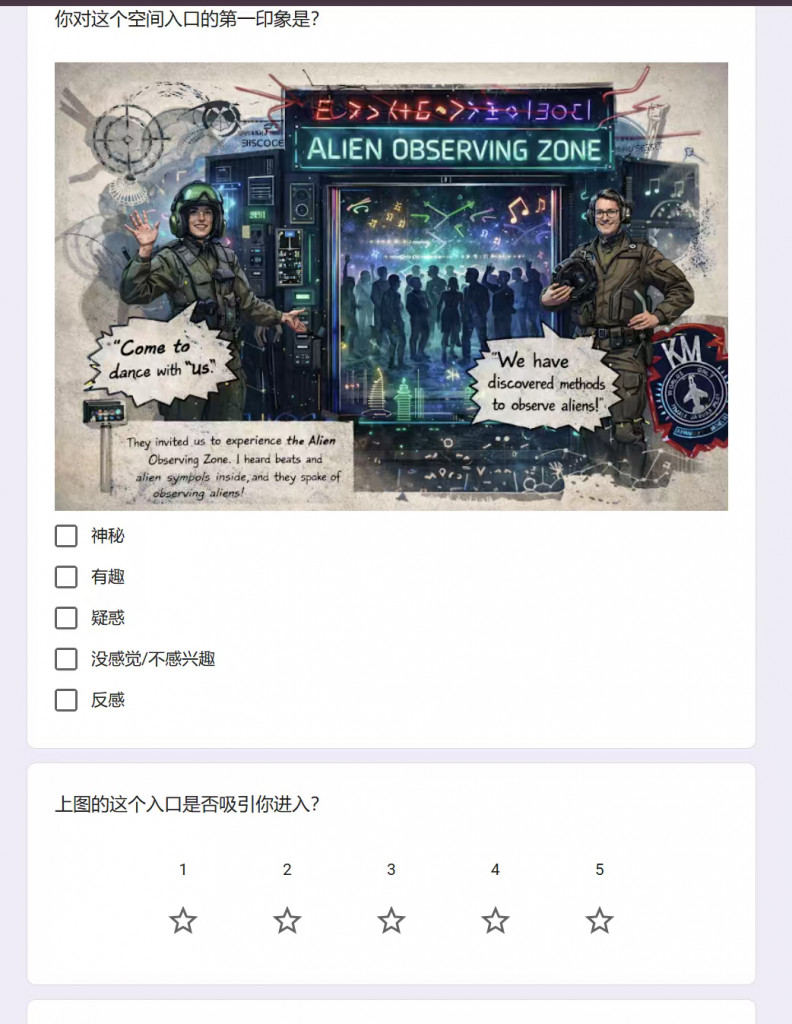
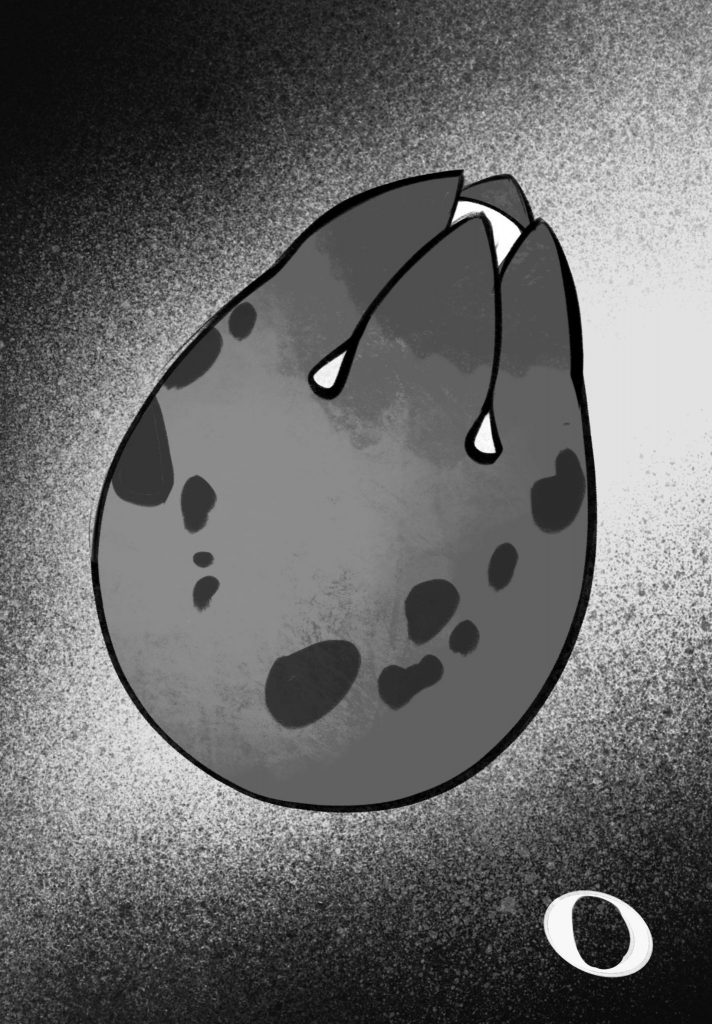
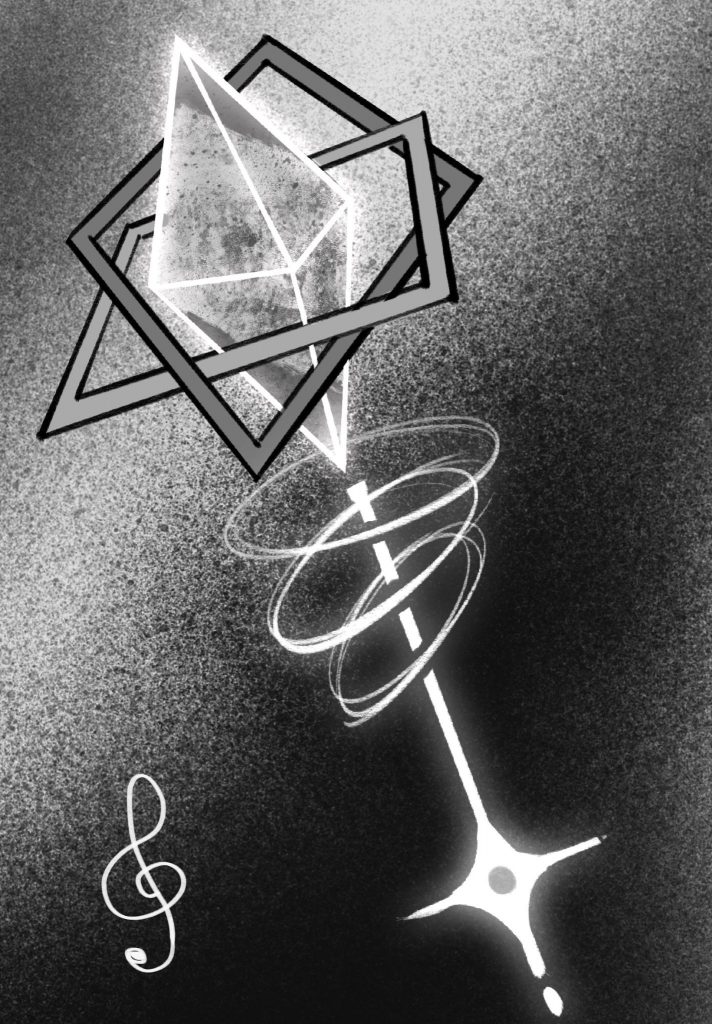
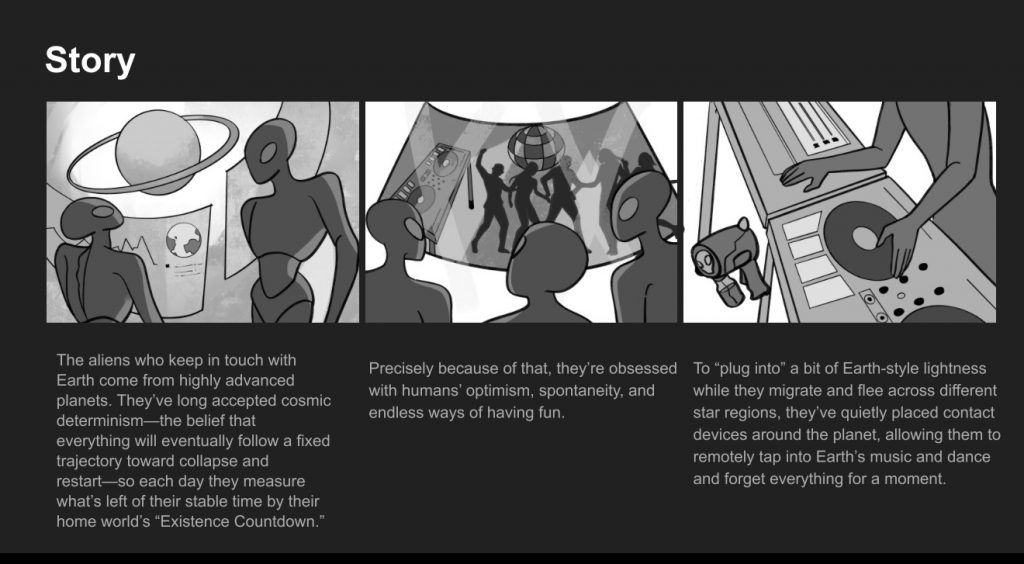
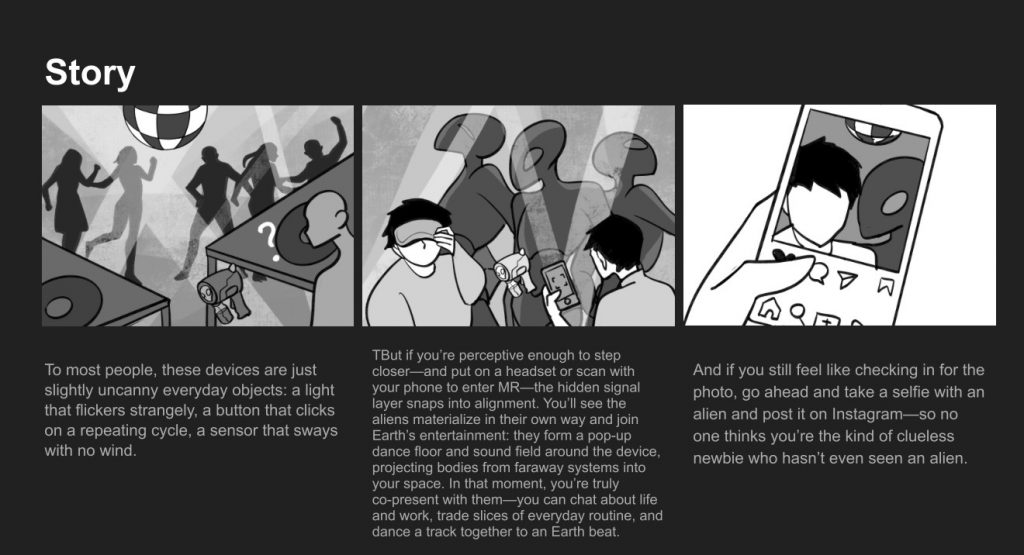
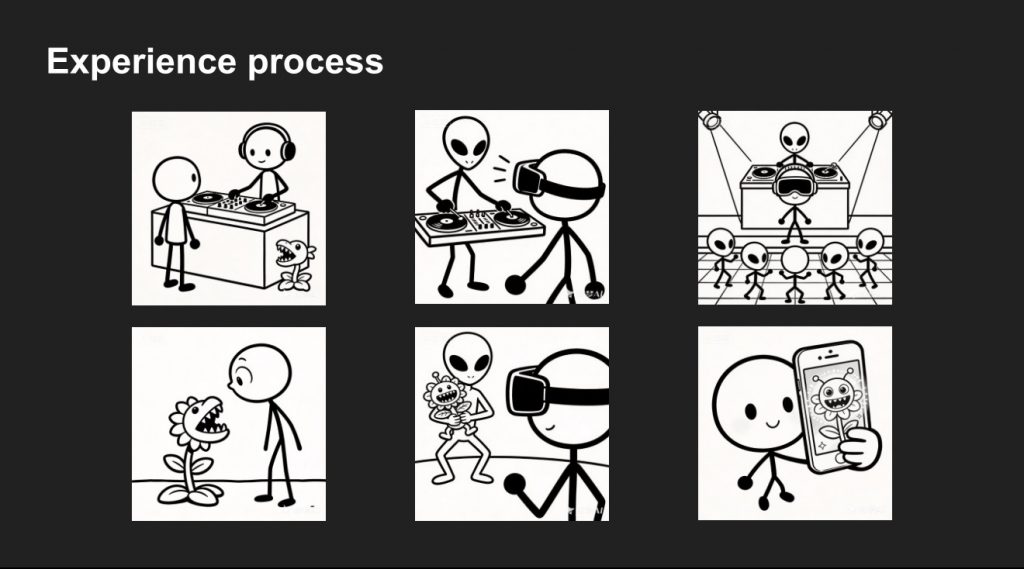
In addition to preparing user-testing questionnaires, I created a user journey storyboard to visualise the complete visitor experience.
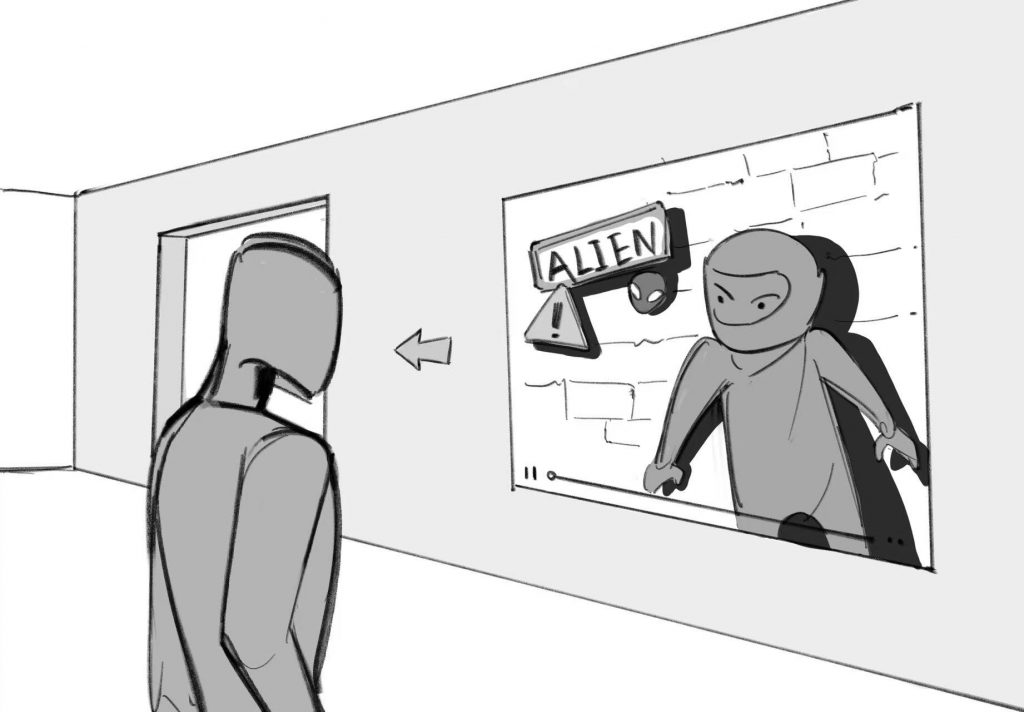
The journey begins when visitors encounter promotional videos and information displays at the exhibition entrance. These elements communicate the idea that aliens have previously been discovered in this location, encouraging visitors to explore further.
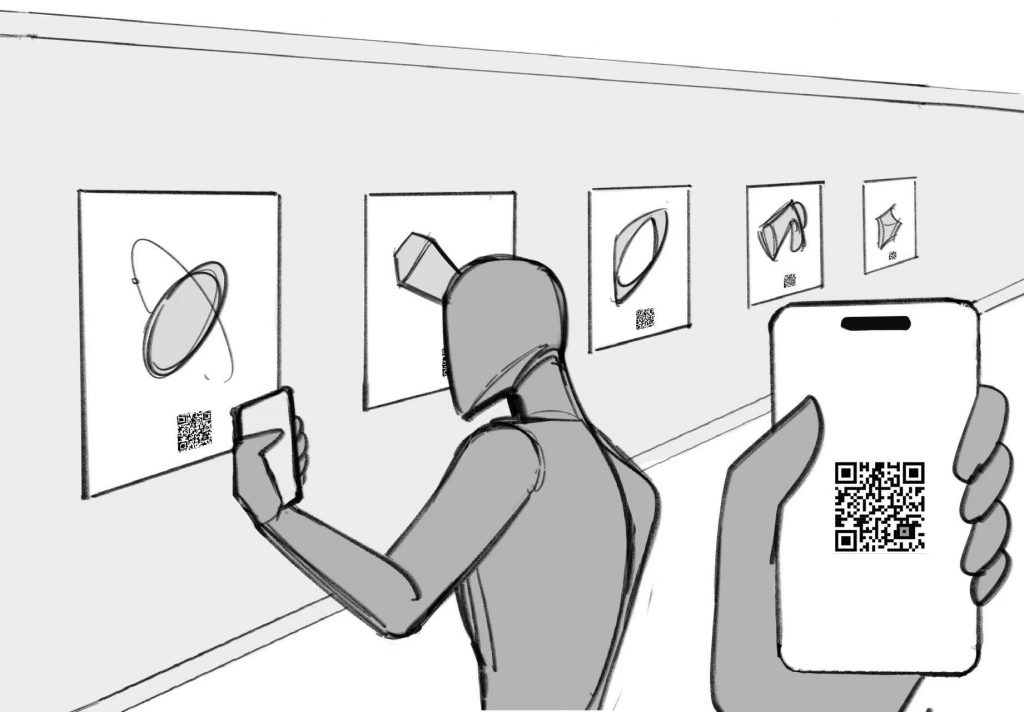
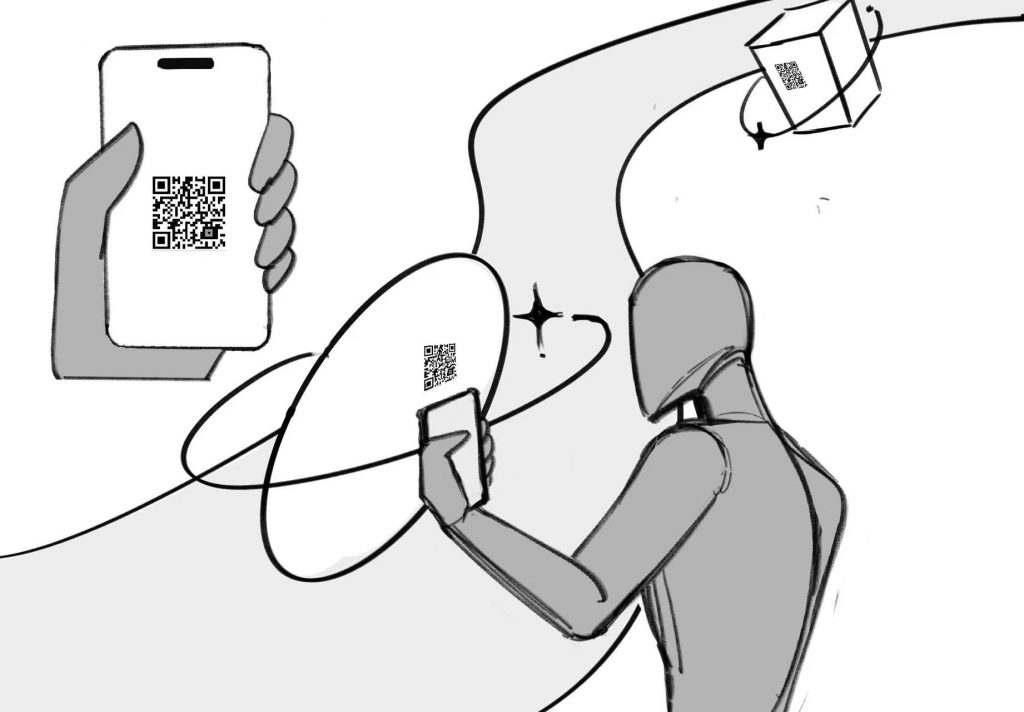
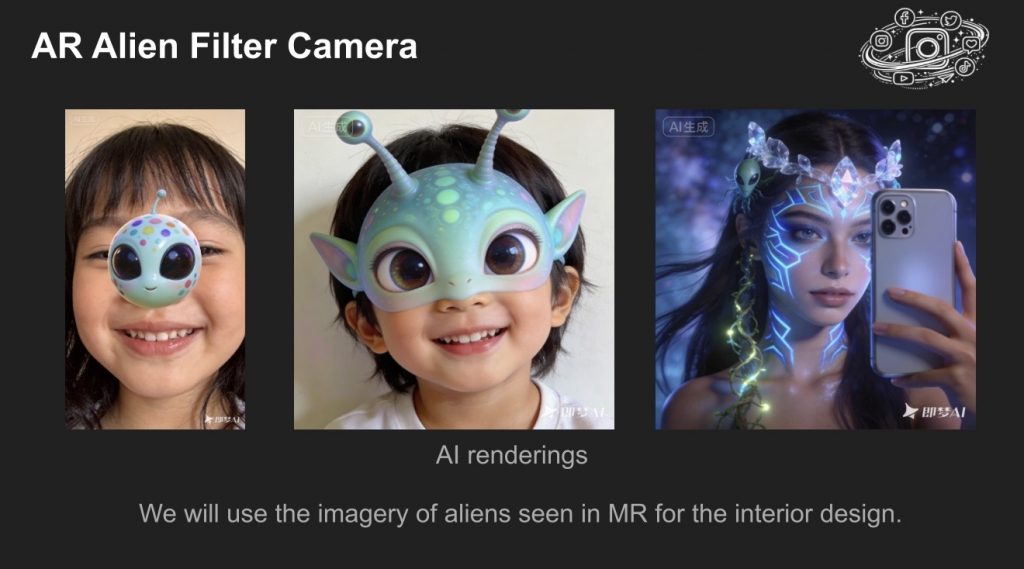
Visitors can then scan QR codes on posters and graphics to unlock AR content and discover hidden alien-related information. This stage serves as an introduction to the fictional world while building curiosity before the main experience.
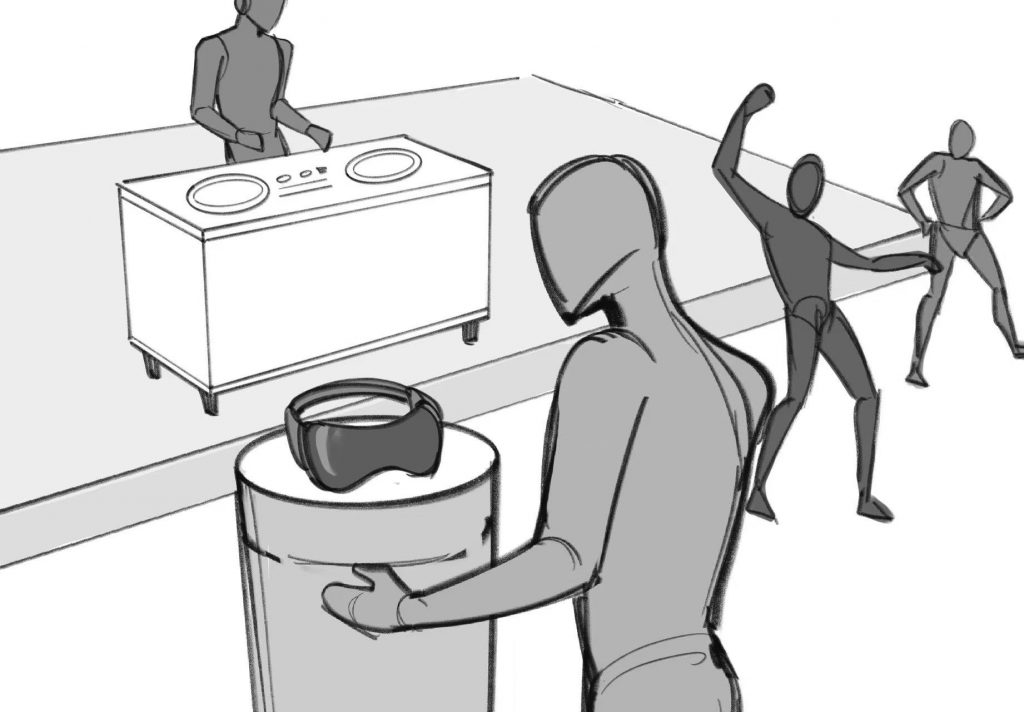
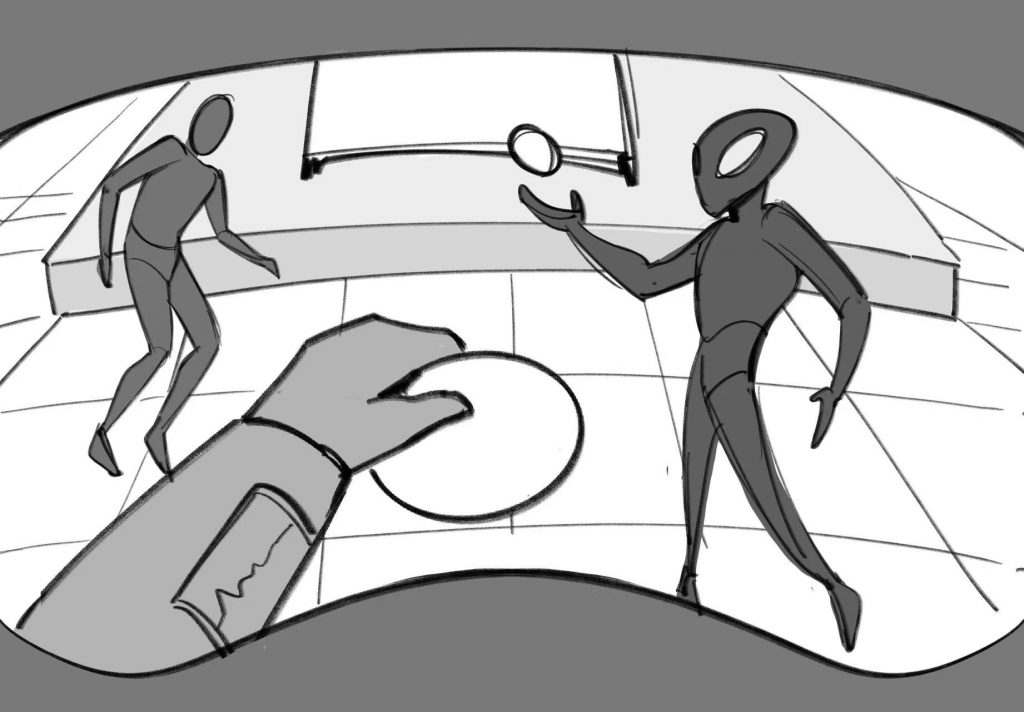
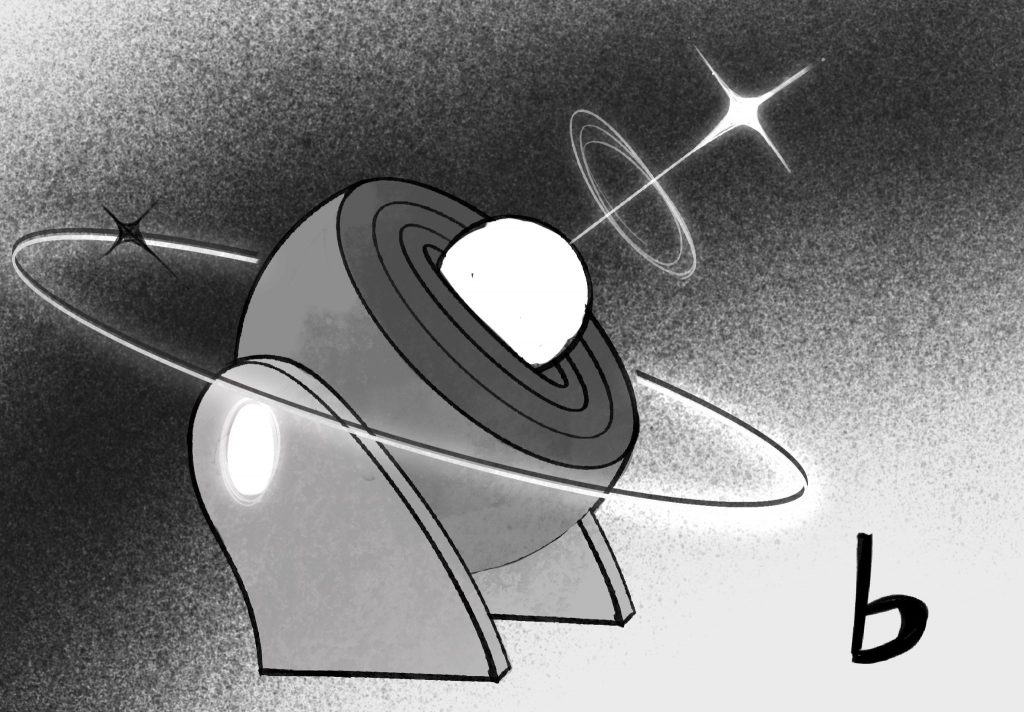
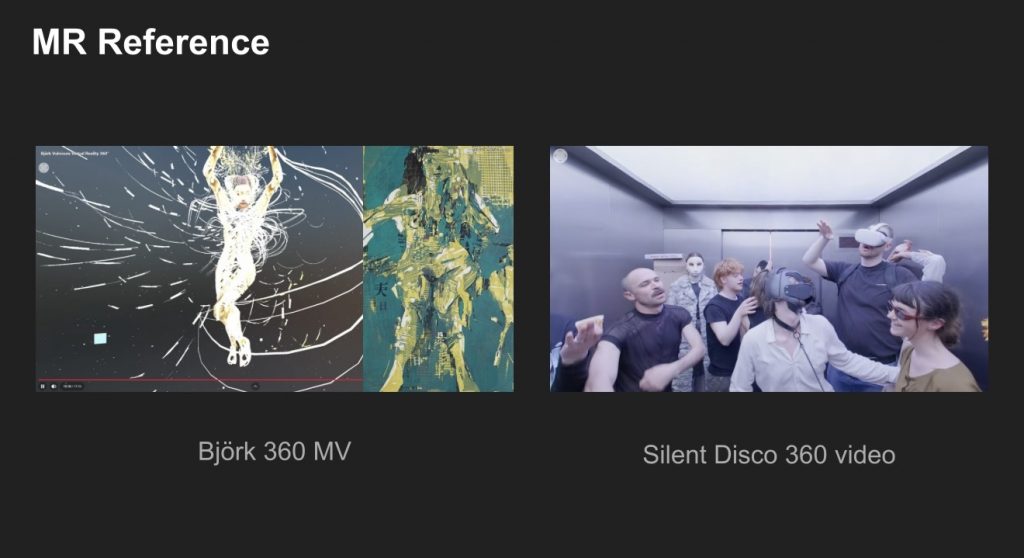
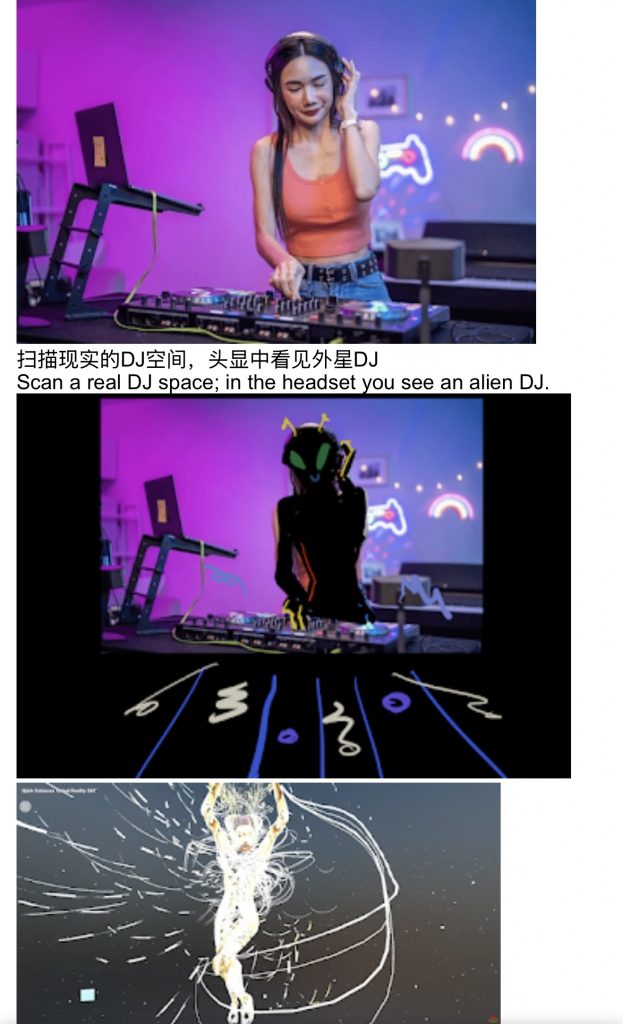
Afterwards, visitors enter the experience space, where they wear an MR headset inside a DJ and dance-floor environment. Through the headset, they are able to see aliens layered into the real world and participate in a shared dance experience.
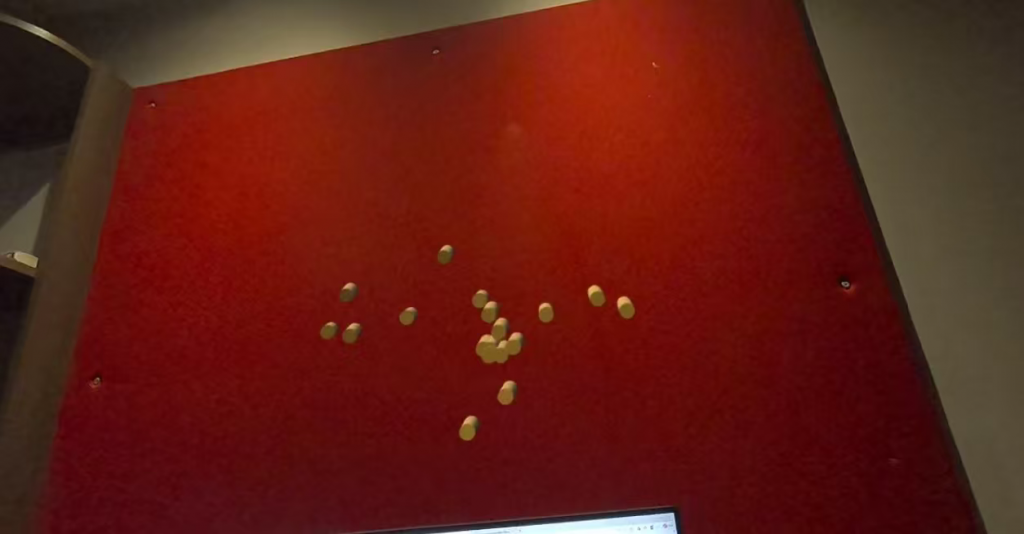
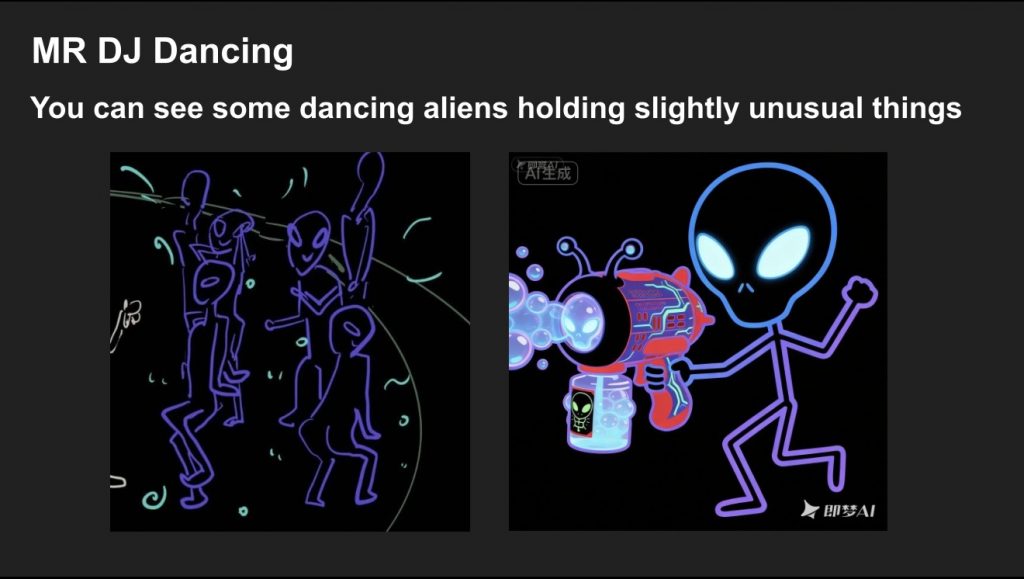
Future versions of the project may include richer interactions with the aliens, such as grabbing, throwing, or exchanging objects, creating a stronger sense of agency and immersion.