Concept development continued
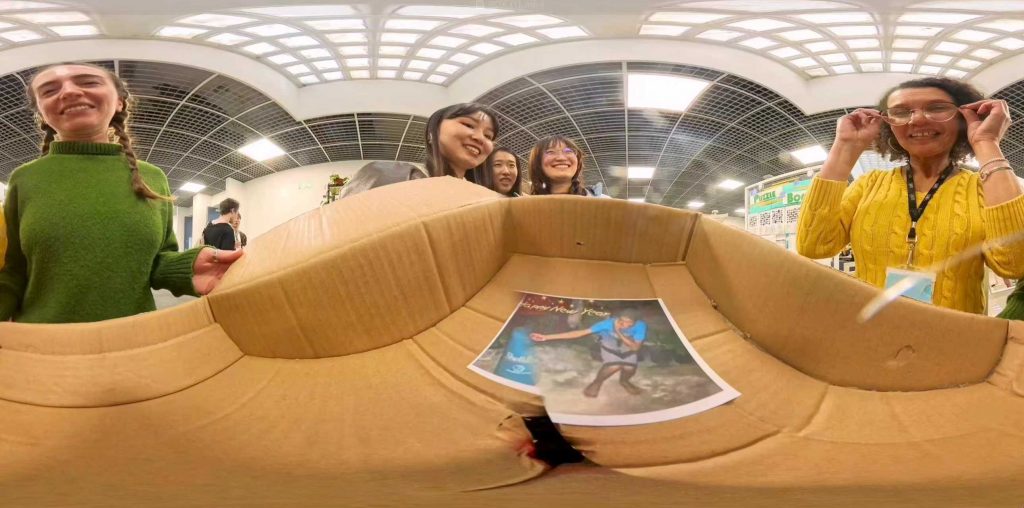
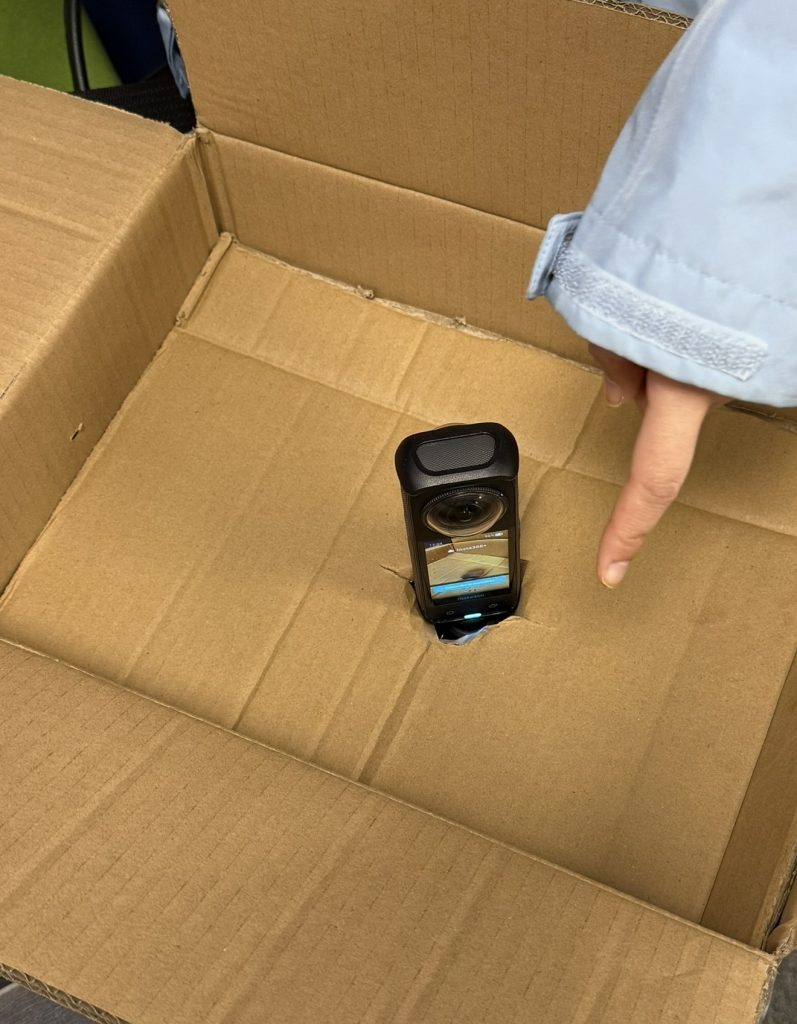
This week, we moved into the production stage of the project, focusing on building the cardboard box, installing the camera, and carrying out the filming. To realise our concept, we designed a box that could conceal the 360° camera while still capturing the reactions of people opening it. We adjusted the internal structure several times to ensure the camera remained hidden without affecting the recording quality.
During filming, we placed the box in a suitable location and recorded participants’ genuine reactions as they opened it. Because the camera was concealed inside the box, many people were unaware that they were being filmed at first, resulting in natural and authentic responses.
In post-production, we made an interesting creative decision: we removed all of the meme images that had originally been placed inside the box. As a result, viewers could only see the participants’ reactions without knowing what they had actually seen. Some people laughed, some looked confused, and others appeared surprised, while the source of these reactions remained hidden.
Do Aliens exist?
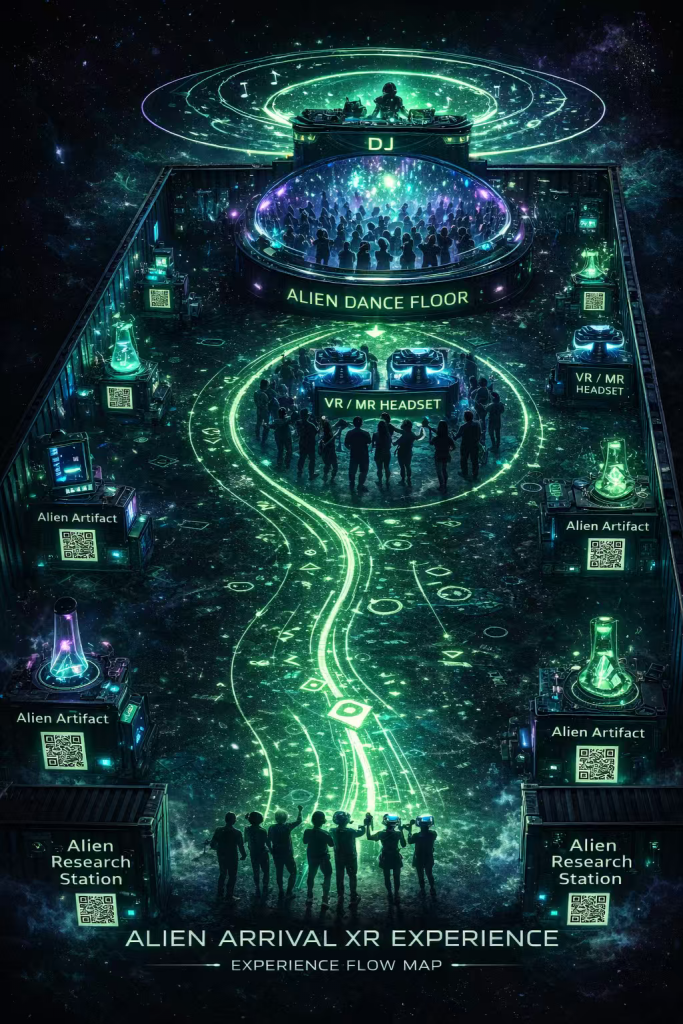
This week, we focused on technical testing for the alien project and further clarified how the experience could be implemented. We decided that the current experience would take place in a fixed dance-floor environment, where visitors use an MR headset to see virtual aliens layered onto the real-world space.
During testing, we found that Passthrough Mixed Reality was sufficient for most of our current requirements. Aliens could appear at random positions within the environment, users would not need to return to the same starting location each time, and the aliens could move toward participants, play animations, and perform behaviours within the shared space.
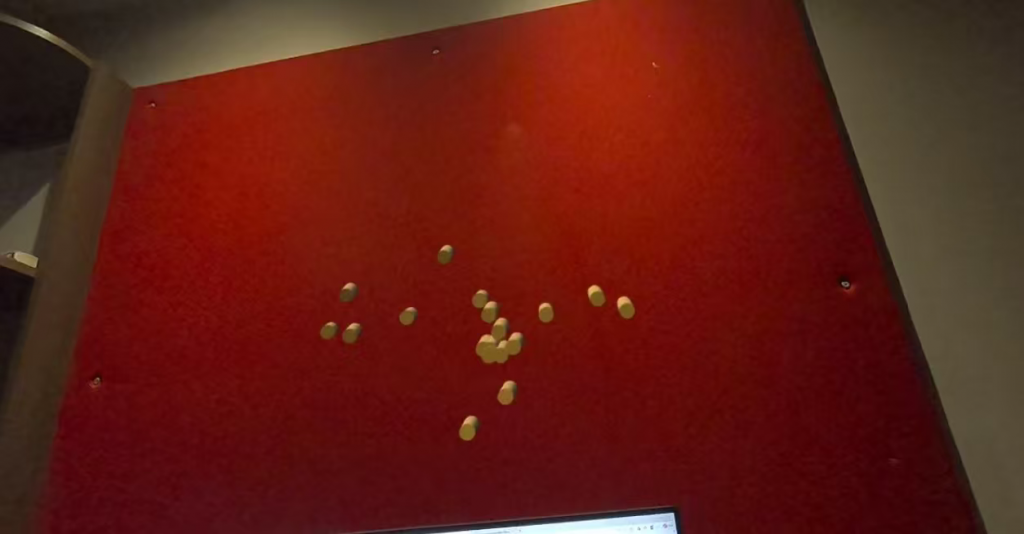
However, we also explored more advanced interactions, such as allowing users to interact with or even shoot at virtual aliens. For these types of interactions, Passthrough alone would not be enough. Spatial Anchors would be required to maintain stable relationships between virtual content and physical space.
To investigate these possibilities, we created a simple shooting prototype in Unity. Through this experiment, we learned about target spawning, raycasting, and basic interaction systems, while also gaining a better understanding of the technical requirements of different MR approaches.
Leave a Reply