Independent work
As the project developed, we began to realise that discussing narrative themes and symbolism alone was not sufficient to support an XR experience. This week, we shifted our focus toward spatial design, considering how the wedding functions as a sequence of spaces rather than a single narrative event.
We started to understand the wedding as a clear spatial flow. Different areas within a wedding venue naturally carry different social rules, behaviours, and emotional intensities. This existing structure provided a practical framework for organising the XR experience, allowing space itself to guide the participant’s journey.
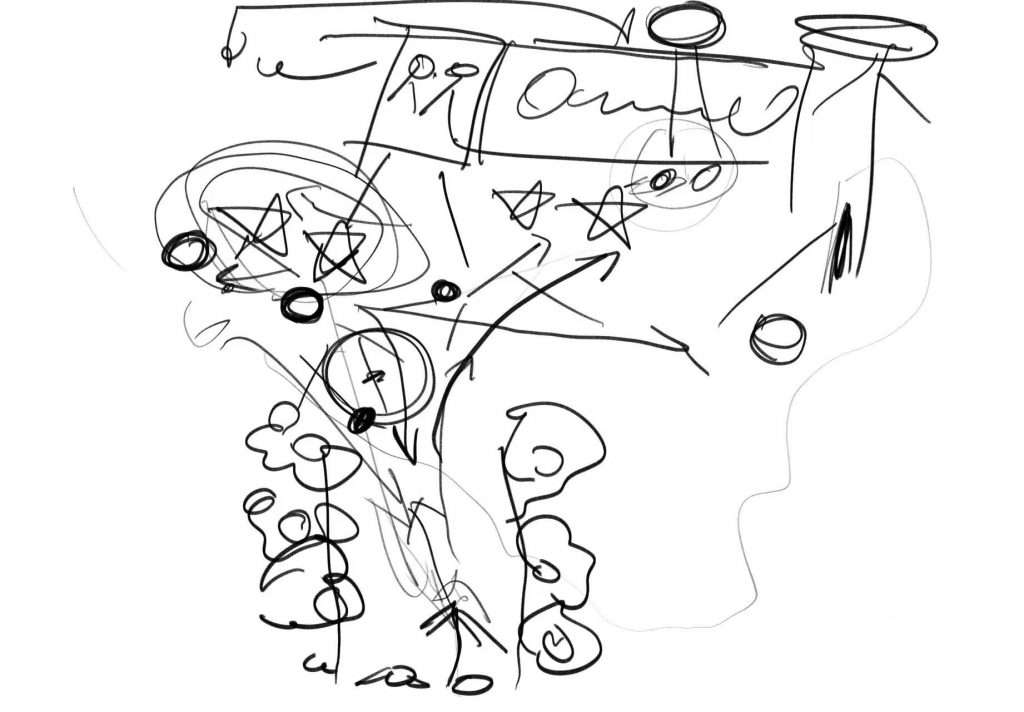
The experience begins in the reception or entrance area. This is an open and public space where guests arrive, greet one another, and settle into the event. At this stage, the participant can enter the experience as an observer, gradually becoming familiar with the environment and the social expectations of the wedding without immediately engaging with emotional tension.
From there, the experience moves toward more private preparation spaces, such as dressing rooms or backstage areas. Compared to the reception, these spaces are more enclosed and intimate, and relationships become more direct. We identified this area as where the mother’s involvement begins to feel more intrusive, and where emotional pressure starts to accumulate, even before the ceremony officially begins.
Transitional spaces, such as corridors connecting different areas, were treated as important experiential elements rather than narrative scenes. These moments of movement and waiting allow for changes in atmosphere, pacing, and perspective. In XR, such spaces function as breathing points within the experience, supporting smooth transitions between different emotional states.
The ceremony hall represents the core public space of the experience. It is highly ritualised and governed by strict social conventions. Within this context, moments of absurdity and subtle humour can emerge naturally, as actions are accepted simply because they occur within the authority of the ceremony. This space provides a stage for the most concentrated emotional and symbolic moments of the story.
Finally, backstage or post-ceremony spaces offer a shift away from public performance. These quieter, more private areas are suitable for emotional release or moments of personal realisation. Rather than resolving emotions within the ceremony itself, moving into these spaces allows the experience to conclude in a more restrained and reflective manner.
By structuring the project around a spatial flow—from entrance, to preparation, to ceremony, and finally to backstage—we began to treat the wedding as an experiential structure rather than a narrative backdrop. This approach helped us organise emotional intensity through space, maintain a light surface tone, and clarify the participant’s journey through the XR environment, laying the groundwork for further refinement of the experience.
Leave a Reply