Storyboarding and Event List
In Week 4, the course focused primarily on the analysis and discussion of VR narrative case studies. Rather than producing new material, this week functioned as a period of methodological input, helping us understand how immersive narratives are structured and experienced. For us, this stage was less about advancing the final form of the project and more about building a conceptual framework for thinking about VR storytelling.
Through the examination of various XR narrative examples, we were introduced to an event-based way of understanding immersive storytelling. Unlike traditional scripts that rely on linear plot progression, VR narratives are often structured around the participant’s position, access to information, and the actions they are allowed or prevented from performing at any given moment. This perspective highlighted that narrative meaning in VR can emerge from the sequencing of experiences and shifts in viewpoint, rather than from explicit causal storytelling.

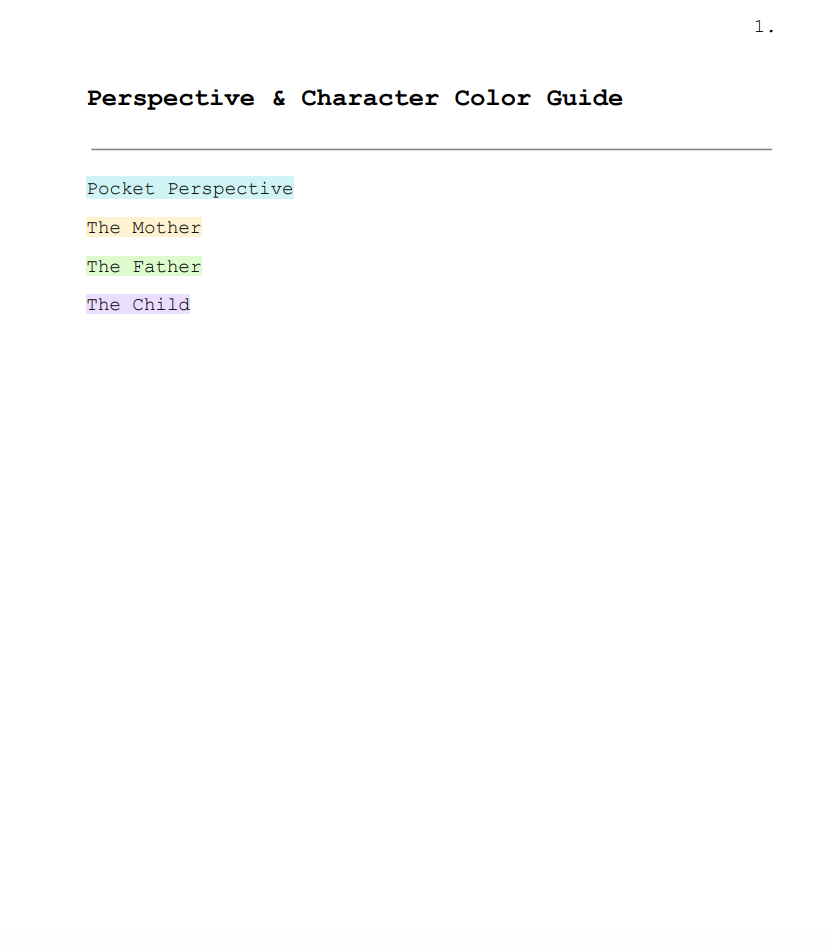
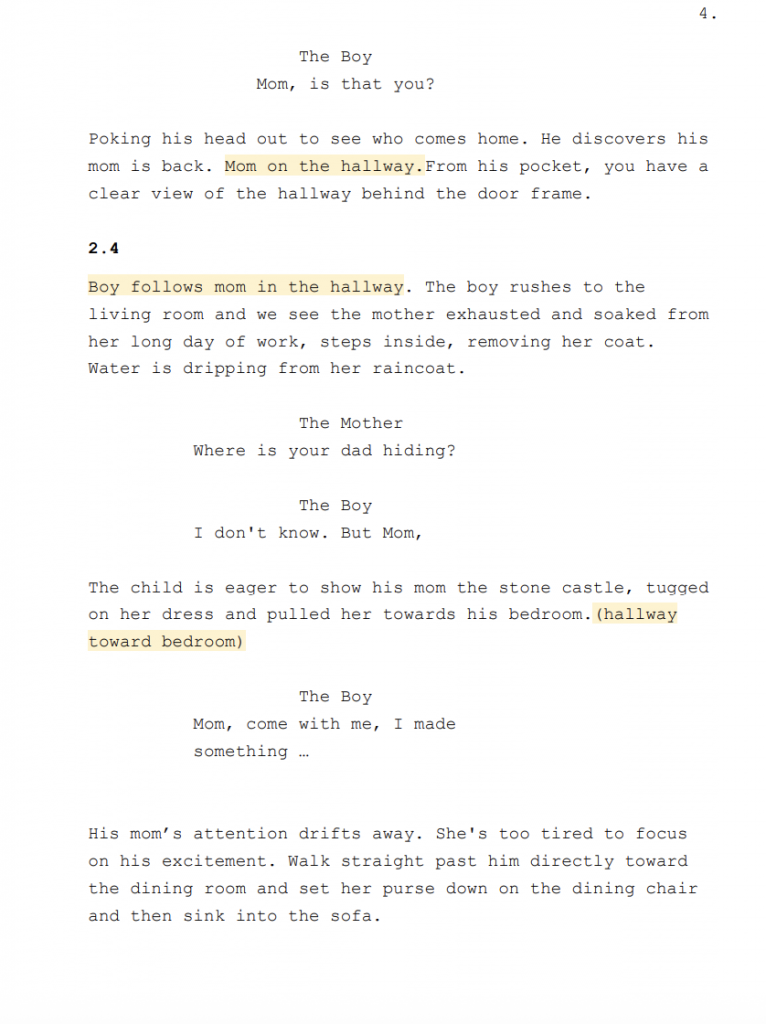
Alongside this theoretical input, our group continued to develop an initial XR story draft, resulting in a preliminary treatment. This version focused on three interconnected themes: growing up and letting go, the tension between love and independence, and the ways families express care. We aimed to explore these themes through a symbolic narrative approach that could translate emotional relationships into immersive experience.
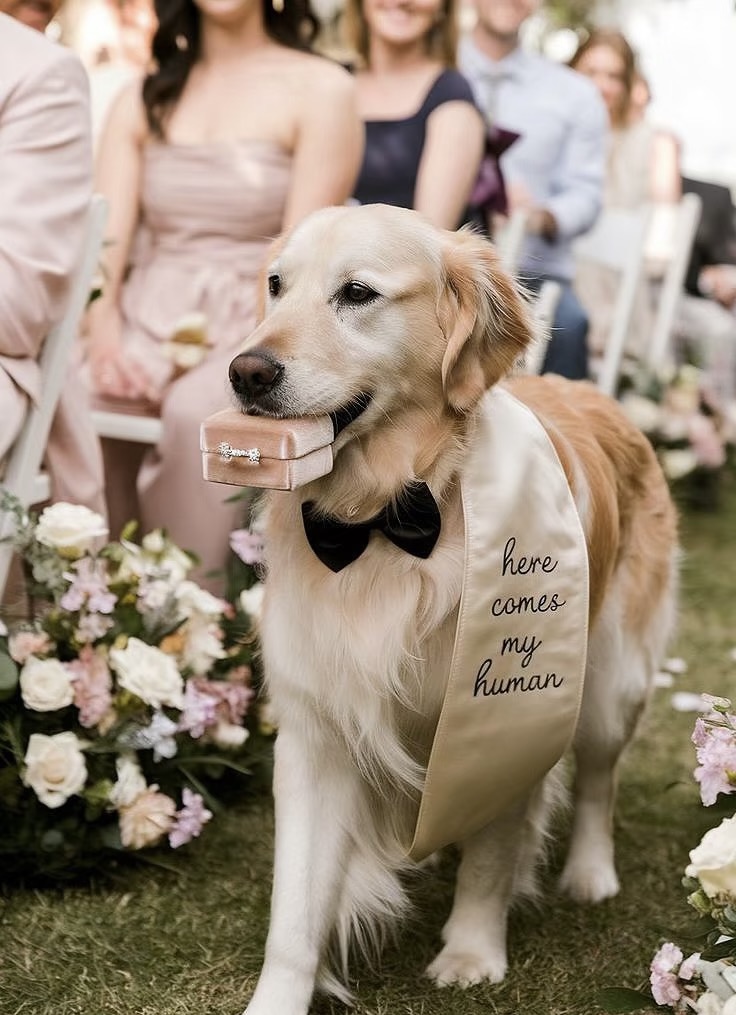
At the centre of the story is a symbolic “dog,” originally given by a mother to her daughter during childhood and consistently treated as real by the family. Whether the dog would ultimately take the form of a toy, a real pet, or a symbolic presence remained under discussion. At this stage, our interest lay primarily in its emotional function: representing protection, attachment, and the responsibility that is gradually transferred from parent to child as independence emerges.
Structurally, we began experimenting with a multi-perspective framework in which the participant experiences the story through different roles. The player would initially occupy more observational positions before transitioning into roles that are directly involved in the emotional dynamics, such as the mother or the bride. Certain key scenes were conceived as recurring narrative nodes, reappearing across perspectives to reinforce symbolic meaning rather than to advance plot in a conventional sense.
At this point, the narrative structure was still fluid and unresolved. Questions remained regarding the precise form of the dog as a symbol and whether the accumulation of perspectives and symbolic layers might complicate the experiential clarity of the story. However, these uncertainties were understood as part of the exploratory process. The case studies discussed in class encouraged us to think of narrative not as a fixed text, but as a sequence of experiential events that would need to be tested and refined through design.
Leave a Reply