XR Stories (continued)
This week marked the submission of our first project draft, representing a shift from early exploratory discussions toward a proposal that could be clearly articulated, reviewed, and critiqued. Compared to the previous week, which focused more on references and open-ended interests, this draft aimed to define what kind of relationship we wanted to explore, how emotional progression might be structured, and how immersive media could potentially support this narrative.
In the first draft, we centred the project on changes within a parent–child relationship, particularly how “love” takes different forms across stages of growth. Rather than treating love as a fixed or purely positive force, we approached it as a dynamic relational structure that evolves over time: beginning with protection and dependency, moving through constraint, friction, and compromise, and eventually reaching acceptance, letting go, and mutual growth. We organised this emotional progression into five stages, using the emotional arc itself as the core narrative framework rather than relying on a single plot-driven event.
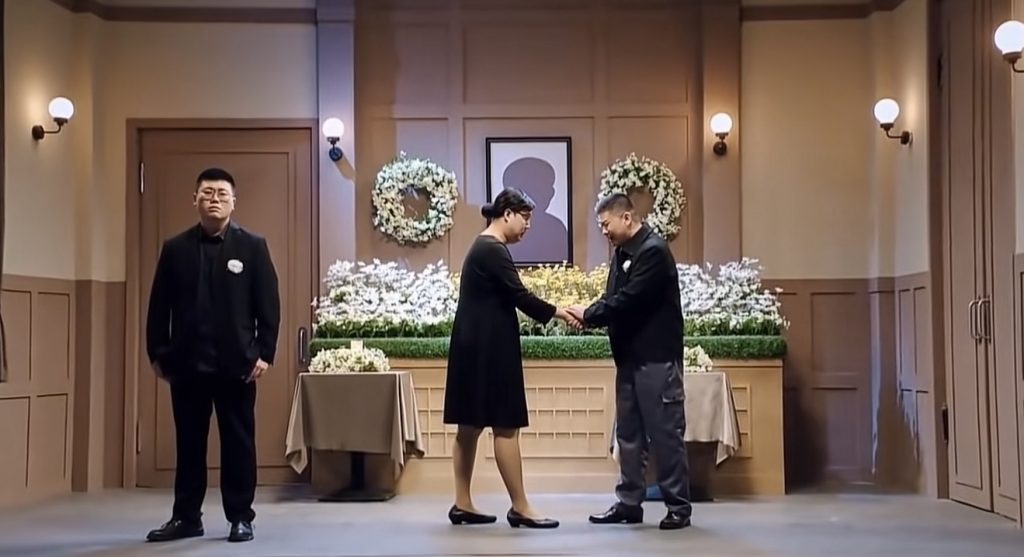
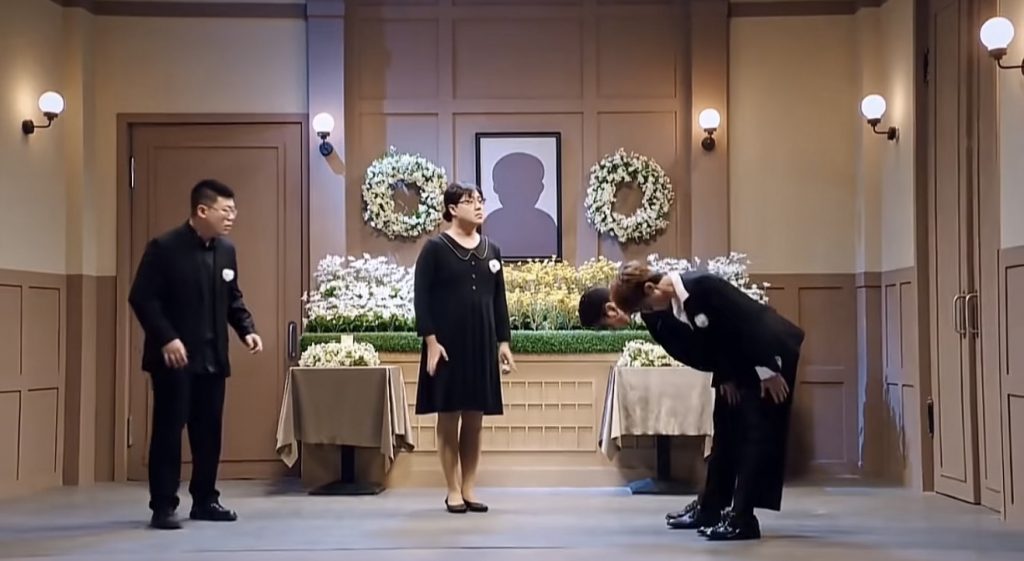
In terms of narrative setting, we proposed a family ritual—such as a wedding or funeral—as the primary space in which these relational tensions unfold. This type of setting combines public visibility with private emotion, bringing multiple generations, traditions, and personal expectations into the same space. We considered it particularly suitable for immersive storytelling, as it allows emotional pressure and relational imbalance to be spatially experienced rather than simply explained.
At the level of medium and experience design, the first draft already began to translate emotional dynamics into potential immersive mechanisms. We discussed The Line as a reference for how restricted interaction at critical moments can produce a strong sense of helplessness, and considered whether similar limitations could reflect moments in family relationships that cannot be intervened in or reversed. We also explored early ideas around a “mother” perspective, imagining an experience structured around continuous tasks and accumulating pressure. In this context, failure or loss of control was not framed as error, but as a way to reveal the child’s emerging independence rather than parental inadequacy.
It is important to note that while this draft established a clear thematic direction, emotional structure, and narrative setting, several aspects remained intentionally unresolved. We had not yet determined the most appropriate experiential viewpoint for the audience—whether the participant should be positioned close to the centre of the conflict or in a more observational role between witnessing and intervention. Similarly, the extent to which interaction should drive narrative progression, as opposed to reinforcing emotional experience, was left open for further testing and feedback.
Leave a Reply