Category: FMP

  • FMP 04-Drawing the Storyboard

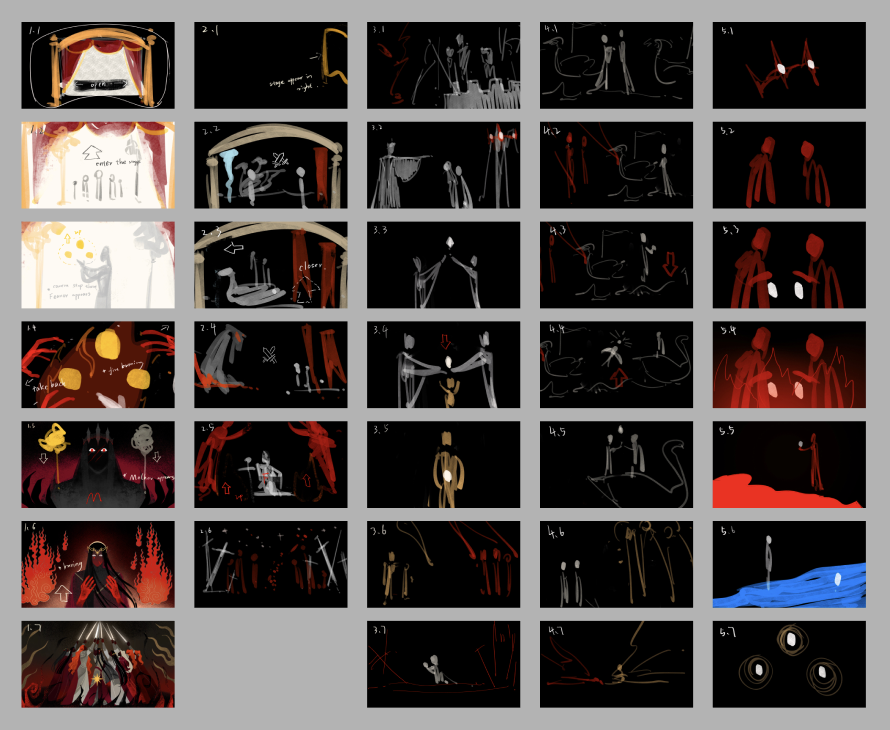
    This week, I drew a storyboard for all nine parts of the story, from the opening scene to the ending. It begins with Fëanor using the light of the Two Trees to make the Silmarils. It follows Fëanor and his seven sons as they swear their oath, take the ships at the harbour and fight in Middle-earth. After Fëanor’s death, the storyboard continues with his sons and ends with the three jewels in the sky, the earth and the sea.

    As I drew, I thought about how someone new to the story could follow it. For example, when the story shifts to Beren and Lúthien, we spend time away from Fëanor’s family. The jewel connects the two parts. If viewers recognise it and can see whose hands it passes into, they can understand why Fëanor’s sons return. Laying the panels side by side helped me see where I needed another drawing to make a change clear, and where a single image could tell a whole part of the story.

    My tutor had suggested looking at the first and last scenes together. Once I had drawn the full storyboard, I could place those panels next to each other. At the beginning, Fëanor holds the jewels he has made. At the end, his sons finally hold those same jewels, and the jewels burn their hands. Seeing those two images together helped me see the shape of the whole story and how much the oath had changed the family. With all nine parts in front of me, I could begin choosing which moments to animate.
  • FMP 03-Reviewing the Story Outline with My Tutor

    By the time I met with my tutor, I had reduced about 200 pages of The Silmarillion to a three-page outline. My tutor felt that Tolkien’s language would make people want to follow the story to the end. The challenge was turning those three pages into animation. A change of place might take only a few words to describe, but it would mean drawing a whole new scene. I still had nine parts to the story, which was too much to animate before the deadline.

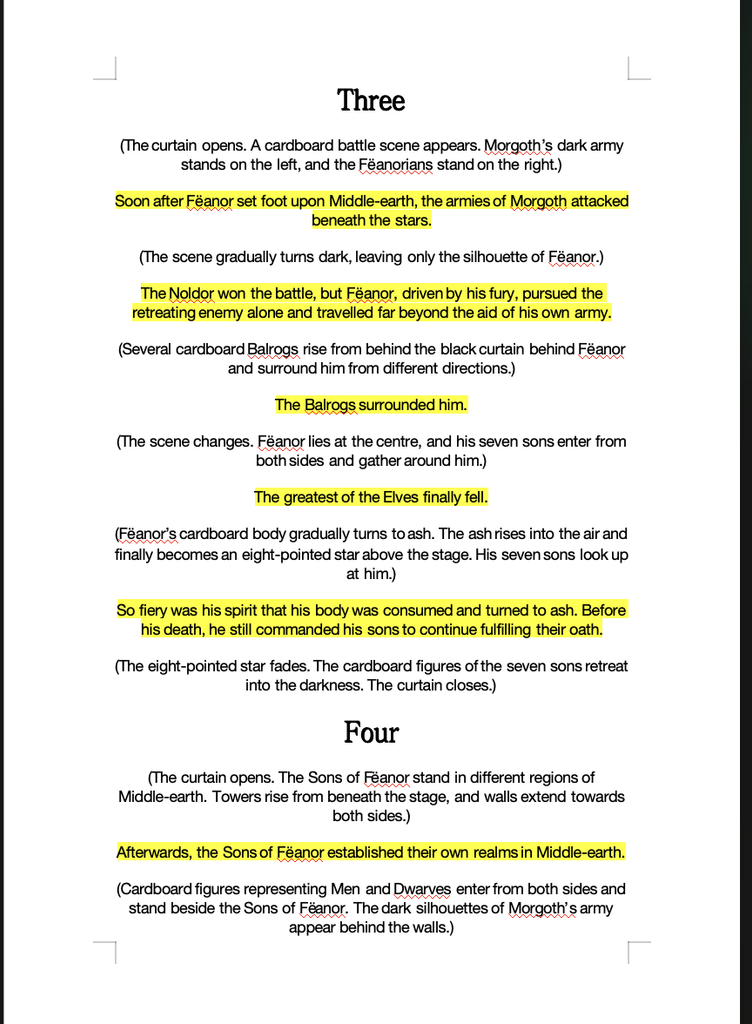
    My tutor suggested focusing on one question: How do Fëanor and his sons go from wanting to recover the stolen Silmarils to attacking their own people? The opening needs to show why Fëanor takes the oath. Morgoth has stolen the jewels and killed his father, Finwë, so the audience can understand his anger. The first clear change comes at the harbour. The Teleri want to keep the ships they built, and Fëanor is willing to kill them to continue his journey. Later, when he chases the enemy alone and dies after the Battle Under the Stars, the audience can connect his fate to the choices they have already seen him make.

    We also discussed the quieter part of the story. After Fëanor’s death, his sons build kingdoms in Middle-earth. For a time, they stop chasing the jewels and begin to prosper. My tutor asked what would bring this peace to an end. Beren recovers one of the Silmarils so that he can marry Lúthien. The jewel eventually passes to their son, Dior. Like the Teleri before him, Dior has done nothing to Fëanor’s family. Yet the sons attack him because of their oath. This helped me see why Beren and Lúthien belong in the outline and which part of their story the audience needs to know.

    My tutor suggested planning the first and last scenes of this version before working on the middle. In the first scene, Fëanor holds the jewels he has made. In the last, his surviving sons finally hold those same jewels, and the jewels burn their hands. I want to sketch these two moments side by side. The light stays the same, but what it means to the family has changed. With those images in mind, I can decide which moments need animation. The years spent building kingdoms, or the part where Elwing and Eärendil start a family, could each be shown in one or two still illustrations.

  • FMP 02-Mapping Out the Story

    After choosing to adapt The Silmarillion, I spent this week putting the main events in order. I know the characters well, so when I look at one of my drawings, I already know who is in it and what is happening. Someone new to the book would see the same drawing very differently. This gave me a question to start with: could I tell the story of Fëanor’s family by following the three Silmarils?

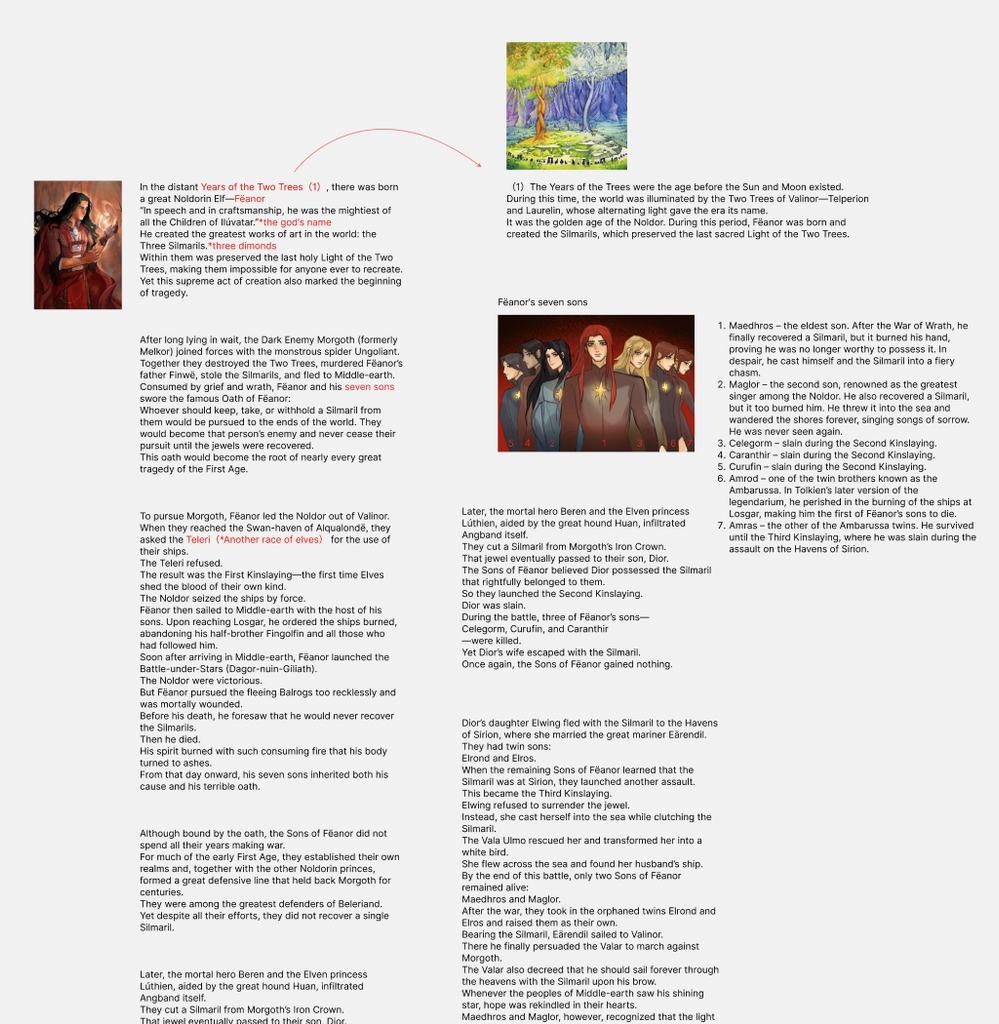
    My outline begins with Fëanor capturing the light of the Two Trees in three jewels. Morgoth steals the jewels and kills Fëanor’s father, Finwë. Fëanor and his seven sons then swear an oath to take the Silmarils back from anyone who holds them. To follow Morgoth across the sea, they need ships. When the Elves at the harbour refuse to give up their ships, Fëanor and his followers draw their swords against their own people.

    The harbour scene stood out to me. Morgoth stole the jewels, yet the first people Fëanor and his followers hurt are the Elves protecting their ships. Through this one choice, the audience can see how the oath begins to change what the family is willing to do.

    At this stage, my outline still followed the sons after Fëanor’s death. It went all the way to the end, when one jewel is in the sky, one is in the earth and one is in the sea. Seeing the whole story laid out helped me understand my tutor’s point about the ten-minute limit. The harbour scene alone needs time for the audience to understand both sides.

  • FMP 01 Choosing My Project Theme

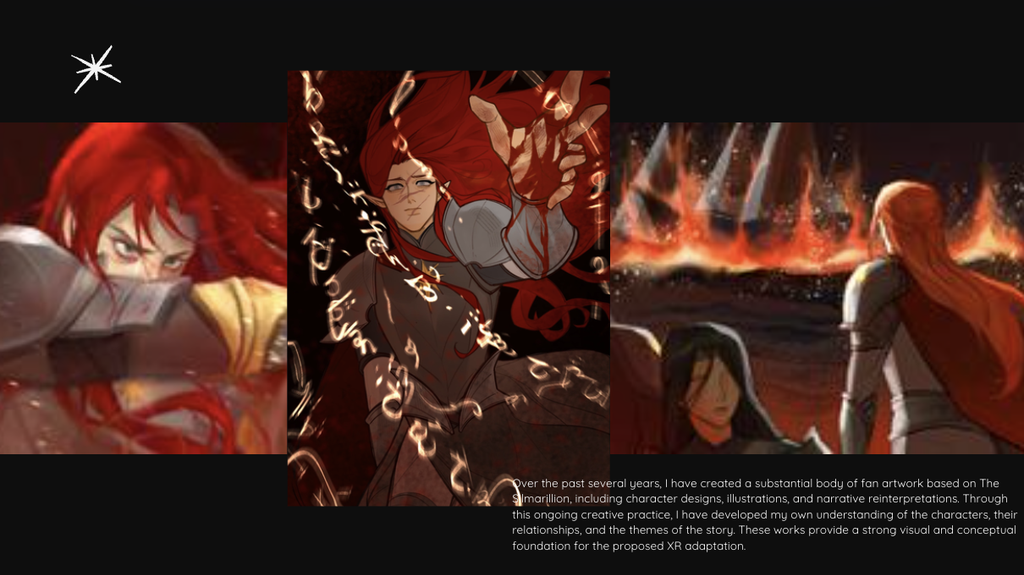
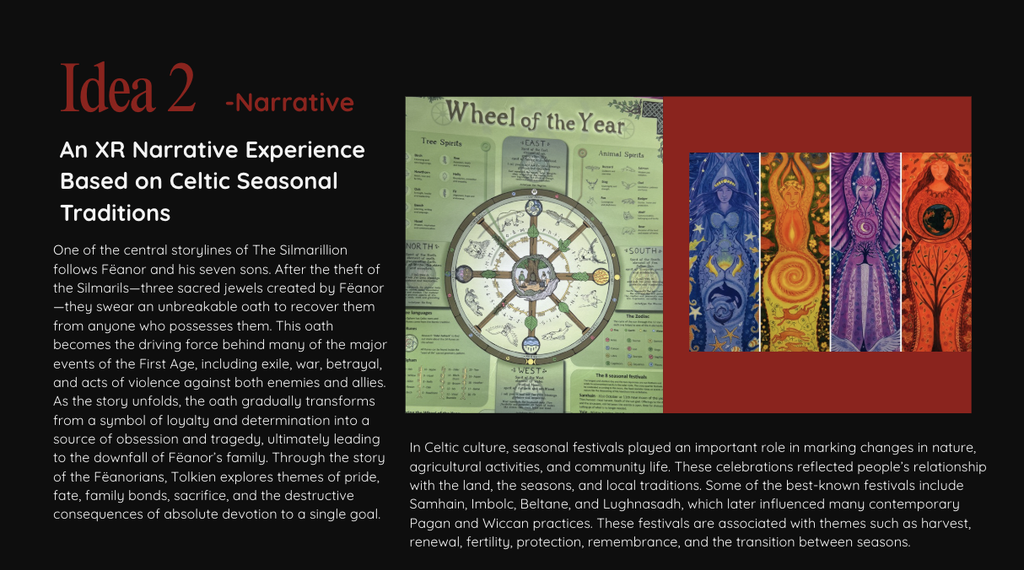
    This week, I prepared two ideas for my final project. The first came from the illustrations I have made over the years for Tolkien’s The Silmarillion. The second came from a sunrise celebration I attended in the UK. I put my drawings and photos in the same presentation and discussed both ideas with my tutor.

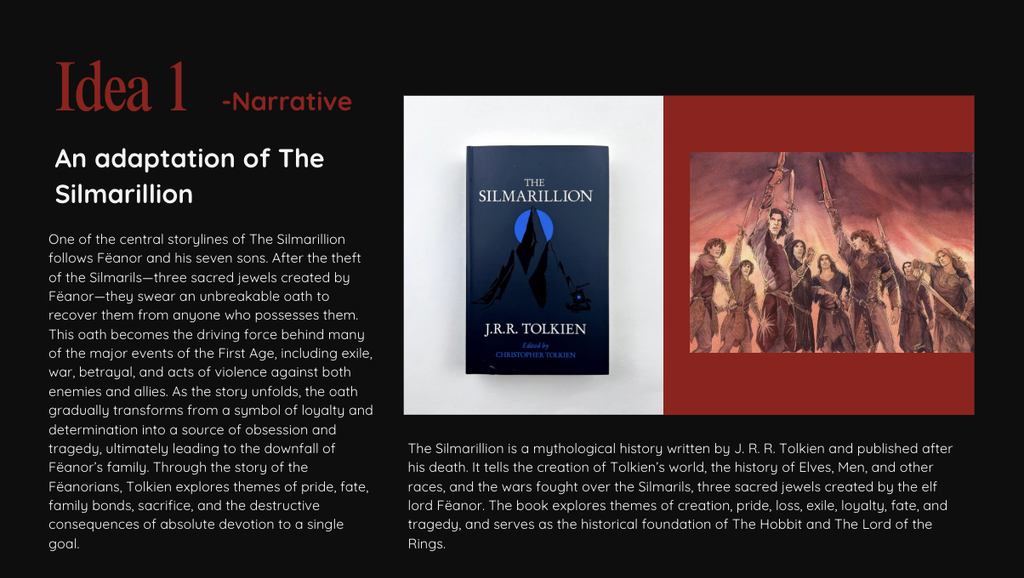
    My first idea was to adapt part of The Silmarillion for VR. I have drawn Fëanor and his family many times. When I put some of my older drawings together, I realised that I kept coming back to one part of their story: the oath. After the Silmarils are stolen, Fëanor and his seven sons swear to get them back. What interests me is how one promise brings the family together, then leads them to hurt other people. When I draw a single illustration, I can choose any moment I like. For a VR story, I had to think about someone who had never read the book. What would they need to see first to understand why these characters make that choice?

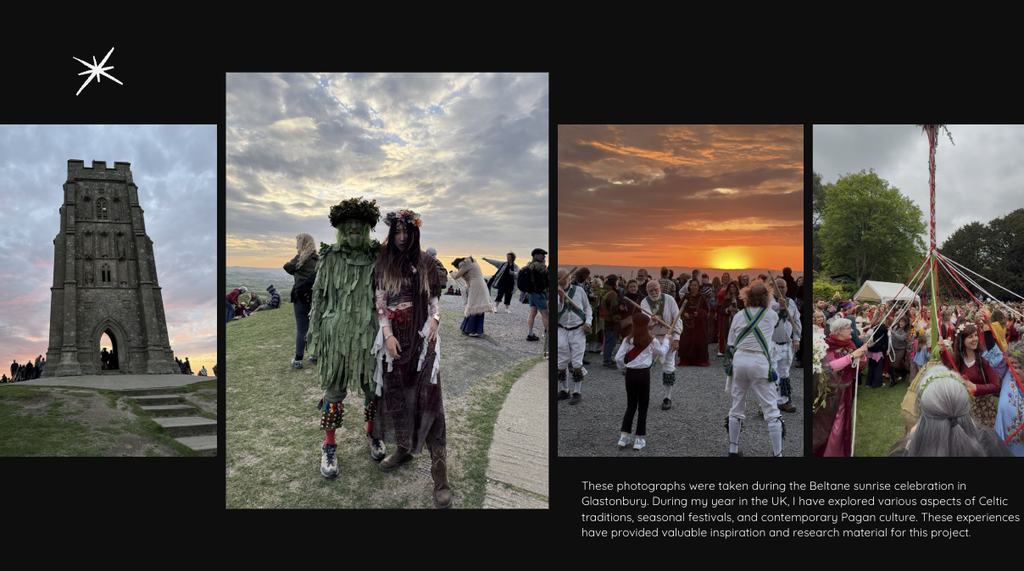
    My second idea grew out of my interest in Wicca and Celtic seasonal festivals. I wanted to use the Wheel of the Year to guide the viewer through different celebrations as the seasons changed. I included photos I took at the Beltane sunrise celebration in Glastonbury. They showed people gathering on the hill at dawn, a person dressed in green leaves, and dancers holding ribbons around a maypole. Looking at the photos, I wondered what someone standing in the middle of the crowd would look at first. Would they watch the sun rise or turn to see what the people beside them were doing?

    My tutor encouraged me to develop The Silmarillion idea. Fëanor’s family already had a clear story, and I had drawings I could build on. My tutor also pointed out that the story was too big for a ten-minute experience and suggested choosing one part of it. I decided to go ahead with The Silmarillion. My next step was to return to the book, choose one decision I wanted the viewer to witness, and work out where the story needed to begin.