Category: Design for Immersive Experiences

  • WEEK 11

    Tutorials and Trouble Shooting

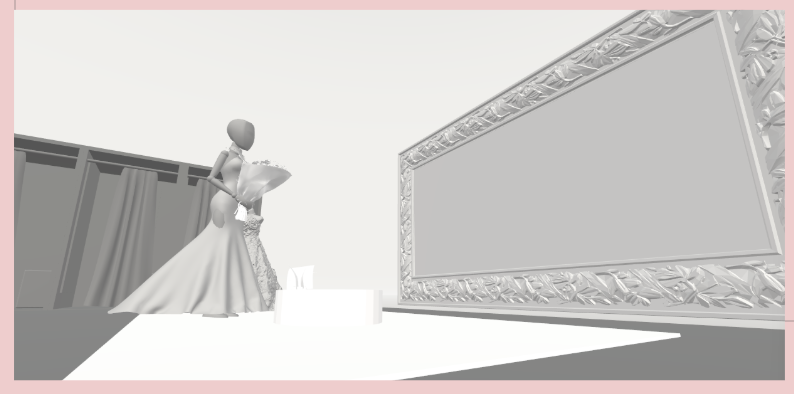
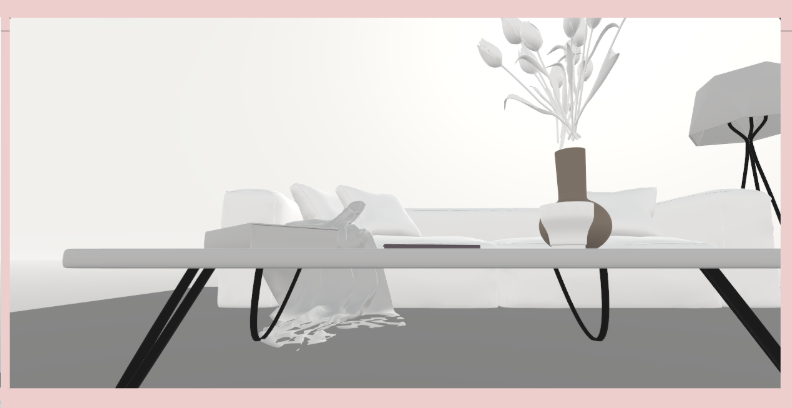
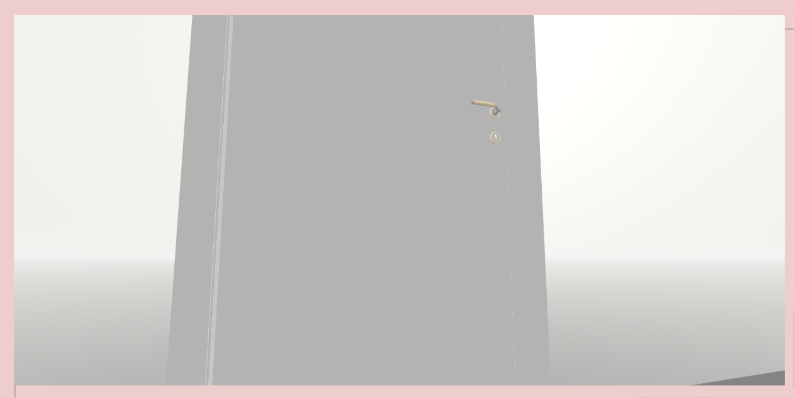
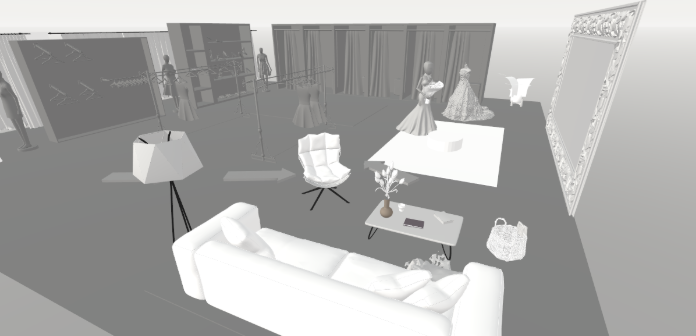
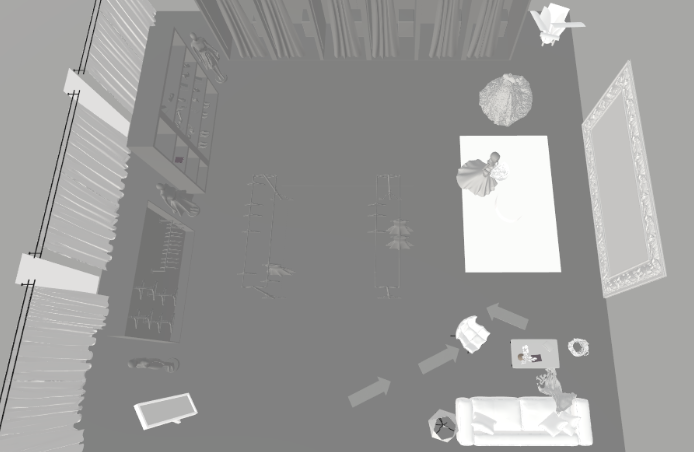
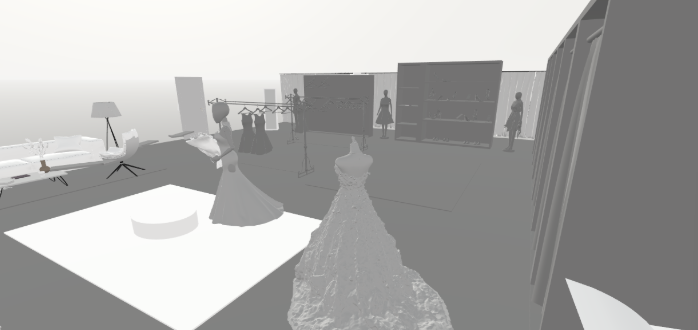
    In Week 11, we focused on constructing the wedding environment within ShapeXR, translating our spatial plans into a walkable and experiential XR space. Following the previous week’s decision on a low-poly visual style and initial layout planning, this week was dedicated to assembling the full set of wedding spaces and evaluating them through embodied experience.

    Working in ShapeXR allowed us to think about space in an immersive and iterative way, rather than through static models or two-dimensional layouts. We built the key areas of the wedding, including the reception space, transitional corridors, preparation areas, and the main ceremony hall, and adjusted their scale and connections within a single environment.

    By entering and moving through these spaces in ShapeXR, we were able to assess design decisions based on bodily perception rather than abstract logic. Several issues became apparent only through this process, such as how spatial proportions affect comfort or pressure, how corridor length influences pacing, and how sightlines guide attention within the ceremony space. These insights highlighted the importance of embodied testing in XR design.

    The process also helped us clarify the functional differences between spaces. The reception area remained open and fluid, supporting observation and gradual entry into the experience. Preparation and backstage spaces were more enclosed, reinforcing intimacy and relational tension. The ceremony hall, as the core public space, needed to balance clear structure with the capacity to hold symbolic actions and collective attention. These distinctions became more concrete as they were tested spatially.
  • WEEK 10

    Tutorials and Trouble Shooting

    In Week 10, our project progressed from conceptual discussion into practical visual development. This week focused on identifying an appropriate modelling approach and beginning the initial construction of the environment, allowing our ideas around narrative, space, and embodiment to take visible form.

    After researching and comparing different modelling styles, we decided to adopt a low-poly visual approach. From a technical perspective, this style is well suited to XR environments, supporting stable real-time performance and clear spatial readability. Conceptually, the simplified geometry helps maintain a light and approachable tone for the wedding setting, aligning with our intention to avoid visual heaviness or emotional pressure.

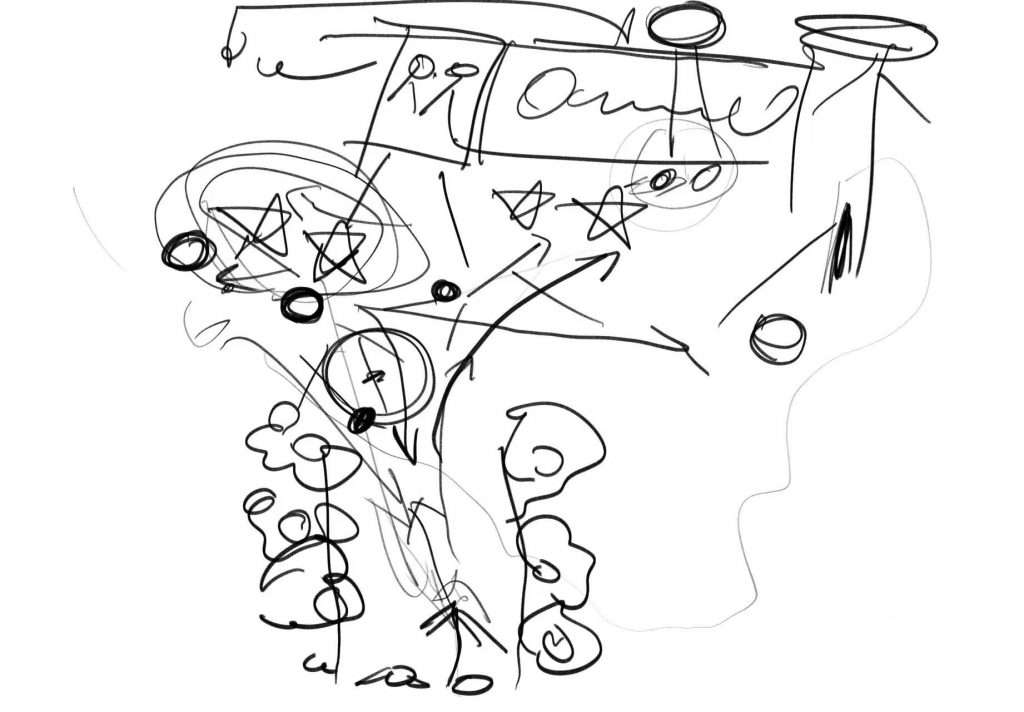
    Once the visual direction was established, we began building the core scenes of the project. At this early stage, the focus was not on detail or decoration, but on spatial layout and scale. We translated our planned wedding flow into three-dimensional space, including entrance areas, transitional zones, and the main ceremony space, in order to test whether the spatial sequence could support the intended embodied experience.

    Working in a low-poly style also encouraged us to pay closer attention to form, colour, and proportion as tools for guiding attention. With visual detail reduced, the hierarchy of spaces, the clarity of movement paths, and the prominence of key areas became more dependent on structural design. This process reinforced our understanding of how spatial design directly shapes embodied experience.

  • WEEK 9

    Embodiment

    Through lectures and case studies, we began to understand embodiment as more than simply having a virtual body or a first-person viewpoint. Embodiment is constructed through design decisions such as where the participant is placed, how freely they can move, what actions they are allowed to perform, and what actions are deliberately restricted. These bodily conditions directly influence how relationships, power dynamics, and emotions are perceived.

    This framework was particularly relevant to our project, which is organised around a wedding and its spatial layout. Different wedding spaces naturally produce different embodied states: guests move freely at the entrance, feel confined in dressing rooms or backstage areas, and are physically positioned and regulated during the ceremony. These bodily experiences communicate social roles and expectations without the need for explicit narrative explanation.

    Embodiment also encouraged us to rethink character perspective. Rather than explicitly assigning a role, physical positioning and agency can imply identity. Being placed at the edge of a space, limited to observation, can convey exclusion or lack of agency, while being positioned at the centre and addressed directly can create a sense of responsibility and expectation.

    Within the context of our project, this approach offered a new way to express the mother–daughter relationship and the themes of care and letting go. Instead of relying on symbolic dialogue or narrative explanation, we began to consider how the participant’s body could be guided, constrained, or entrusted within the space. These embodied experiences allow emotional dynamics to be felt rather than explained.

    Screenshot
  • WEEK 8

    Independent work

    As the project developed, we began to realise that discussing narrative themes and symbolism alone was not sufficient to support an XR experience. This week, we shifted our focus toward spatial design, considering how the wedding functions as a sequence of spaces rather than a single narrative event.

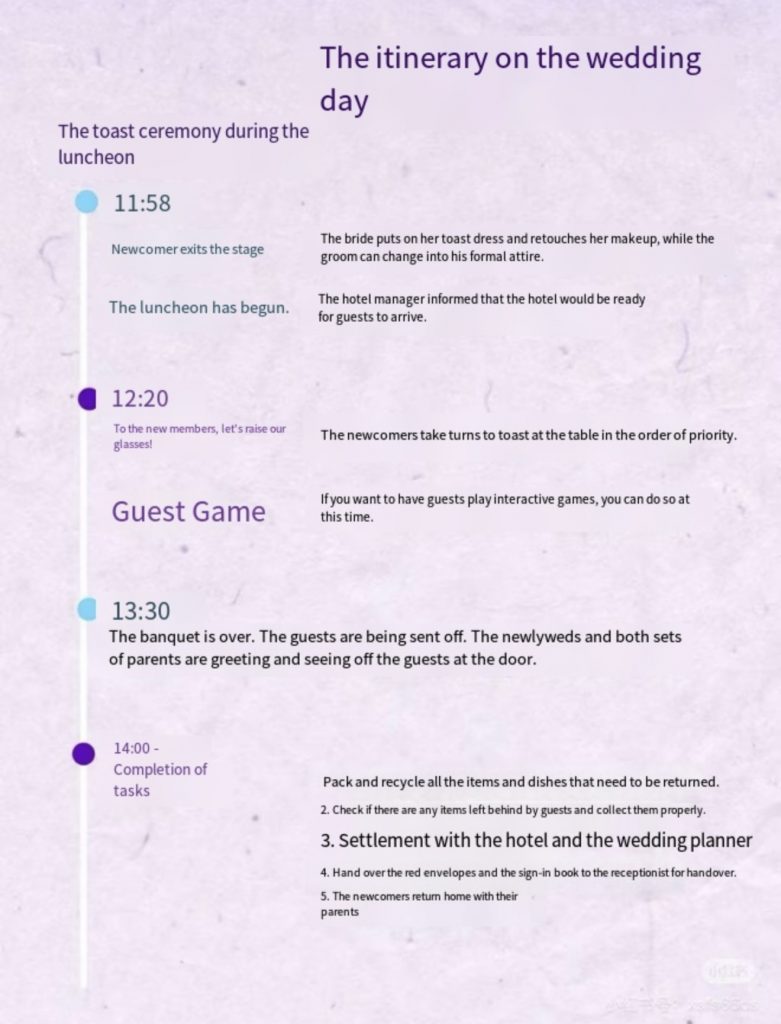
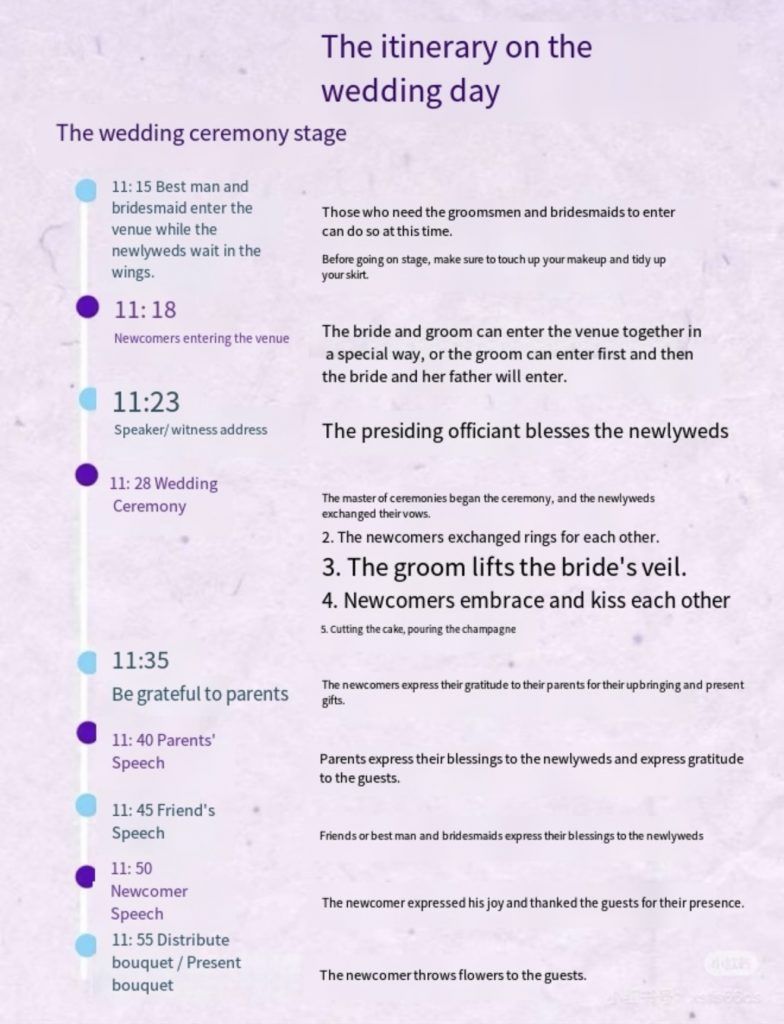
    We started to understand the wedding as a clear spatial flow. Different areas within a wedding venue naturally carry different social rules, behaviours, and emotional intensities. This existing structure provided a practical framework for organising the XR experience, allowing space itself to guide the participant’s journey.

    The experience begins in the reception or entrance area. This is an open and public space where guests arrive, greet one another, and settle into the event. At this stage, the participant can enter the experience as an observer, gradually becoming familiar with the environment and the social expectations of the wedding without immediately engaging with emotional tension.

    From there, the experience moves toward more private preparation spaces, such as dressing rooms or backstage areas. Compared to the reception, these spaces are more enclosed and intimate, and relationships become more direct. We identified this area as where the mother’s involvement begins to feel more intrusive, and where emotional pressure starts to accumulate, even before the ceremony officially begins.

    Transitional spaces, such as corridors connecting different areas, were treated as important experiential elements rather than narrative scenes. These moments of movement and waiting allow for changes in atmosphere, pacing, and perspective. In XR, such spaces function as breathing points within the experience, supporting smooth transitions between different emotional states.

    The ceremony hall represents the core public space of the experience. It is highly ritualised and governed by strict social conventions. Within this context, moments of absurdity and subtle humour can emerge naturally, as actions are accepted simply because they occur within the authority of the ceremony. This space provides a stage for the most concentrated emotional and symbolic moments of the story.

    Finally, backstage or post-ceremony spaces offer a shift away from public performance. These quieter, more private areas are suitable for emotional release or moments of personal realisation. Rather than resolving emotions within the ceremony itself, moving into these spaces allows the experience to conclude in a more restrained and reflective manner.

    By structuring the project around a spatial flow—from entrance, to preparation, to ceremony, and finally to backstage—we began to treat the wedding as an experiential structure rather than a narrative backdrop. This approach helped us organise emotional intensity through space, maintain a light surface tone, and clarify the participant’s journey through the XR environment, laying the groundwork for further refinement of the experience.

  • WEEK 7

    Independent work

    In Week 7, our discussions shifted toward defining the overall tone of the project and the kind of experience we wanted the audience to enter. Building on the previous week’s conversations about the dog’s form, we began to address a broader question: what should this wedding feel like for the participant?

    Through reflection on our earlier ideas, we realised that overly abstract or heavily symbolic approaches risked pushing the experience toward a darker or more unsettling direction than we intended. This led us to clarify that, on the surface, we wanted the wedding to feel relatively light and even subtly comedic. Rather than creating tension through fear or discomfort, we aimed for a sense of gentle absurdity—an atmosphere that feels strange but not threatening.

    Choosing a lighter tone was not about diminishing the emotional weight of the story. Instead, it was a way of making the experience more accessible. Weddings are already highly ritualised events, often filled with exaggerated gestures, formal procedures, and social performance. We began to see these qualities as opportunities for humour and irony, allowing emotional tension to emerge naturally through imbalance and repetition rather than overt conflict.

    Within this context, we revisited our narrative elements to assess whether they supported this tonal direction. The representation of the dog, the intensity of the mother’s behaviour, and the participant’s position within the ceremony all needed to avoid pushing the experience into something overly oppressive or psychologically heavy. We became more cautious about design choices that might feel conceptually rich but risk alienating the audience or disrupting the intended mood.

    This week also helped us recognise that humour and lightness do not equate to superficiality. Within a wedding that appears playful or slightly absurd, themes of growing up, letting go, and independence can be communicated in more subtle and resonant ways. Rather than explicitly signalling emotional seriousness, the experience allows participants to gradually sense changes in relationships through participation and observation.

  • WEEK 6

    Independent work and Tutorials


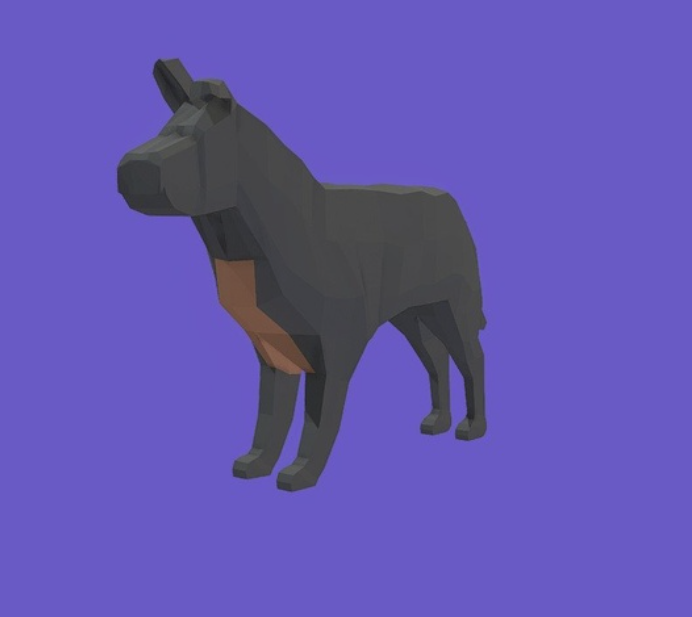
    In Week 6, our discussions became more focused on the central symbolic figure in the story—the dog—and how it should be represented within the XR experience. Rather than expanding the narrative, this week was about refining and questioning a single core element, as we began to recognise how strongly the form of the dog would shape the overall tone and accessibility of the project.

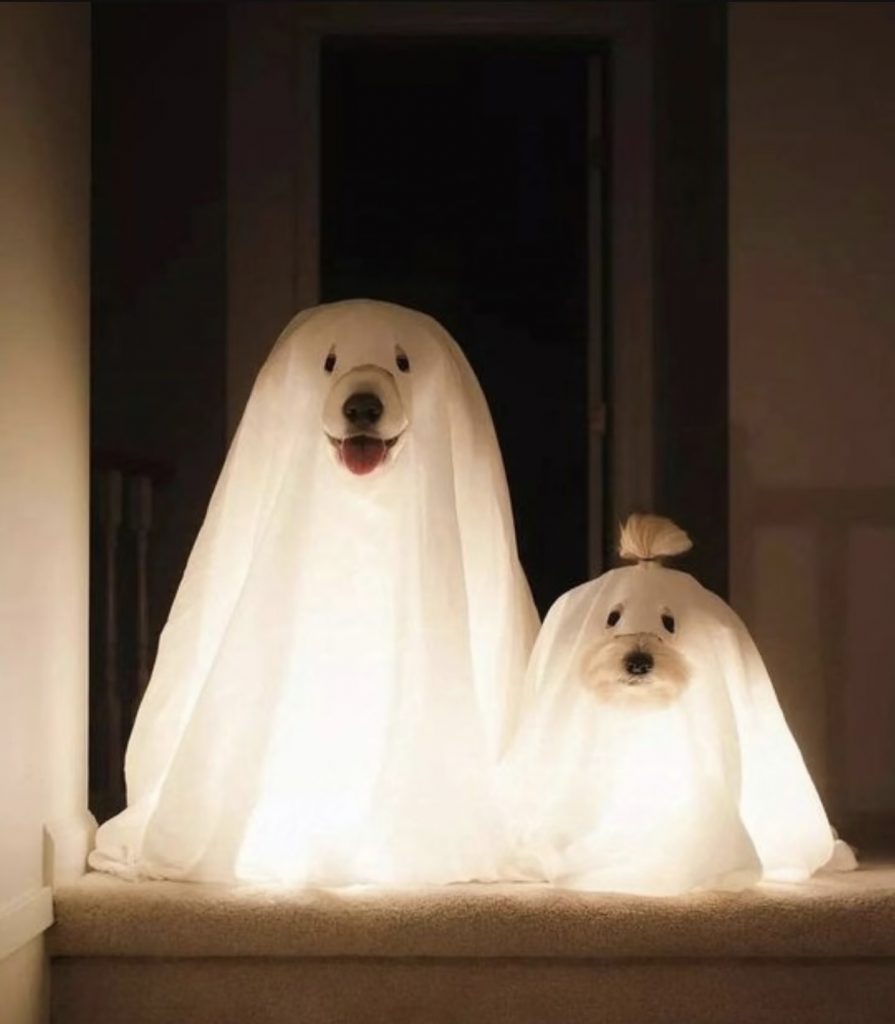
    Initially, we considered presenting the dog as a ghostly or intangible presence. This idea emerged from our desire to emphasise its symbolic nature, treating the dog as an emotional projection rather than a literal character. However, as we discussed this approach further, we became aware that such an abstract representation might create emotional distance for the participant and weaken the warmth of the family dynamic we were trying to convey.


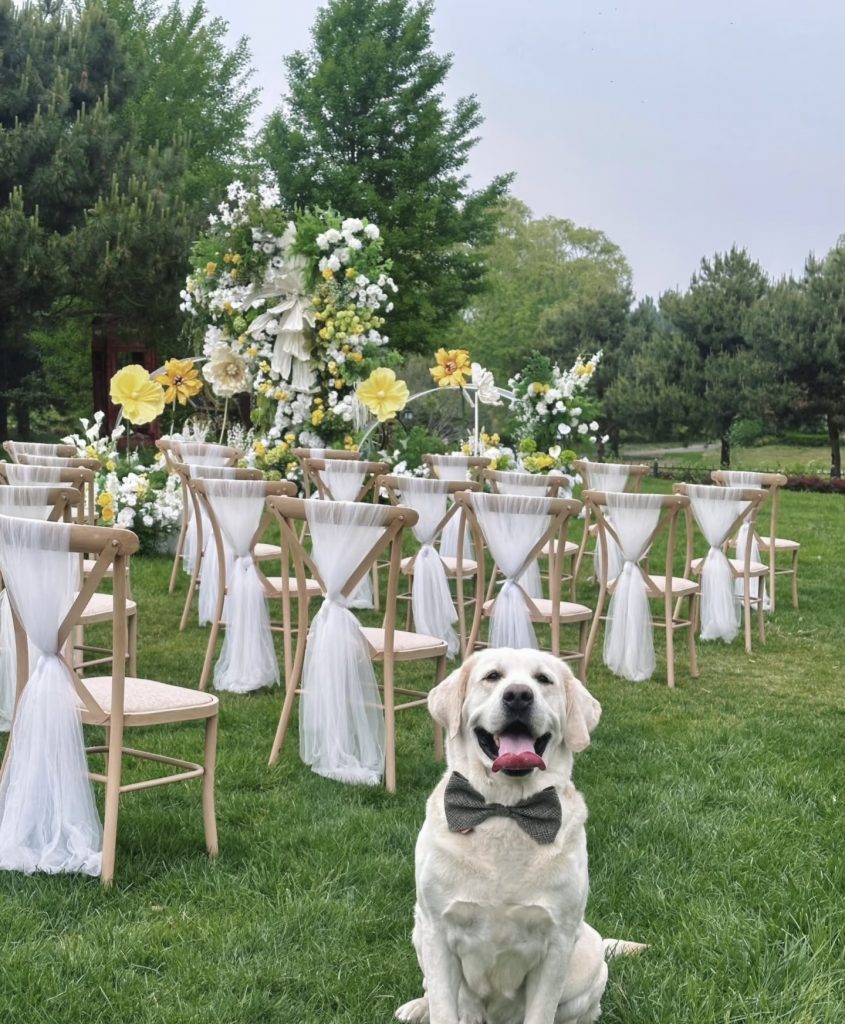
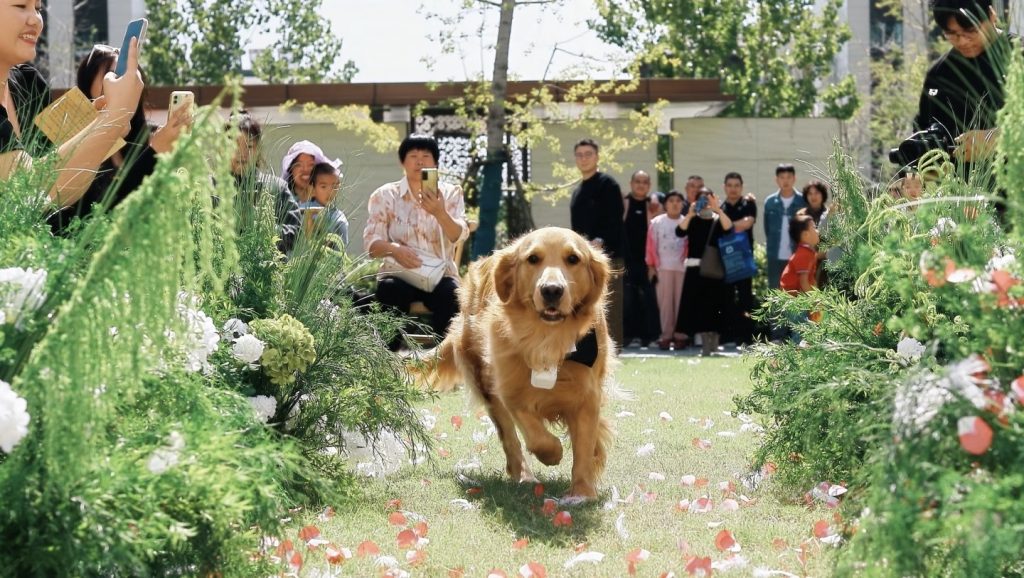
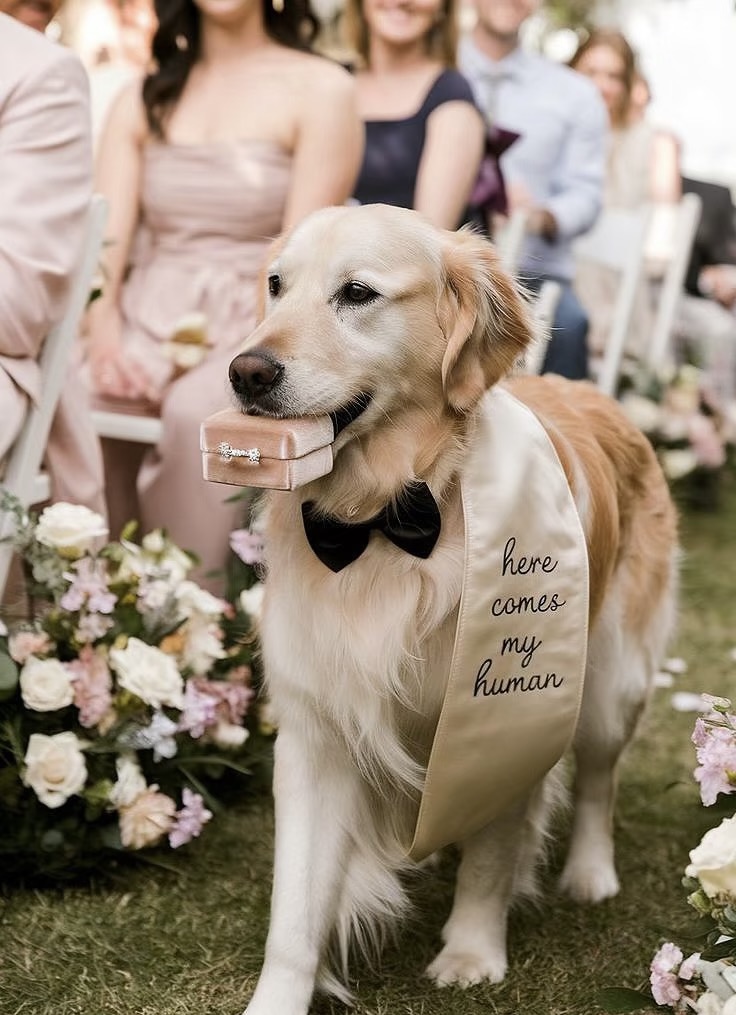
    Following feedback from our tutor, we shifted toward imagining the dog as a physical, tangible presence. This change was not merely a visual adjustment, but a reconsideration of how the experience would be received. A physical dog allows the family’s behaviour—treating it seriously and addressing it with care—to feel more grounded and believable, even within a surreal narrative context. This helped us realise that symbolism in XR does not necessarily need to rely on overtly unreal forms, but can be embedded in everyday actions and attitudes.

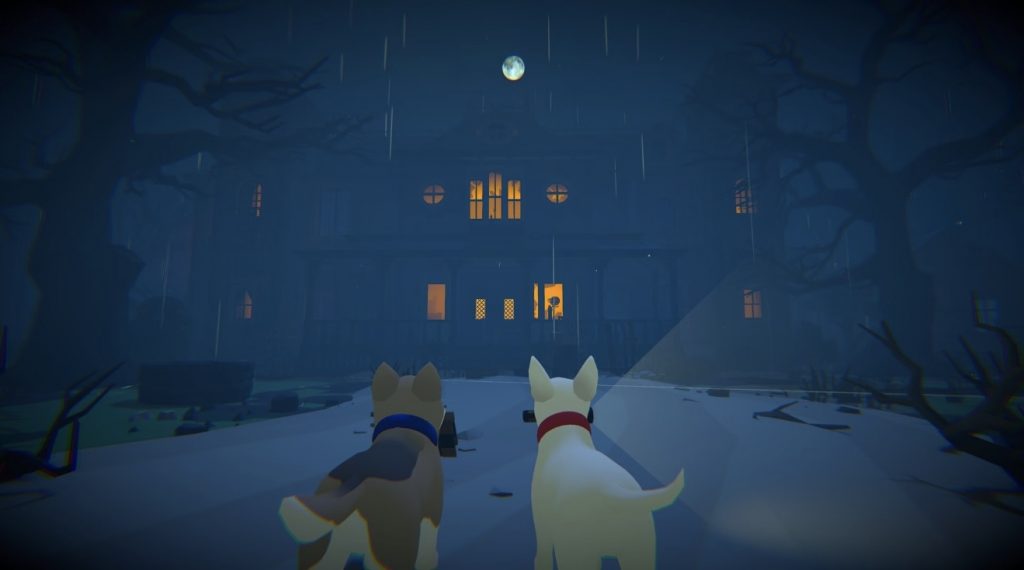
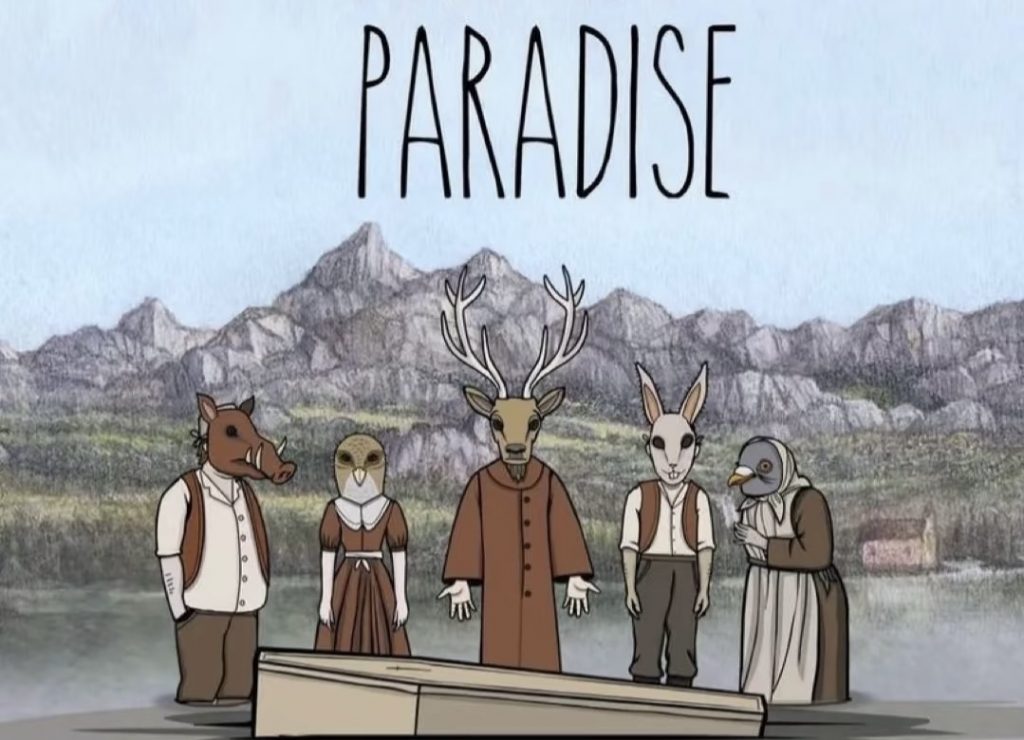
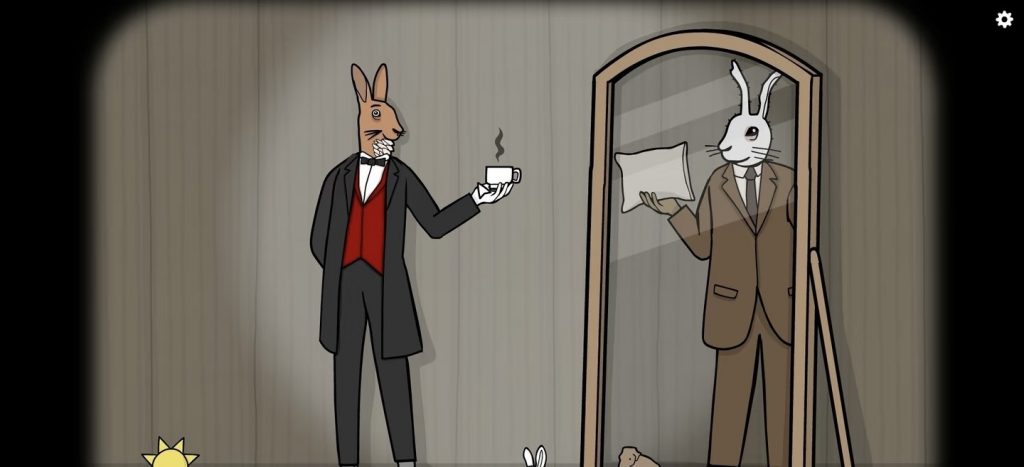
    During this process, we also explored a more exaggerated visual direction inspired by Rusty Lake, specifically the idea of a humanoid figure with a dog’s head. This option was ultimately rejected, as it pushed the tone of the project toward something darker and more unsettling than we intended. Since our aim was to create a wedding experience that felt relatively light, and even subtly comedic on the surface, such a grotesque form risked overshadowing the emotional nuance of the story and shifting audience expectations too strongly.

    These discussions made it clear that the form of the dog is not just a symbolic choice, but a key factor in establishing the emotional tone of the experience. Overly abstract or disturbing imagery could draw attention away from the relational dynamics at the heart of the story, causing participants to focus on decoding the concept rather than engaging with the emotional situation.

  • WEEK 5

    XR Space choreography and Ethics

    In Week 5, our focus expanded from narrative structure toward ethical considerations within XR experiences. The lectures and readings this week addressed why ethics matter in immersive media, the potential risks of heightened embodiment, and real-world examples where immersive design raised ethical concerns. While this week did not directly advance the project’s form, it significantly influenced how we began to evaluate our narrative decisions.

    Through discussions around games as storytelling systems, we revisited the idea that interactive narratives do not simply present stories but construct systems in which participants act, identify, and sometimes assume responsibility for outcomes. In XR contexts, this involvement becomes more bodily and emotionally intense, which amplifies the designer’s responsibility. This prompted us to question how our project positions the participant and which emotional perspectives they are implicitly encouraged to adopt or reject.

    The lecture on ethics in XR further highlighted issues such as emotional overload, psychological pressure, role confusion, and the blurring of boundaries between virtual experience and everyday life. These considerations challenged the assumption that stronger immersion is always beneficial. We began to recognise that immersive intensity, if not carefully framed, can place an unintended burden on the participant rather than deepen understanding.

    When reflecting on our developing project, these discussions introduced new uncertainties. Our narrative centres on family relationships, growing up, and letting go, using symbolic figures and multiple perspectives to convey emotional tension. In light of the ethical discussions, we started to question whether this approach might impose excessive emotional weight on the participant or obscure the boundary between observation and identification—particularly given the themes of parental control, emotional responsibility, and identity.

    Ethical considerations also led us to rethink the role of constraint within the experience. Limiting action, restricting choice, or forcing participation can be powerful narrative tools, but they also raise questions about consent, comfort, and clarity. This week encouraged us to treat such design decisions as ethical choices that require justification, rather than purely formal or aesthetic strategies.

  • WEEK 4

    Storyboarding and Event List

    In Week 4, the course focused primarily on the analysis and discussion of VR narrative case studies. Rather than producing new material, this week functioned as a period of methodological input, helping us understand how immersive narratives are structured and experienced. For us, this stage was less about advancing the final form of the project and more about building a conceptual framework for thinking about VR storytelling.

    Through the examination of various XR narrative examples, we were introduced to an event-based way of understanding immersive storytelling. Unlike traditional scripts that rely on linear plot progression, VR narratives are often structured around the participant’s position, access to information, and the actions they are allowed or prevented from performing at any given moment. This perspective highlighted that narrative meaning in VR can emerge from the sequencing of experiences and shifts in viewpoint, rather than from explicit causal storytelling.

    Alongside this theoretical input, our group continued to develop an initial XR story draft, resulting in a preliminary treatment. This version focused on three interconnected themes: growing up and letting go, the tension between love and independence, and the ways families express care. We aimed to explore these themes through a symbolic narrative approach that could translate emotional relationships into immersive experience.

    At the centre of the story is a symbolic “dog,” originally given by a mother to her daughter during childhood and consistently treated as real by the family. Whether the dog would ultimately take the form of a toy, a real pet, or a symbolic presence remained under discussion. At this stage, our interest lay primarily in its emotional function: representing protection, attachment, and the responsibility that is gradually transferred from parent to child as independence emerges.

    Structurally, we began experimenting with a multi-perspective framework in which the participant experiences the story through different roles. The player would initially occupy more observational positions before transitioning into roles that are directly involved in the emotional dynamics, such as the mother or the bride. Certain key scenes were conceived as recurring narrative nodes, reappearing across perspectives to reinforce symbolic meaning rather than to advance plot in a conventional sense.

    At this point, the narrative structure was still fluid and unresolved. Questions remained regarding the precise form of the dog as a symbol and whether the accumulation of perspectives and symbolic layers might complicate the experiential clarity of the story. However, these uncertainties were understood as part of the exploratory process. The case studies discussed in class encouraged us to think of narrative not as a fixed text, but as a sequence of experiential events that would need to be tested and refined through design.

  • WEEK 3

    XR Stories (continued)

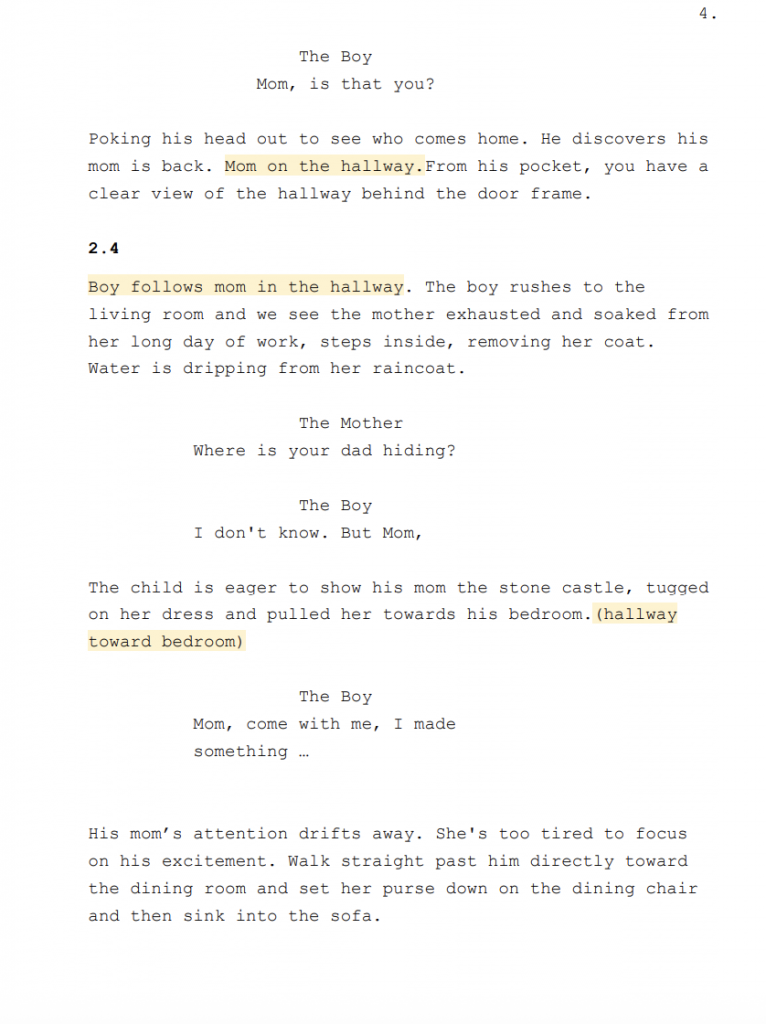
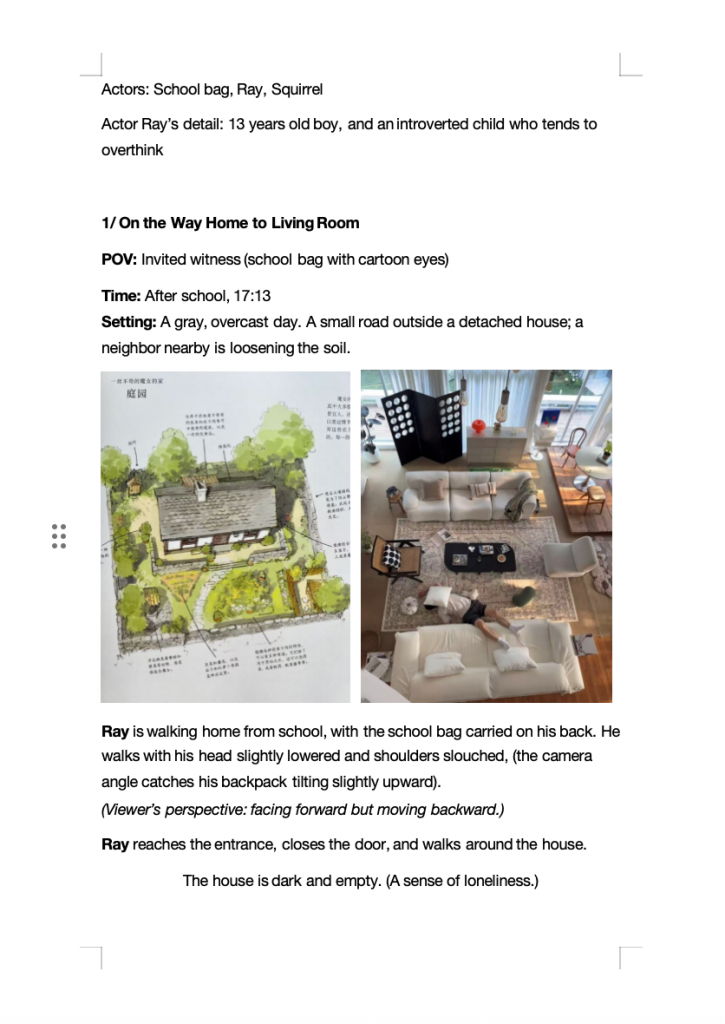
    In Week 3, we began to develop a more structured understanding of the basic components of a script. Through a small script practice exercise, we moved beyond abstract discussions of theme and emotion and started to break narrative down into concrete, executable elements, including point of view (POV), time, space, character relationships, and the position of the audience within the experience.

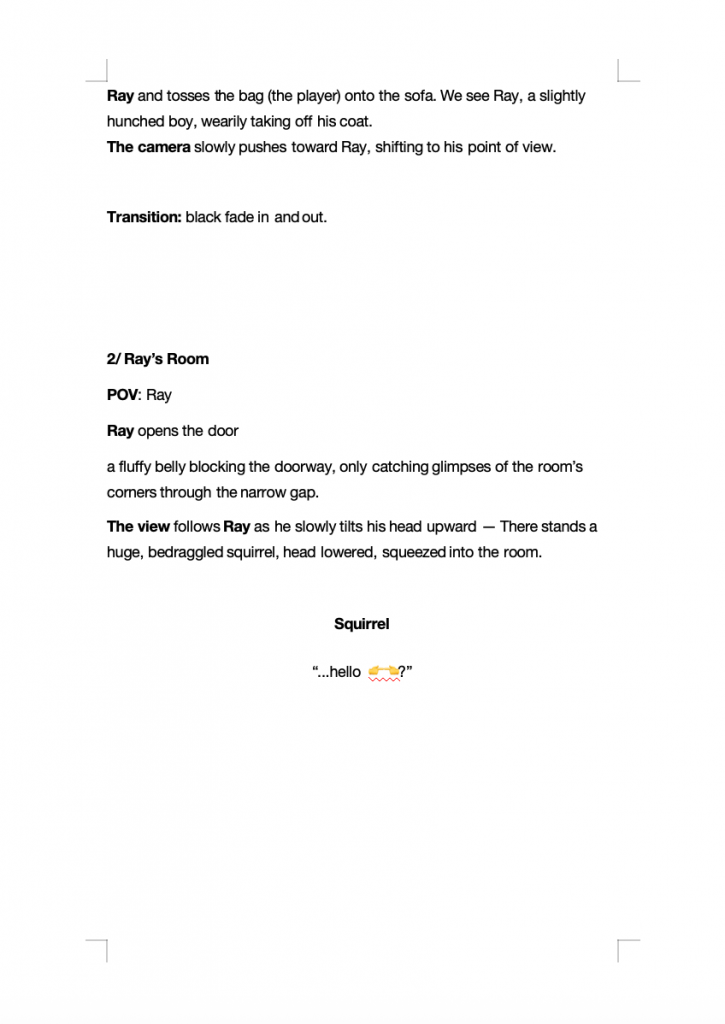
    The exercise was built around a simple everyday scenario: a 13-year-old boy returning home from school. A clear experiential point of view was required, so we experimented with a non-human but carried witness perspective—the school bag. The audience entered the story from the position of the bag on the boy’s back, passively following his movement without the ability to intervene. This setup helped us understand that narrative does not necessarily rely on inner monologue or complex plot progression; emotional atmosphere can be established through perspective, action, and spatial transition alone.

    During the exercise, we paid particular attention to shifts in point of view and emotional progression. The first part positioned the audience as an “invited witness” entering the domestic space, using emptiness and low light to suggest isolation. This then transitioned into the character’s first-person perspective, bringing the audience closer to the boy’s internal state. In the second scene, a sudden change in spatial scale—contrasting the small bedroom with an oversized squirrel figure—was used to create a sense of imbalance and unease, rather than relying on explicit narrative explanation.

    This practice made it clear to us that a script is not defined only by what happens, but by how perspective, pacing, and experiential positioning shape emotional understanding. Even within a short exercise, choices around POV, transitions, and spatial relationships significantly affected how the scene was perceived.


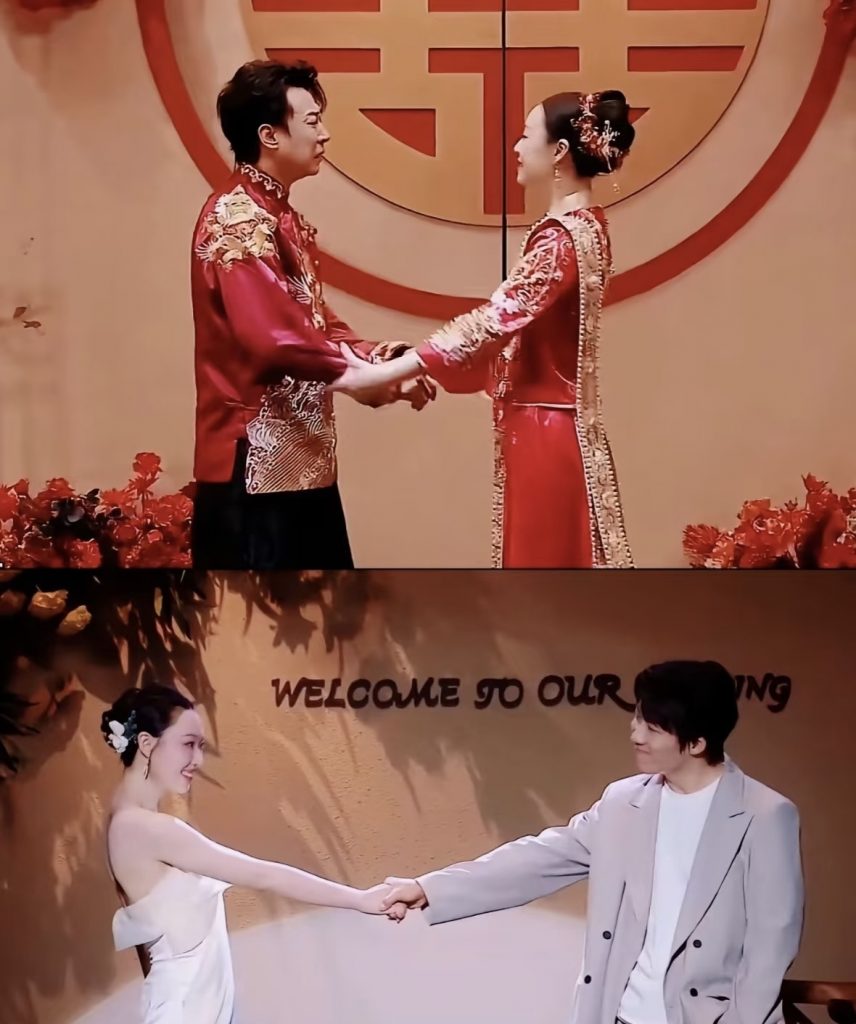
    At the project level, this week also marked an important decision. Building on the discussions of the previous two weeks, we formally confirmed the wedding as the core theme and narrative context of our project. Through the script exercise, we began to recognise that a wedding, like the practice scenario, is highly dependent on perspective and spatial relationships. Different positions within the same event allow access to different information, levels of agency, and emotional intensity. This reinforced our decision to situate changes in family relationships within a ritualised and highly structured social space.

  • WEEK 2


    XR Stories (continued)

    This week marked the submission of our first project draft, representing a shift from early exploratory discussions toward a proposal that could be clearly articulated, reviewed, and critiqued. Compared to the previous week, which focused more on references and open-ended interests, this draft aimed to define what kind of relationship we wanted to explore, how emotional progression might be structured, and how immersive media could potentially support this narrative.

    In the first draft, we centred the project on changes within a parent–child relationship, particularly how “love” takes different forms across stages of growth. Rather than treating love as a fixed or purely positive force, we approached it as a dynamic relational structure that evolves over time: beginning with protection and dependency, moving through constraint, friction, and compromise, and eventually reaching acceptance, letting go, and mutual growth. We organised this emotional progression into five stages, using the emotional arc itself as the core narrative framework rather than relying on a single plot-driven event.

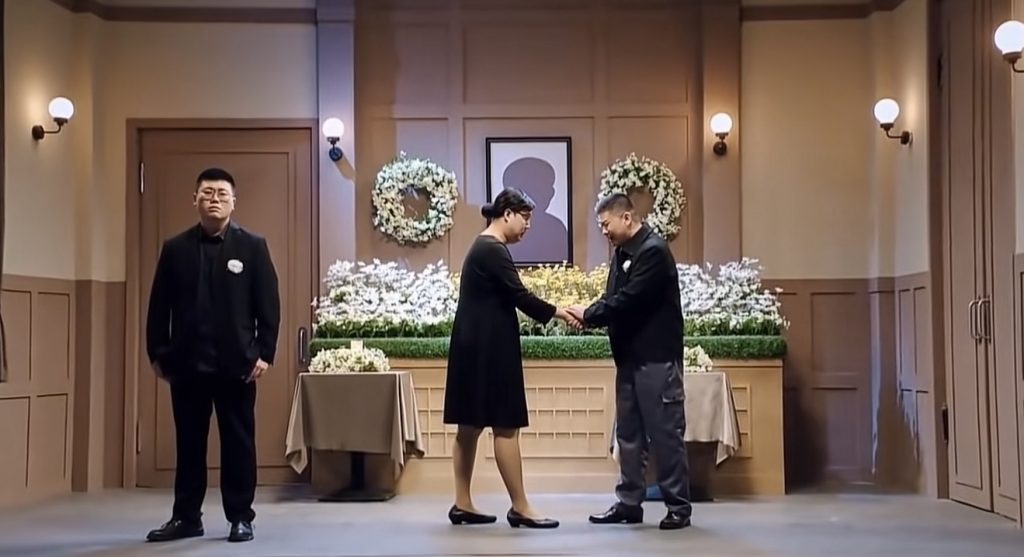
    In terms of narrative setting, we proposed a family ritual—such as a wedding or funeral—as the primary space in which these relational tensions unfold. This type of setting combines public visibility with private emotion, bringing multiple generations, traditions, and personal expectations into the same space. We considered it particularly suitable for immersive storytelling, as it allows emotional pressure and relational imbalance to be spatially experienced rather than simply explained.

    At the level of medium and experience design, the first draft already began to translate emotional dynamics into potential immersive mechanisms. We discussed The Line as a reference for how restricted interaction at critical moments can produce a strong sense of helplessness, and considered whether similar limitations could reflect moments in family relationships that cannot be intervened in or reversed. We also explored early ideas around a “mother” perspective, imagining an experience structured around continuous tasks and accumulating pressure. In this context, failure or loss of control was not framed as error, but as a way to reveal the child’s emerging independence rather than parental inadequacy.

    It is important to note that while this draft established a clear thematic direction, emotional structure, and narrative setting, several aspects remained intentionally unresolved. We had not yet determined the most appropriate experiential viewpoint for the audience—whether the participant should be positioned close to the centre of the conflict or in a more observational role between witnessing and intervention. Similarly, the extent to which interaction should drive narrative progression, as opposed to reinforcing emotional experience, was left open for further testing and feedback.